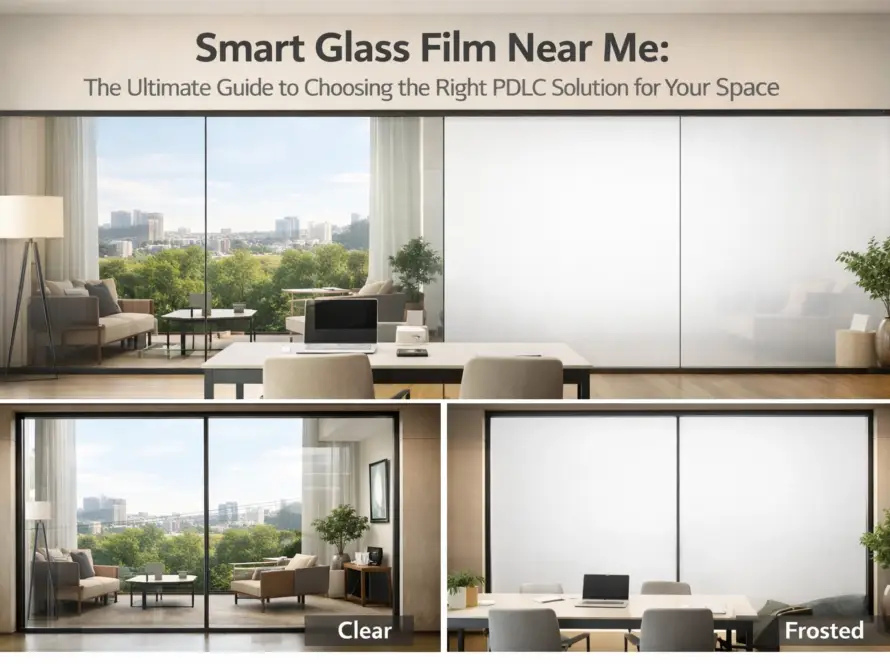
Smart Glass Retrofit Process: 7 Expert Steps (2026)
Most LA buyers spec’ing privacy glass don’t actually want new glass — they want privacy on the windows already in their home or office. Replacing the glass means demolition, downtime, and dust. Smart glass retrofit delivers the same privacy benefit without any of that, but only if the process is run cleanly from site measure to control test.
This guide walks the smart glass retrofit process end-to-end — the seven expert steps we run on every retrofit project, in the order they actually happen on a real LA-area install. Every step came from a real install we shipped in the last 12 months.
Why Run a Disciplined Smart Glass Retrofit Process
The film itself goes on the glass quickly. The expensive failures live elsewhere — wrong control path, missed HVAC coordination, dirty glass prep that delaminates six months later, transformer placed somewhere the homeowner can’t access. Each is preventable, but only if the smart glass retrofit process is run as a sequence rather than ad-hoc on install day.
The seven steps below are the playbook we hand every site lead before they roll out for the first measure visit.
The 7-Step Smart Glass Retrofit Process
- 1. Site measure (Day 1). Record actual glass dimensions (not frame), confirm glass type (single-pane vs IGU vs laminated), check for existing tint or film that would block adhesion, and identify the planned control location. The site measure conversation is where most decisions actually get locked in.
- 2. Control path decision (Day 1, before the electrician). Wall switch / handheld remote / smartphone app / smart-home integration (Lutron, Savant, voice assistant). The choice drives the wiring run. Decide before site measure ends; document on the site sheet.
- 3. Material order + clean-room cut (Day 2–5). Film is cut to glass dimensions in a clean environment. Bus bars and tabs prepped on the cut panels before they leave the shop. Custom shapes (curved, circular) require additional templating time at this stage.
- 4. Electrical pre-run (Day 5–7). If new wiring is needed, the electrician pre-runs the control leg to the chosen switch location BEFORE film day. Doing it after means opening drywall on a finished surface twice.
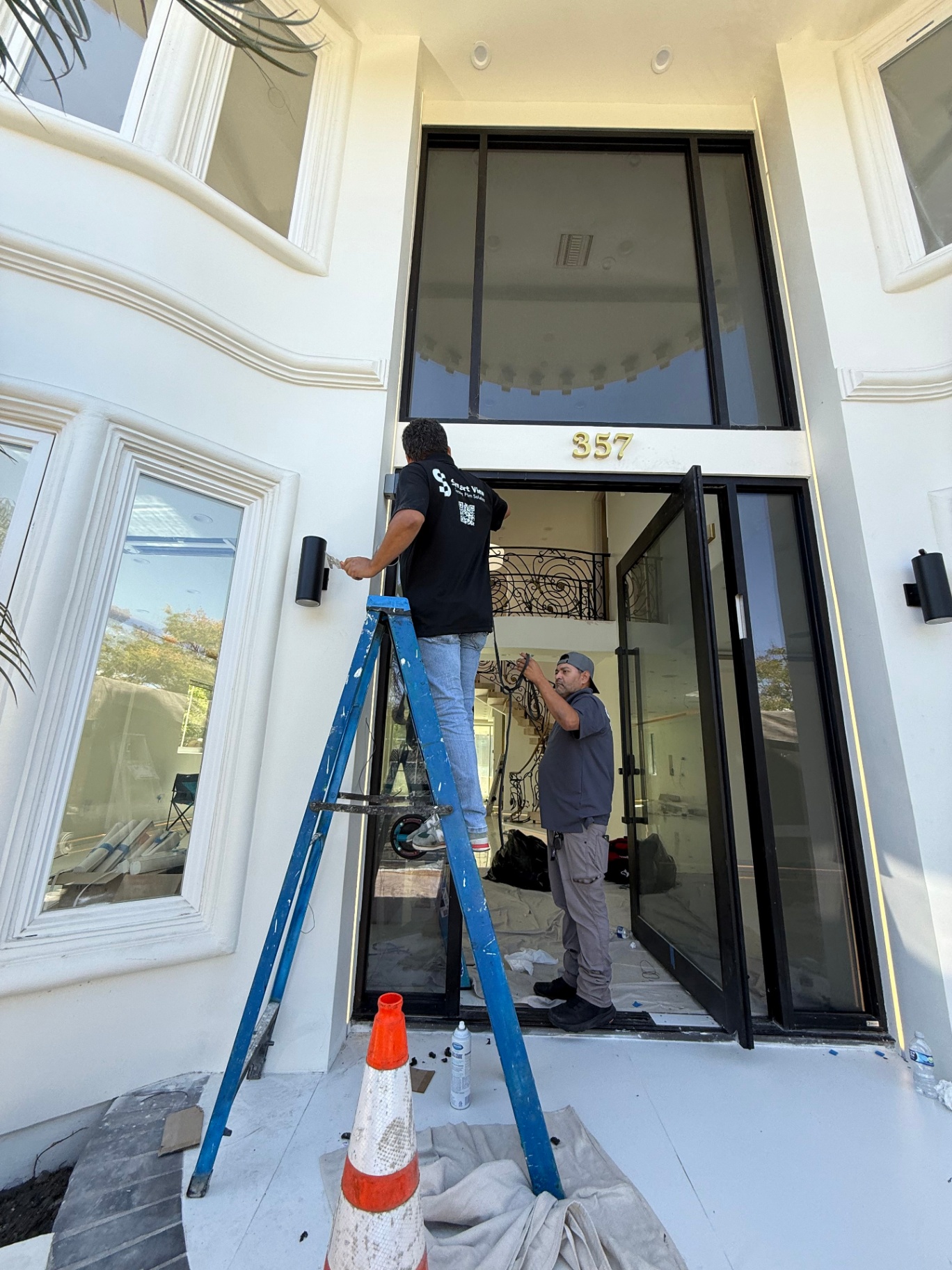
- 5. Glass prep + film application (Day 8 — install day). Cleaning the interior glass face is most of the install effort. Dust, residue, or trim caulk anywhere near the install zone causes delamination later. Film goes on in a controlled sequence with the installer trimming to the glass edge and seating the bus bar.
- 6. Control tie-in + final test (Day 8 — same day). Low-voltage leg from the driver connects to the bus bar. Wall switch gets its final test. Installer toggles the glass multiple times on site to confirm transition speed and uniformity.
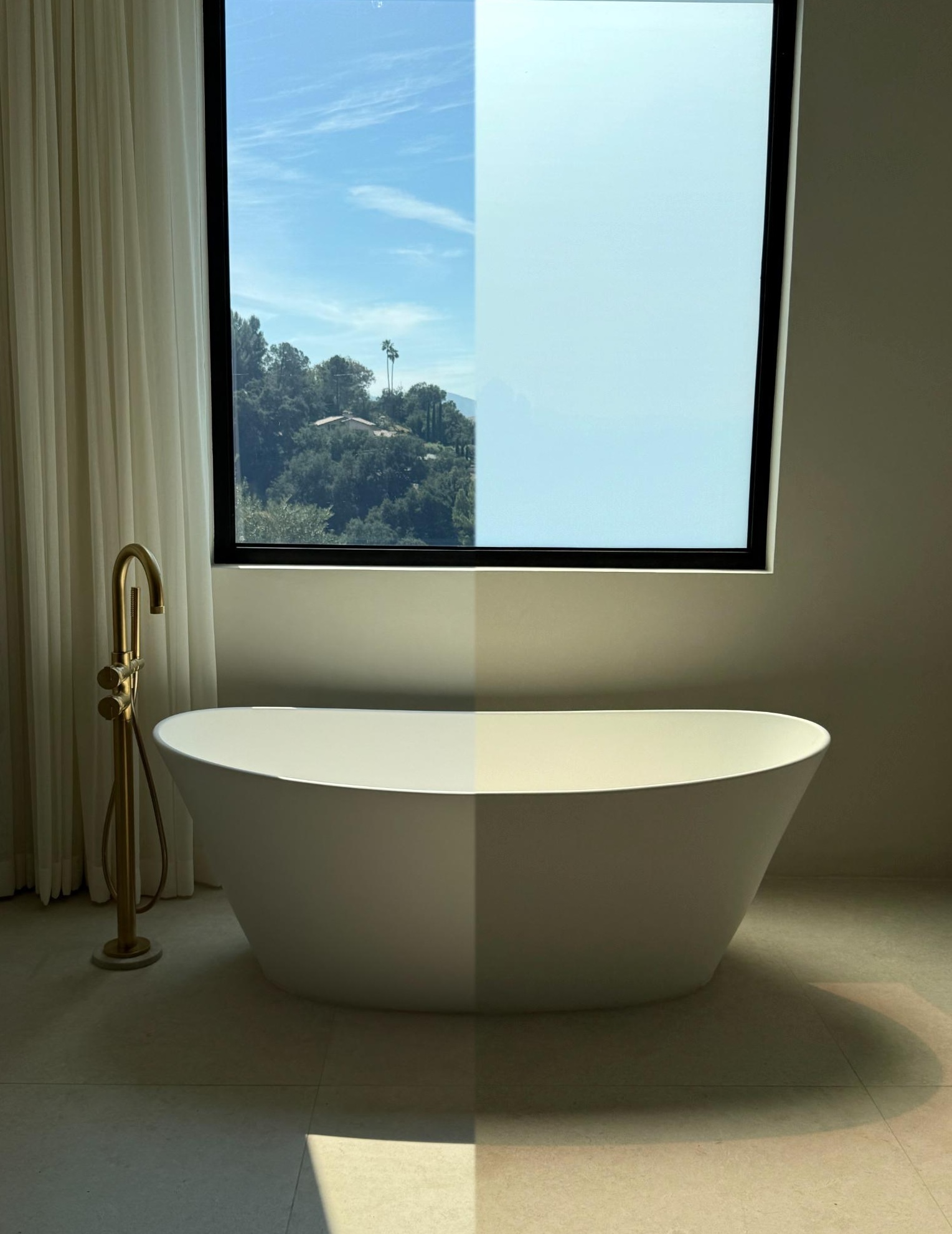
- 7. Walk-through + care brief (Day 8 — end of install day). Installer walks the homeowner or office manager through care behavior, default-state-frosted explanation, and warranty terms. Most service tickets come from skipped walk-throughs, not failed film.
Where the Smart Glass Retrofit Process Most Often Goes Wrong
Three failure modes account for the vast majority of botched retrofits we get called in to fix:
- Skipping the control-path decision until install day. Forces electrician to either run wire reactively (paying twice) or punt to a battery-powered remote that the client didn’t want.
- Inadequate glass prep. The retrofit looks clean for 60 days, then visible bubbles or delamination start showing up at the edges. Always more time on prep than on application.
- Missing the default-state-frosted briefing. First time the power flickers, the windows quietly frost over and the client thinks the system is broken. One paragraph in the welcome packet prevents the service ticket.
None of these are exotic. They’re checklist items the smart glass retrofit process catches when it’s run as a sequence with explicit handoffs.
Where the Smart Glass Retrofit Process Pays Off Most
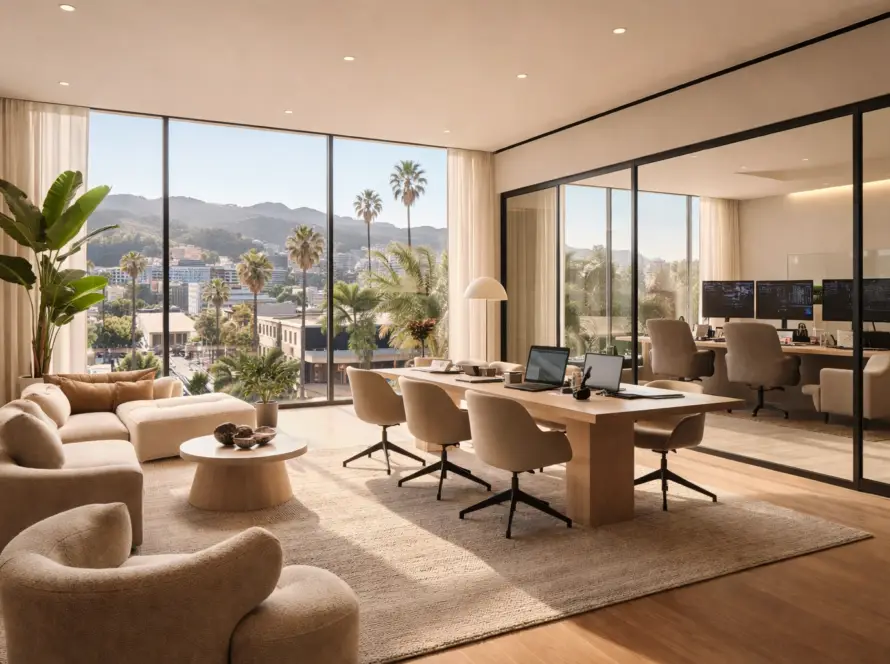
Across the LA-area retrofits we ship, the smart glass retrofit process earns its premium most clearly in five room types: residential bathrooms (privacy on demand without permanent vinyl), bedrooms with street-facing windows (open by day, private by night), conference rooms with existing single-pane glass partitions (collaborative-mode → confidential-mode without re-glazing), French and patio doors (where blinds look awkward), and storefronts (clear during business hours, frosted after).
For deeper context on the install-side mechanics across LA-area projects, see our overview of smart film installation in Los Angeles — covers the same retrofit process at the service-level, with city-specific notes.
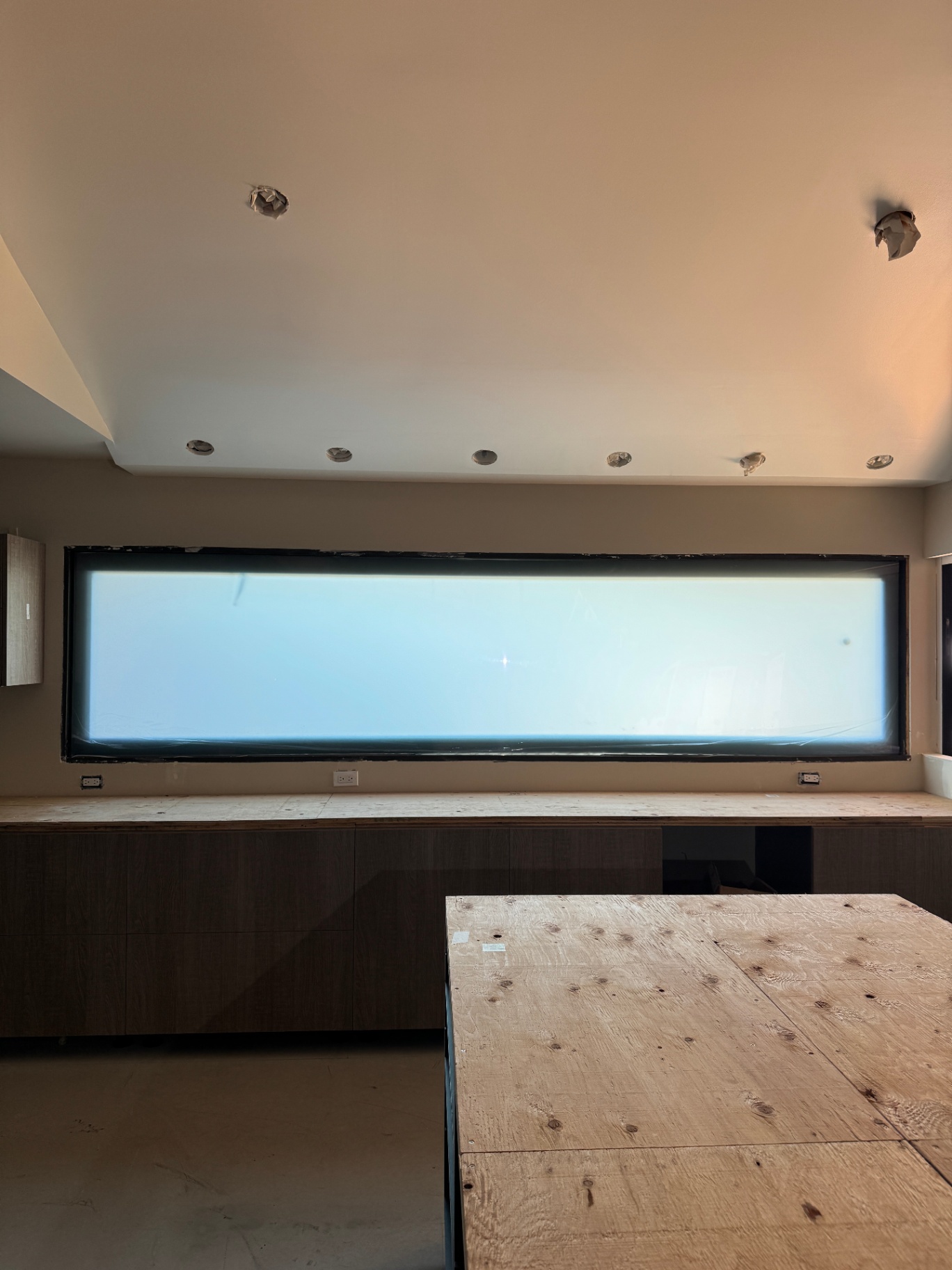
A Los Angeles French-Door Reference
The cleanest example of the smart glass retrofit process applied end-to-end is a French-door install we shipped in Los Angeles. Existing French doors with single-pane glass, homeowner wanted on-demand privacy on the doors that opened to the backyard. All seven steps ran clean across the 8-day timeline; install completed in a single day with wall switch + smartphone app pairing.
Full project breakdown: smart glass French doors in Los Angeles — same retrofit process, single client scope.
Planning a Retrofit?
If you’re considering a smart glass retrofit on a residential or commercial property, we can scope the project against your actual glass on a short site visit. No pressure — straight read on whether the existing glass is a clean retrofit candidate, what control path makes sense, and what timeline + cost to expect.
Contact Smart View with the room type, glass count, and timeline window, and we’ll come out for a measure and quote.