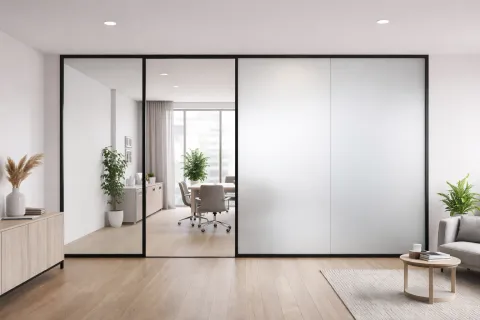
Smart Glass Installation Case Study: Los Angeles

Los Angeles loves natural light. Floor-to-ceiling windows, French doors, storefront glass — it’s baked into how the city looks and how Angelenos live. But the same windows that make a room feel open during the day turn it into a fishbowl at night, and that’s where most of our phone calls start.
This is a real smart glass installation case study Los Angeles homeowners, property managers, and office designers can pull patterns from. It’s drawn from the 50–100 sq ft switchable-film projects we’ve shipped across Downtown, Hollywood, Santa Monica, Beverly Hills, and the Valley, and it breaks down what actually happens from quote to control switch.
The Problem — Natural Light vs. Everyday Privacy in LA Homes
Almost every project starts with the same frustration: the client loves the look of their glass, but they’ve quietly stopped using the room once the sun goes down.
Typical triggers we hear:
- Street-facing windows on ground-floor homes and condos, where sidewalk traffic lines up with the couch or the dining table.
- Bathrooms and bedrooms exposed to neighbors or second-story sightlines, often retrofitted with frosted vinyl that can’t turn off.
- Conference rooms and private offices that need focus privacy for calls but feel like caves once the blinds come down.
The usual fixes — drapes, blinds, static frosted film — either kill the light, age the room, or trade one compromise for another. None of them are “on demand.”
The Solution — Switchable Smart Film On Demand
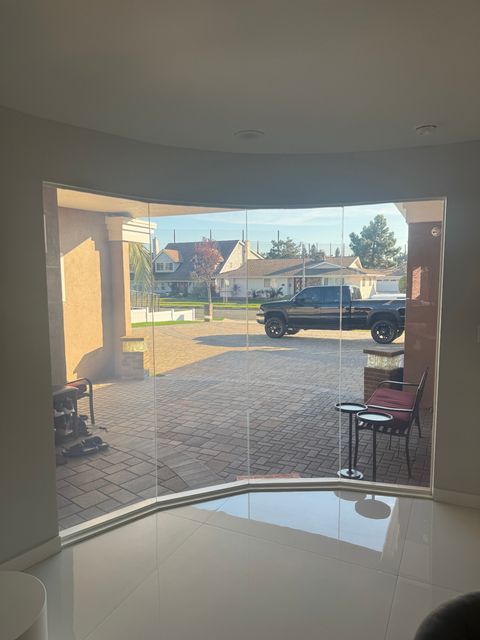
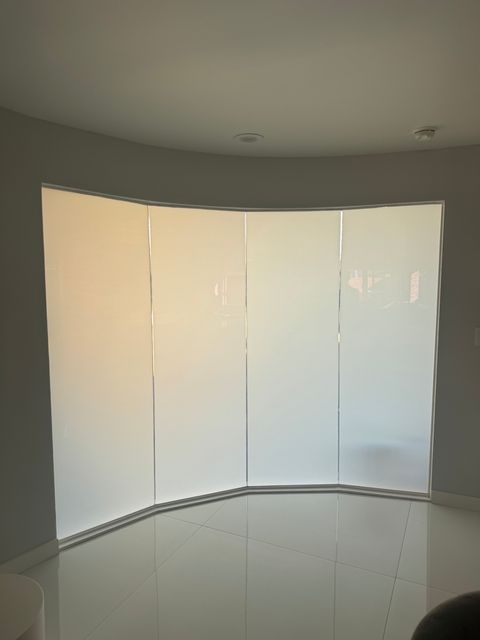
Smart View Smart Film solves the either/or problem by letting the glass itself flip between fully clear and fully frosted in about a second. No mechanical blinds, no motorized shades, no holes in the drywall. Power off: frosted. Power on: crystal clear.
Typical control options we install, depending on the client and the space:
- Hardwired wall switch — the default for most residential and office projects, wired like any other light circuit.
- Handheld remote — useful for rooms where a wall switch wouldn’t fall on a natural traffic path, or for clients who want a bedside option.
- App and smart-home integration — phone control plus integration with systems like Lutron or common voice assistants, increasingly the default on 2026 installs.
Inside the 50–100 Sq Ft Project Book
Zoom out across the 50–100 sq ft projects we’ve shipped in the last year and the numbers cluster tightly. This is the size range that covers a pair of large windows, a French-door set, a bathroom wall, or a single office partition run — meaningful transformation without full-remodel cost.
Snapshot from the recent book of work:
- Average install size: about 75 sq ft per project.
- Most common residential use: street-facing living rooms, bedrooms, and bathrooms in Mid-City, Silver Lake, and the Westside.
- Most common commercial use: conference rooms, private offices, and studio partitions in West LA and Downtown creative-office buildings.
- Typical install timeline: one working day for the film, plus a few hours for wiring and controls.
Same glass, two modes — this is the before/after clients see at the end of day one:
7 Lessons From These LA Installs
Across this body of LA work, the same seven patterns show up often enough that they’re worth pulling out before any client scopes a project:
- 1. Measure the glass, not the window frame. Film is applied directly to the glass surface, so the usable area is smaller than the rough opening — quotes based on frame size overshoot every time.
- 2. 50–100 sq ft is the value sweet spot. Below 50 sq ft the fixed setup cost dominates; above 100 sq ft you’re usually better off planning controls in zones.
- 3. Wire for the future even if the client isn’t using an app yet. Pulling a smart-home-compatible control run during install is cheap. Retrofitting one later means opening walls again.
- 4. Pick the control location during the design walk, not after. The best wall-switch spot is rarely the first one clients suggest — we flag it during site measure so the electrician doesn’t have to chase a change order.
- 5. Client expectation management is half the job. Frosted mode blocks visibility, not light — the room stays bright, which most clients don’t expect until they see it.
- 6. Edge trim matters more than people think. The thin bus-bar edge is visible up close; a small amount of trim or a reveal detail makes the install look architectural instead of retrofitted.
- 7. Single-day installs are the norm, not the exception. On 50–100 sq ft residential projects, the film goes up, the controls get wired, and the client is flipping the switch before the crew leaves.
A Residential Parallel — French Doors in Los Angeles
For a deeper look at how this plays out on a single residential project, the best reference in our book of work is a French-door install we did earlier this year. Square footage sits right in the 50–100 sq ft band, the control setup matches the defaults above, and the before/after photos show what “clear on demand, frosted on demand” actually looks like in a lived-in room.
Full breakdown: smart glass French doors in Los Angeles — same approach as this case study, one project at a time.
Planning Your Own LA Install?
If your space falls in the 50–100 sq ft range and you want a no-blinds, no-drapes privacy solution, we’ll walk you through sizing, control options, and timeline on a short consult — no pressure, no templates.
Contact Smart View for a fast, honest quote, and we’ll tell you what a project like yours usually runs and how soon we could have a crew on site.