
Smart Film for Big Windows: 7 Top Specs (2026)

Big-window architecture defines a meaningful slice of LA residential — floor-to-ceiling glass walls in mid-century homes, oversized bay windows in modernist conversions, expansive sliding-door spans in hillside contemporary builds. The privacy spec on those big windows hits constraints that small-window installs don’t carry: oversized glass cuts, custom shapes, larger driver capacity, multi-panel control coordination. Smart film for big windows is a distinct spec discipline, and the seven specs below cover it.
This guide walks the seven big-window specs we run on every consult that involves glass surfaces over 50 sq ft per opening. Each comes from real LA-area installs we’ve shipped across hillside contemporary, mid-century floor-to-ceiling, and modernist big-window homes in the last 12 months.
Why Big Windows Are a Different Spec From Standard
Standard switchable-film installs run on bathroom windows, French doors, and partition walls — typically 15–40 sq ft per opening. Big-window installs start at 50 sq ft per opening and scale to 200+ sq ft on signature glass walls. At those scales, three constraints kick in: oversized custom-cut film panels, larger driver capacity sized to the load, and multi-panel control coordination across what reads as a single architectural surface. The seven specs below address those scale constraints.
The 7 Big-Window Specs
- 1. Custom-cut oversized panel spec. The first decision. Standard switchable-film panels max out around 50–60 sq ft per single sheet; bigger glass requires custom-cut multi-panel install with seamless join lines. The cut spec gets decided during the consult based on the glass dimensions; the seam placement gets coordinated with architectural sight lines so it reads as intentional rather than retrofit.
- 2. Driver capacity sized to the load. Big-window installs draw significantly more current than standard installs. The driver capacity gets specced at one tier above the rated load to handle HVAC startup voltage drops without flicker. On 100+ sq ft installs, splitting the load across two drivers eliminates the flicker risk entirely. The base sizing rule those tiers build on is covered in what size transformer smart film needs.
- 3. Multi-panel control coordination. When a big-window install spans 3–5 panels reading as one architectural surface, the control logic needs to fire all panels simultaneously rather than sequentially. Multi-panel installs use synchronized control wiring so the entire surface activates in unison — sequential activation reads as a defect on big glass.
- 4. Glass-prep scaling for oversized surfaces. Glass-prep discipline that works on a 40 sq ft bathroom window doesn’t scale linearly to a 200 sq ft floor-to-ceiling wall. Big-window specs allocate substantially more prep time per square foot — clean-room standards have to hold across a much larger surface, and any prep miss shows up as a visible bubble at architectural scale.
- 5. Edge and seam aesthetic spec. Big-window installs read at architectural scale where edge and seam details matter much more than on standard installs. The bus-bar wiring location and seam placement get coordinated with frame, trim, and sight-line geometry during consult — well-spec’d big-window installs hide the wiring entirely behind frame; rushed installs leave visible wiring at eye level.
- 6. Pairing with low-E or laminated glazing on new construction. For new-construction or full-glazing-replacement projects, pairing the switchable layer with low-E coating or laminated assembly delivers compounded performance — switchable for solar gain, low-E for long-wave thermal, lamination for acoustic. Best-in-class spec for hillside contemporary new builds.
- 7. BMS or smart-home integration for big-window scene control. Big windows on hillside contemporary and mid-century floor-to-ceiling homes typically tie to whole-home automation for thermal-management scene control — frost during peak afternoon glare, clear during morning daylight, sunset-frost on automation. The integration architecture gets decided during the spec phase so the wiring runs cleanly to the home’s BMS or smart-home hub.
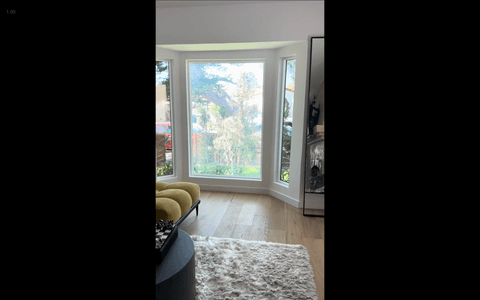
For broader install context across the LA-area service behind big-window deployments, see our smart glass installation overview — covers the install-side discipline and BMS integration patterns relevant to big-window residential and commercial projects.
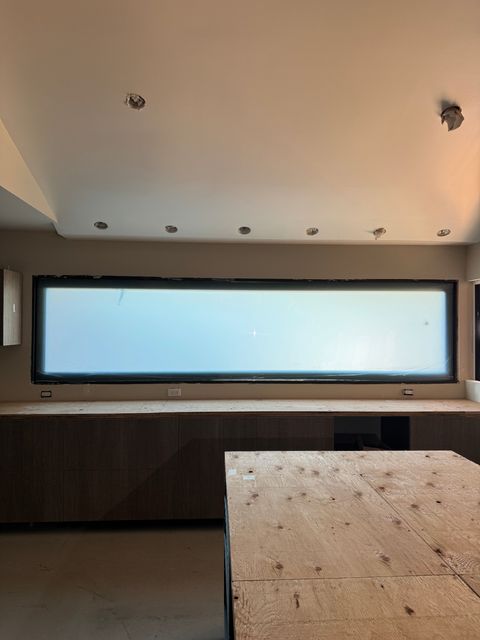
Where the Spec Pays Back Most Clearly
Across the LA-area big-window installs we ship, the spec earns its cost back fastest on three home types:
- Hillside contemporary homes with west-facing floor-to-ceiling glazing. Specs #2 (driver capacity) and #6 (low-E pairing) compound — solar-gain reduction on west-facing big windows is meaningful in absolute terms during peak afternoon hours.
- Mid-century homes with original floor-to-ceiling glass. Specs #4 (prep scaling) and #5 (edge aesthetic) are decisive — the architectural read of mid-century glass demands spec discipline that retrofit-grade installs can’t deliver.
- Modernist conversions and lofts with oversized bay windows. Specs #1 (custom-cut) and #3 (multi-panel control) compound — the multi-panel surface needs to read as one architectural element rather than separate retrofitted panels.
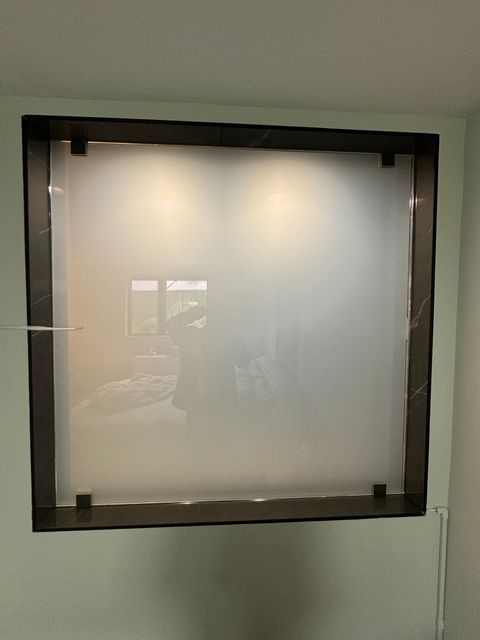
How the Specs Compound on Multi-Surface Homes
The seven specs above don’t sit in isolation — on a typical LA hillside contemporary or mid-century home with multiple big-window surfaces (living-room expanse + master suite + dining glass + bathroom glass), four to six of these specs compound on the same install. The cabling spec, driver placement, and BMS control scale cleanly because the underlying product is the same — only the per-surface dimension differs. The per-surface cost drops as the install scales across the home.
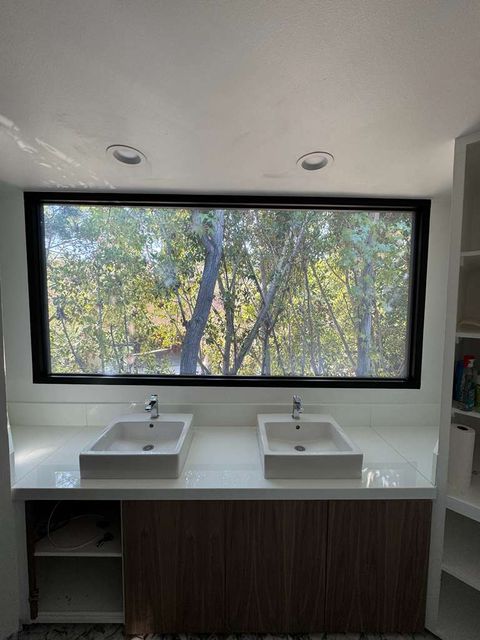
For multi-surface big-window installs, this means a home-wide standard can serve very different surface dimensions under one control system — multiple oversized panels, each with its own custom cut, all unified under one Lutron, Savant, or smartphone app.
Real Project Math
For a typical LA hillside contemporary big-window install (one 100 sq ft floor-to-ceiling living-room wall), the film is quoted in writing after a measurement. For a multi-surface big-window install covering living room + master suite + dining glass (~300 sq ft total), spec is quoted in writing after a measurement — the per-surface cost drops as the install scales because cabling and driver runs share infrastructure across surfaces.
The annual energy savings from solar-gain reduction on west-facing big windows typically run $300–800 per year depending on home size and HVAC efficiency. Modest but meaningful — and the lifestyle wins (daylight retention in privacy mode, glare reduction during peak hours, smart-home scene integration) compound on top.
An LA French-Door Reference
For a residential parallel that mirrors several of these big-window specs (especially #1 custom-cut and #3 multi-panel control), our LA French-door install is the closest reference. Same multi-panel control coordination, same glass-prep discipline at scale, same Lutron/smartphone integration patterns — applied to a French-door spec that reads as one architectural element across multiple panels.
Full project breakdown: smart glass French doors in Los Angeles — same spec discipline, multi-panel residential scope.
Planning a Big-Window Smart Film Install?
Want to talk it through? Call us at (866) 728-9888 and we will walk your project, answer the open questions, and line up a measure if it makes sense. We install across the LA metro, and material-only orders for your installer are available by quote.