Conference Room Privacy Mistakes: 7 Top Fixes (2026)
Office managers spec conference room privacy more often than almost anyone in the building — and they tend to inherit decisions that were made years before they took the role. The same seven mistakes show up on the conference room privacy reviews we run for LA-area offices, regardless of building age, tenant mix, or budget tier.
This guide catalogs the conference room privacy mistakes we see most often and the switchable-film fix for each. Each of the 7 fixes saves an office manager something specific: a tenant complaint, an HVAC re-balance, a re-glaze, or a recurring “the blinds broke again” service ticket.
The Pattern Behind Common Conference Room Privacy Mistakes
The mistakes cluster into two categories: treating privacy as a one-mode problem (blinds always-down, frost always-on) and under-spec’ing the install (skipping HVAC review, ignoring acoustic, picking cheap kits). Almost every conference room privacy mistake we fix lives inside one of those buckets.
Below: the seven we flag every time, with the switchable-film fix for each.
Mistake #1 — Specifying Blinds for “Privacy on Demand”
The problem. Blinds look like a cheap on-demand privacy solution but fail in practice — they collect dust, break, tangle, look residential, and require manual operation every transition. Office managers absorb the service-ticket cost across the building’s life.
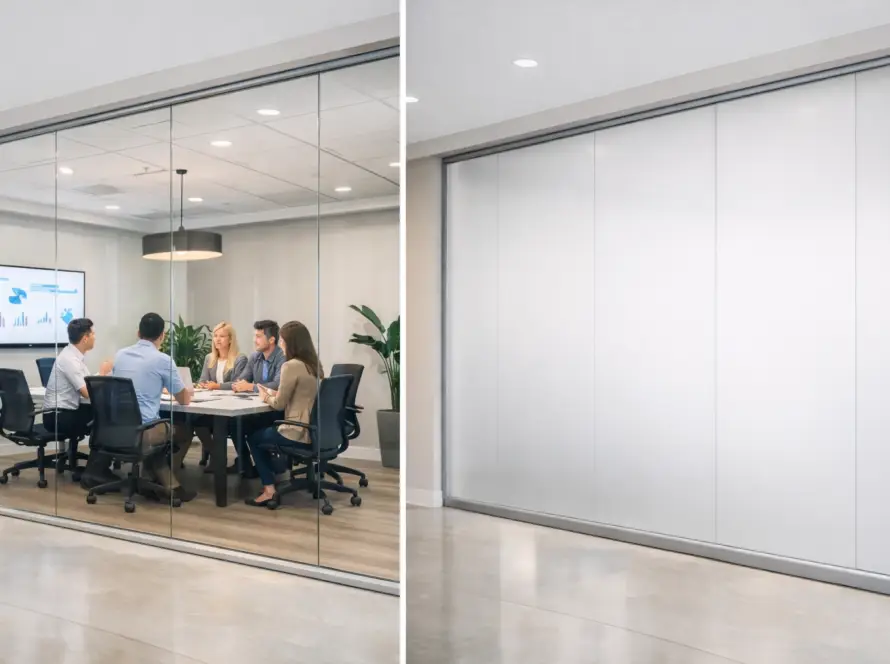
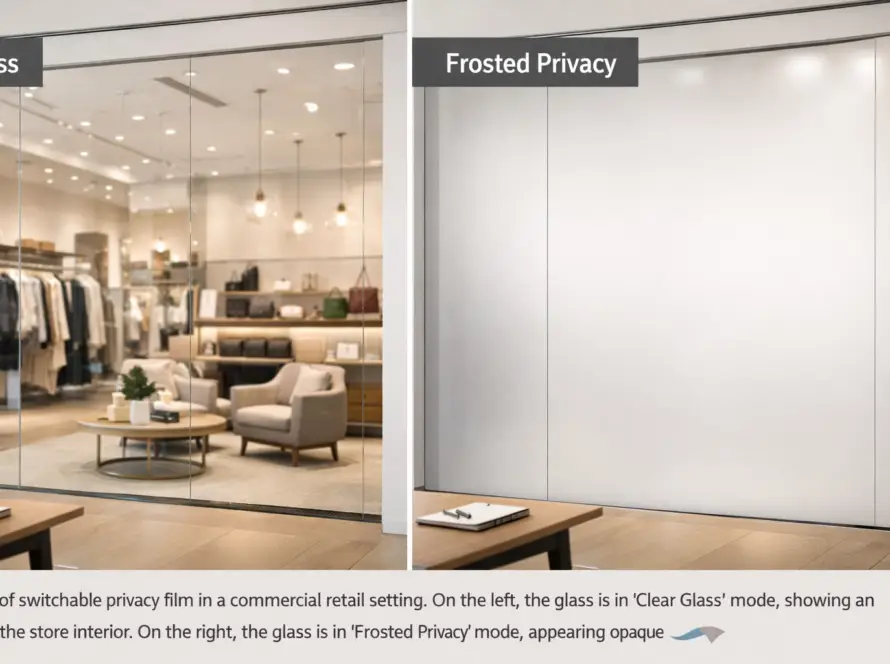
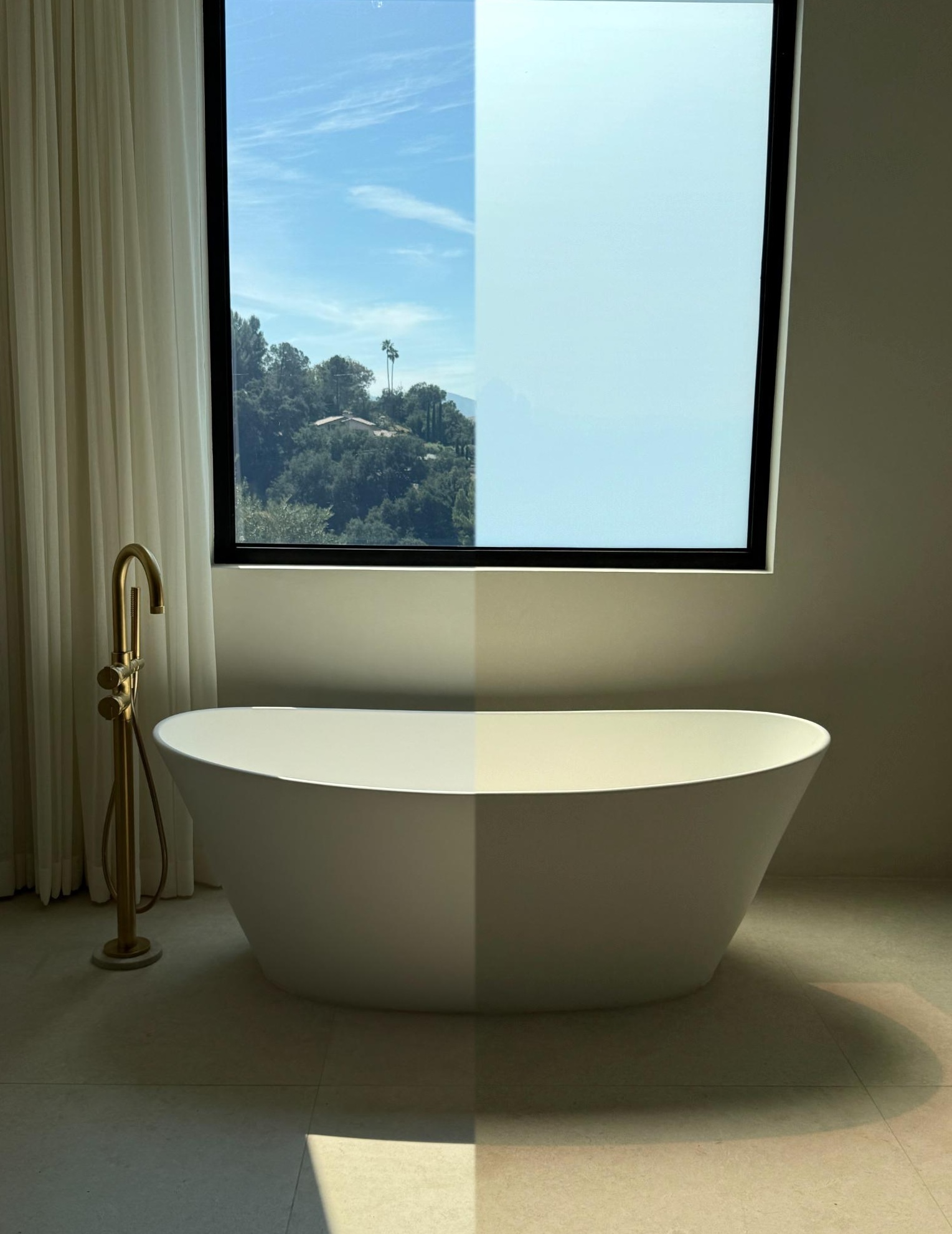
The fix. Switchable conference room privacy film flips clear-to-frosted at the wall switch with no mechanical parts. Maintenance over 10 years is a fraction of replacing blinds across commercial turnover cycles.
Mistake #2 — Locking the Room Into Permanent Frosted Glass
The problem. Permanent frosted glass solves privacy but kills the room’s daytime collaboration value. Conference rooms need to flip between open/visible and focused/private throughout the workday — permanent frost commits the space to one mode forever.
The fix. Switchable film delivers the same privacy effect on demand, in about one second per transition. The room is collaborative in the morning and confidential by 2pm without any physical reconfiguration.
Mistake #3 — Choosing Cheap Amazon Privacy Film Kits
The problem. Office managers under cost pressure occasionally route conference room privacy through facilities-grade DIY kits. These fail under HVAC airflow, yellow under sun exposure, and develop dead spots within 12–18 months. Service tickets then escalate to facilities, and the “savings” reverse inside a year.
The fix. Spec professional-grade PDLC film with warranted install and a documented lifespan (10+ years). The spec-sheet difference is usually under 2× the cheap-kit route; the quality + lifetime difference is 10×.
Mistake #4 — Ignoring Acoustic Privacy When Speccing Visual Privacy
The problem. A conference room that goes frosted but transmits voices through single-pane glass isn’t actually private — anyone in the hall can still hear the meeting. Visual privacy without acoustic privacy is a half-solution that office managers absorb in client complaints.
The fix. Spec laminated or double-pane glass with switchable film applied to one face. Lamination adds significant STC (acoustic) performance; the film handles the visual side. Solve both during the original glazing spec.
Mistake #5 — Skipping the HVAC Coordination Meeting
The problem. Frosted vinyl, blinds, or even switchable film all change the thermal load profile of the glazing. If HVAC engineers aren’t looped in early, the system gets sized for either the wrong glass behavior or “tenant choice” — both expensive to correct mid-project.
The fix. Switchable film publishes documented U-values and SHGC numbers — HVAC engineers can design around known specs from day one. Schedule a 15-minute coordination call during glazing spec.
Mistake #6 — Wiring the Control Path After Film Goes On the Glass
The problem. Office managers occasionally try to retrofit a wall switch or smart-home tie-in after the film is already installed. That means opening drywall on a finished space, rescheduling the electrician, and paying for the wiring run twice.
The fix. Decide the control path (wall switch / remote / app / BMS) during the spec phase. The electrician pulls the right cable on the first visit, before film goes up.
Mistake #7 — Not Briefing Tenants on Default-Off-Means-Frosted Behavior
The problem. The first time a building loses power, switchable film defaults to frosted (the “normally opaque” state). Tenants who weren’t briefed call facilities convinced the system is broken. The service ticket is preventable with one paragraph in the welcome packet.
The fix. Add a short “your switchable glass behavior” note to the tenant welcome materials. Most tenants actually appreciate the default-to-private behavior once it’s explained.
How These Conference Room Privacy Mistakes Compound on Multi-Room Floors
On a single conference room, any one of these conference room privacy mistakes is recoverable. On a 50,000 sq ft floor with 30+ glass partitions, the same mistake repeated 30 times becomes a multi-quarter facilities project. Most office managers only see the pattern after the second tenant-complaint cycle.
A Beverly Hills Conference Room Reference
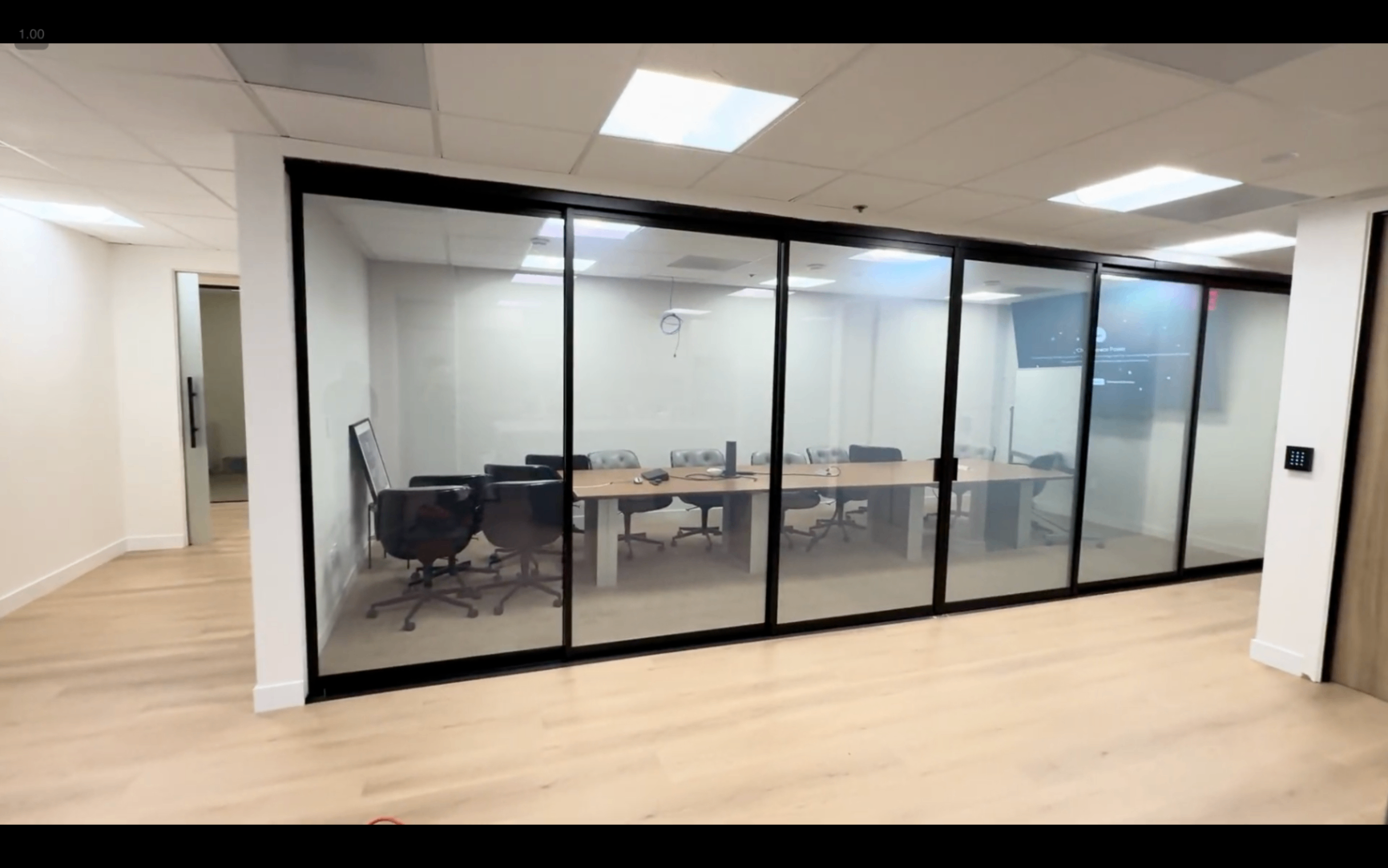
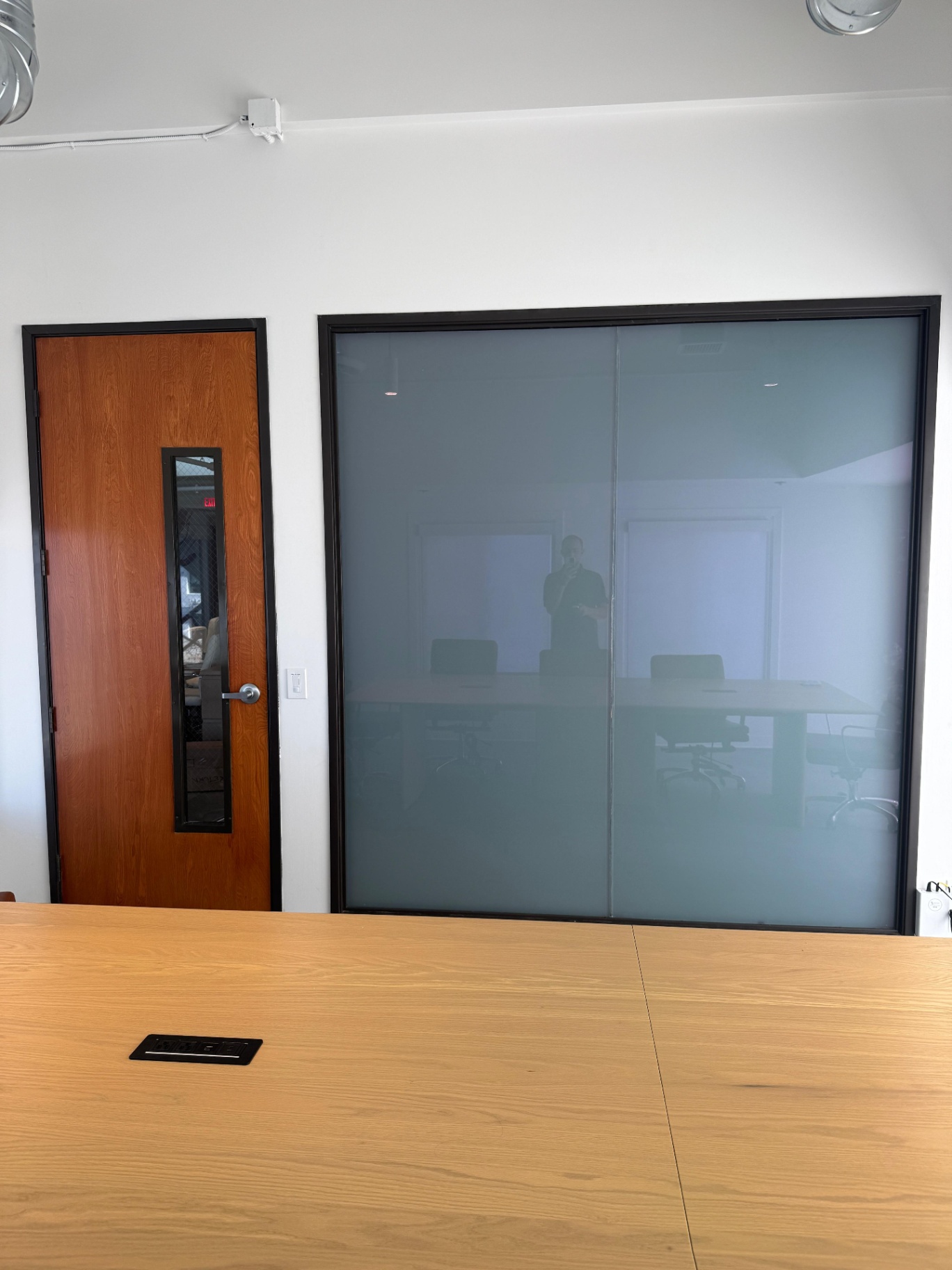
The cleanest example of these conference room privacy mistakes caught during a design walk is the Beverly Hills boardroom install we shipped last year. Original spec had blinds (#1), single-pane glass (#4), and no HVAC sync (#5) — all three caught and fixed before glass order.
Full project breakdown: smart glass conference rooms in Beverly Hills — same playbook applied to a single real client.
Planning Your Next Conference Room Build?
If you’re an office manager about to spec privacy on a new buildout or tenant-improvement, a 30-minute spec review can flush out most of these conference room privacy mistakes before glass is ordered. No pressure, just a second pair of eyes.
Contact Smart View with the project details — floor plan, conference room count, glazing schedule — and we’ll flag which of the 7 mistakes are baked into the current spec.