Smart Film vs Built-In Glass: 5 Real Differences (2026)
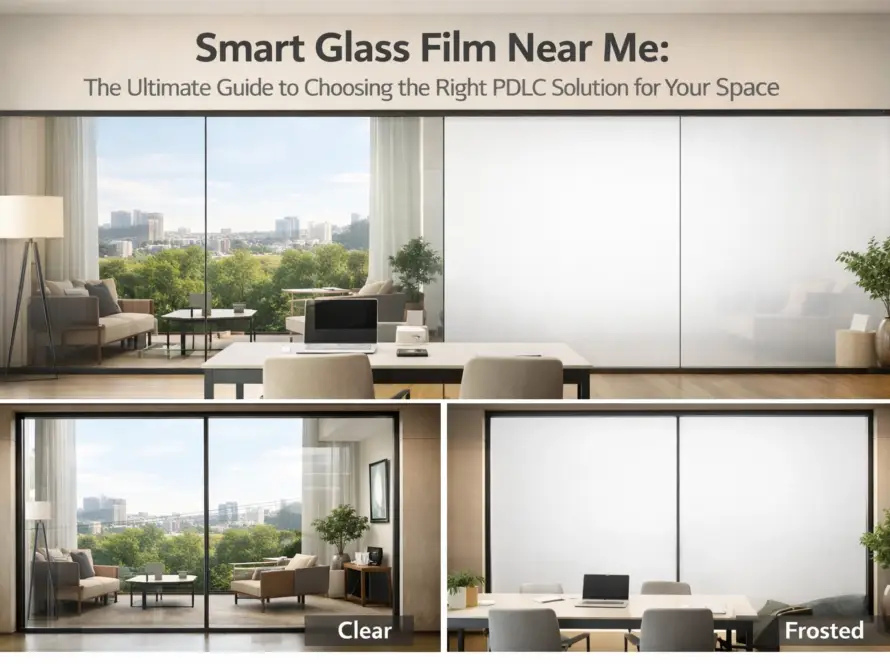
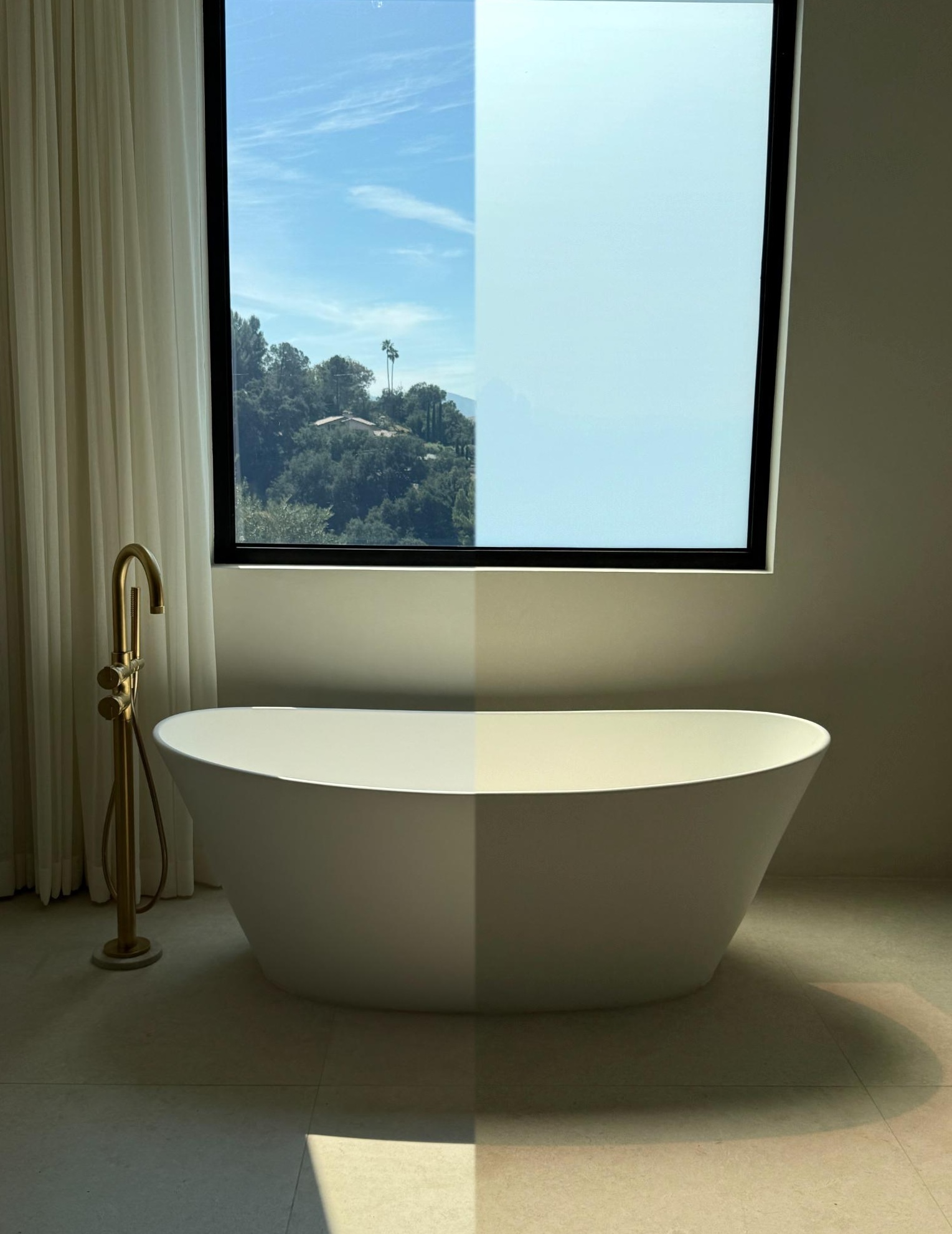
“Smart film” and “built-in smart glass” are essentially the same switchable PDLC technology in two different physical forms. Smart film is a retrofit application bonded to the interior face of existing glass; built-in smart glass is the same technology pre-laminated into a new glass panel at manufacture. Same underlying optics, same control patterns, same lifespan parity — but the install path, cost structure, and aesthetic finish are meaningfully different, and that gap is what determines which form factor fits your project.
This guide is the smart film vs built-in glass decision conversation we run on every consult that involves new construction, remodel, or full-glass-replacement scope. Five real differences that determine which form factor lands best, with the project economics behind each. Every example below comes from real LA-area installs we’ve shipped in the last 12 months.
Why the Smart Film vs Built-In Glass Decision Matters Up Front
Most LA buyers researching switchable privacy land on one product name or the other first and assume that’s the choice. It’s not — the actual decision is install path: are you retrofitting onto existing glass (film) or specifying brand-new glass on a build-out or full remodel (built-in glass)? Pick the right form factor and the rest of the spec falls into place; pick wrong and you’re either replacing perfectly-good existing glass for no aesthetic reason or compromising on edge-detail aesthetics for the install path.
The five real differences below are the ones we always raise during the consult.
The 5 Real Smart Film vs Built-In Glass Differences
- 1. Install path: retrofit vs new construction. Smart film bonds to the interior face of existing glass — no demolition, no glazing crew, hours-per-opening install time. Built-in smart glass requires removing the existing pane and installing a new laminated panel — days per opening, full glazing crew on site, dust event in surrounding spaces. The smart film vs built-in glass install path delta is the single biggest decision driver on most projects.
- 2. Cost structure (typically 30–50% delta). Smart film typically runs 30–50% the cost of equivalent built-in glass replacement on the same square footage, because there’s no demolition labor and no new pane manufacturing. On a residential retrofit, that’s the difference between a 1–2 day install and a 5–7 day glazing project. Built-in glass costs more upfront but ships pre-built into the panel without retrofit assembly.
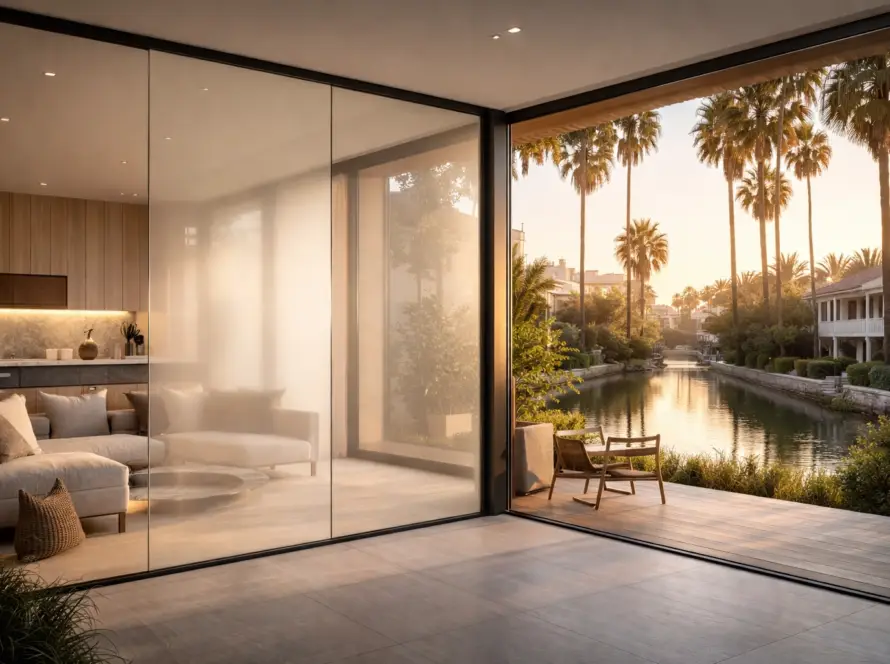
- 3. Aesthetic finish (edge bus-bar visibility). Smart film carries a thin visible bus-bar at the edge of the film — usually hidden behind window trim, but visible up close on frameless installs. Built-in glass conceals the electrical layer inside the laminated assembly, giving a cleaner edge. For frameless architectural glass walls in Class A commercial or modern residential, built-in glass wins the smart film vs built-in glass aesthetic comparison; for trimmed residential windows and partition walls, the difference is essentially invisible.
- 4. Lifespan in identical conditions. Both products carry 10+ year warranted lifespans under quality install. Built-in glass has a slight edge in harsh outdoor exposure (the laminated assembly protects the electrical layer from environmental factors), but for the indoor residential and commercial installs we ship most often, lifespan parity is essentially equal. The smart film vs built-in glass durability gap in indoor service is small enough to deprioritize against install-path and cost considerations.
- 5. Control system compatibility (essentially identical). Both products work with the same control surfaces — wall switch, remote, smartphone app, BMS tie-in (Lutron, Crestron, Savant). The driver and wiring requirements are nearly identical. No project we’ve ever scoped picked one form factor over the other based on control integration. The smart film vs built-in glass decision is mostly about install path and aesthetics, not technology.
Where Each Form Factor Wins on the Smart Film vs Built-In Glass Decision
The decision is mostly about install path and budget, not about underlying technology. Quick mapping:
- Retrofit on existing glass (residential or commercial): smart film wins. 30–50% cost savings, no demolition, single-day install per opening.
- New construction or full glass replacement: built-in glass wins. The glass is being ordered fresh anyway; specifying pre-laminated built-in glass adds modest cost over standard glass and gives a cleaner aesthetic.
- Frameless architectural glass walls in Class A commercial: built-in glass wins on aesthetics. The hidden electrical layer matters when the glass is the architectural feature.
- Trimmed residential windows, French doors, bathroom windows, partitions: smart film wins on cost-per-result. The aesthetic difference is invisible behind trim.
- Curved or shaped glass: film wins for retrofits (PET substrate flexes around moderate curves); built-in glass wins for new (laminated curves are pre-fabricated to spec).
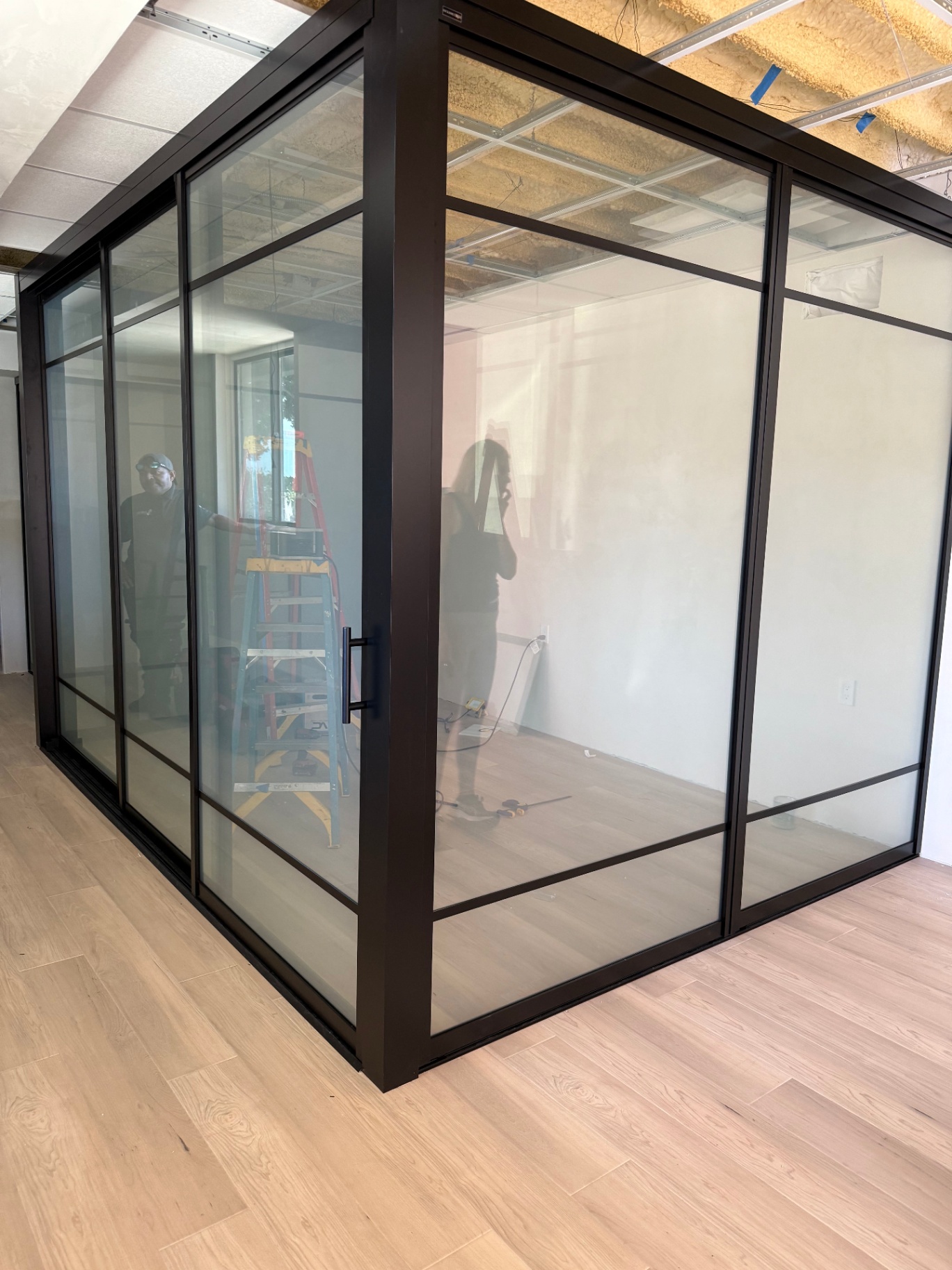
For broader install context across LA-area service, see our smart glass installation in Los Angeles overview — covers the install side at the service level, with city-coverage notes that apply equally to retrofit and new-construction installs.
The Smart Film vs Built-In Glass Decision in Real Project Math
For a typical LA residential bathroom retrofit (40 sq ft of glass), smart film runs roughly $2,000–3,000 installed. Equivalent built-in glass replacement on the same opening — including pane removal, new laminated panel, re-glazing — runs $5,000–8,000 because of the demolition and new-glass labor. For an office conference room (100 sq ft), film runs $5,000–7,500 vs $12,000–18,000 for built-in glass replacement. The retrofit path wins on dollars and timeline almost every time, except in new construction where the demolition cost doesn’t apply.
For new construction (no existing glass to demolish), built-in glass runs roughly 1.3–1.7× the cost of standard glass — well below the cost of demolition-plus-replacement on a retrofit. So if the glass is being ordered fresh anyway, the smart film vs built-in glass math tips toward built-in glass on aesthetic grounds.
How the Smart Film vs Built-In Glass Decision Compounds on Multi-Room Projects
On a single bathroom or single conference room, the decision is straightforward — pick the form factor that fits the install path. On a multi-room project (residential whole-home, commercial floor-wide build-out), the decision often splits across rooms: retrofit-path on existing-glass rooms, build-in-path on new-construction rooms. The same underlying control system supports both form factors, so the multi-room install can mix and match without compromising the building-wide control standard.
This is one of the patterns we see most often on whole-home luxury residential and Class A commercial build-outs — film on existing glass surfaces, built-in glass on new construction, unified BMS or smart-home control across both.
A Reseda Storefront Reference
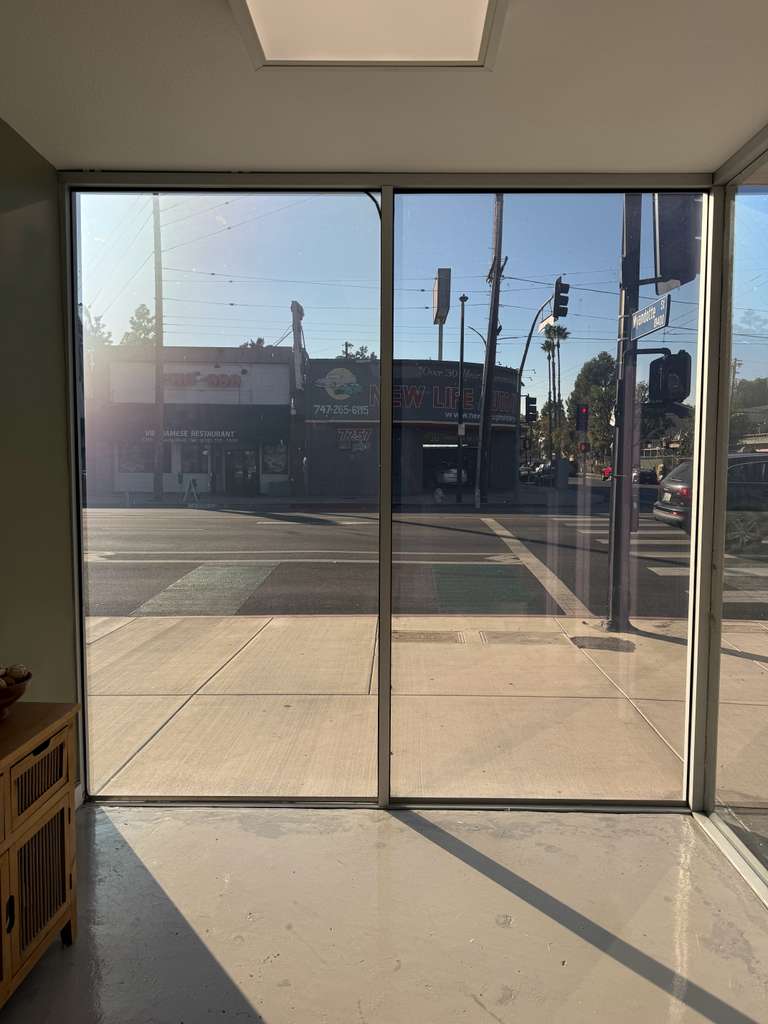
For a concrete example of the smart film vs built-in glass decision applied end-to-end on a single project, our Reseda storefront install picked smart film over built-in glass replacement because the existing storefront glass was already premium quality and didn’t need replacement. The film retrofit completed in two working days vs the 5–7 days a glass replacement would have required, with no dust event in the surrounding retail space and no tenant-disruption period.
Full project breakdown: smart glass storefront in Reseda — retrofit-path implementation of the smart film vs built-in glass decision.
Planning a Switchable-Privacy Project?
If you’re considering switchable privacy for a residence or commercial space and want help making the smart film vs built-in glass decision against your actual project scope, a 30-minute consult can scope it on a short site visit. No sales pressure — straight read on which form factor wins for your specific glass condition and timeline.
Contact Smart View with the project type, glass count, and whether the install is retrofit or new construction, and we’ll tell you which form factor fits your scope cleanest.