
Smart Glass Home Integration: 7 Top Setups (2026)

Switchable smart glass on its own delivers privacy-on-demand cleanly. Switchable smart glass integrated with the rest of the home’s automation system delivers privacy-on-demand as part of larger lifestyle scenes — sleep mode, away mode, movie mode, voice-triggered privacy. The integration spec is what turns a single bathroom upgrade into a whole-home smart-living layer, and the seven setups below cover the patterns we ship on every smart-home-equipped LA residence.
This guide walks the seven smart glass home integration setups we run on every smart-home consult call. Each comes from real LA-area installs we’ve shipped in the last 12 months across Lutron Caseta, Lutron RA3, Savant, Crestron, Alexa, Google Home, and Apple HomeKit ecosystems.
Why Integration Earns the Setup Time
Most homeowners install switchable glass first, then think about integration second. The result is typically a wall switch that works but doesn’t talk to the rest of the home — privacy on demand from one room but no scene control, no automation, no voice triggering. The seven setups below are what convert the install from a standalone product to a connected system. The setup time is modest if planned during the consult; significantly higher if retrofitted after install.
The seven setups below are the ones we recommend during the consult.
The 7 Integration Setups
- 1. Lutron Caseta wall-switch integration. The most common home integration. Lutron Caseta is the de facto standard for residential smart-home automation in LA luxury and mid-century homes. Pairing switchable glass with Caseta uses the standard 0–10V dimmer module — the glass appears as a Caseta device in the app, supports scenes, and triggers from the existing Pico remotes around the house.
- 2. Lutron RA3 / RadioRA whole-home integration. For higher-end homes already running Lutron RA3 or RadioRA, the glass ties into the existing keypad ecosystem and becomes a scene element — “good night” presses one keypad button and frosts every bedroom and bathroom window in the house simultaneously.
- 3. Savant Pro full-home integration. Savant-equipped luxury homes can integrate switchable glass directly into the Savant Pro Remote and Savant scenes. Same scene-triggered logic as Lutron RA3 but with Savant’s audio-video integration layer — privacy can trigger as part of “movie mode” along with lighting, audio, and shade control.
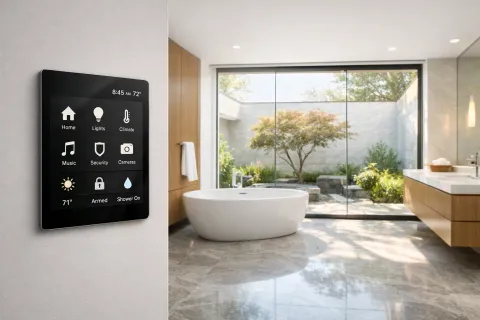
- 4. Crestron home-systems integration. Highest-end Crestron-equipped residences integrate smart glass via the Crestron AV system, often as part of a single touchpanel that controls glass, lighting, audio, video, climate, and security. Typically spec’d on Beverly Hills, Bel Air, and Holmby Hills luxury residential.
- 5. Voice-assistant integration (Alexa, Google Home, Apple HomeKit). All major voice assistants now support switchable glass via the Lutron, Savant, or direct-product bridge. “Alexa, frost the master bath” or “Hey Google, clear the front-door glass” — voice integration is the lowest-friction layer for daily-use scenarios.
- 6. Smartphone-only direct app control. For homes without an existing smart-home hub, the manufacturer’s smartphone app provides direct switchable-glass control without needing Lutron or Savant. A lower-cost integration path that still delivers app-based scene control and scheduling.
- 7. Scheduled-mode automation (sunrise / sunset / time-based). Tying the glass into the home’s existing automation hub enables time-based scheduling — bathroom glass auto-frosts at 9pm, front-door sidelight clears at sunrise, west-facing windows frost at peak sun hours for thermal management. Hands-off automation that runs in the background.
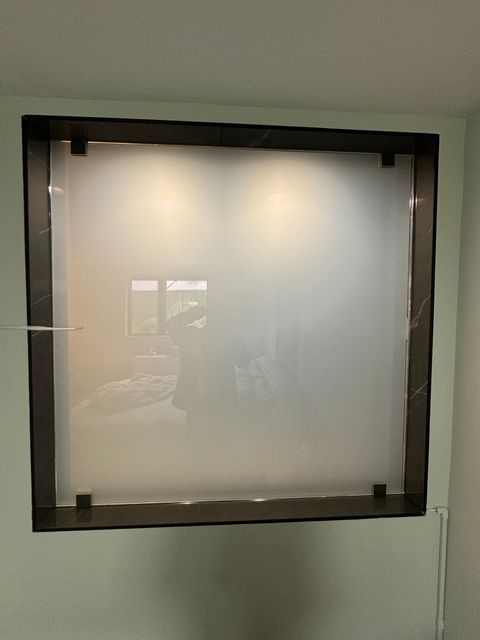
For technical context on the underlying switchable-glass technology that powers all 7 integration setups, see our smart glass PDLC page — covers the spec details that determine product behavior across smart-home control surfaces.
Where the Setup Investment Pays Back Fastest
Across the smart-home-equipped residential installs we ship, the integration spec earns its setup investment back fastest in three home types:
- Lutron- or Savant-equipped luxury residential. The hub is already paid for; adding switchable glass as a scene element is incremental cost with high lifestyle return. Setups #1, #2, and #3 are the typical entry points.
- Smart-home retrofitted mid-century or modern homes. Owners who’ve added Caseta, Hue, Nest, or comparable systems benefit from extending the smart-home layer into privacy spec. Setups #1 and #5 (voice integration) are common.
- Multi-glass residential projects (3+ glass surfaces). Per-glass app control becomes unwieldy at 4+ surfaces — scene-based control via setups #1–#3 dramatically improves daily usability.
Automation Mistakes to Avoid on Any of the 7 Setups
Almost every failed integration we’re called in to fix traces back to one of two patterns: spec’ing the smart-home platform after the glass is already on the wall, or treating the switchable glass as a separate sub-system instead of a single device on the same controller. Both are preventable during the design walk. Beyond those two:
- A standalone wall switch outside the controller. A dedicated switch outside the smart-home controller means privacy state can’t join any scene or routine. Wire the glass as a low-voltage device on the existing controller — Lutron RadioRA, Caseta, and Homeworks all support generic low-voltage outputs that handle PDLC perfectly; same for Savant and Crestron.
- One master switch for multi-room glass. Three rooms on one switch means all-rooms-private or all-rooms-clear. Spec per-room control circuits during initial wiring — the controller can still trigger a global “all private” scene when needed.
- Skipping the multi-user voice test at commissioning. Voice control tied to one Amazon account fails the first time a spouse tries it. Test every household member’s device, and name the glass clearly (not “Bedroom Switch 3”).
- No “power out” brief. Switchable PDLC film defaults to frosted on power loss — which most homeowners actually want, but only after they’re briefed. Without the brief, the first power flicker gets reported as “the smart glass broke.”
- Mixing voltages across driver and controller. Cheap online drivers ship with non-standard voltage outputs that Lutron, Savant, and Crestron don’t expect. Spec a driver from the film manufacturer’s approved-integrator list — the cost difference is negligible.
- No integration documentation at handoff. Provide a one-page integration map — what’s wired to what, on what circuit, controlled by which platform — and tape it inside the breaker panel. Future service calls take 15 minutes instead of 90.
How the Setups Compound Across a Whole-Home Install
The seven setups above don’t sit in isolation — on a typical whole-home smart-glass install (4–8 glass surfaces across bathrooms, bedrooms, French doors, and front-door sidelights), three to five of these integration setups compound on the same project. The cabling spec, driver placement, and BMS integration scale cleanly across rooms because the underlying control logic is the same — only the per-room scene assignment differs. The per-room integration cost drops as the install scales.
The mistakes above compound the same way: recoverable on a single bathroom window, a months-long debugging project when repeated across every room of a 5,000 sq ft home.
For multi-room luxury residential, this means a unified integration standard can serve very different room contexts under one app and one set of physical control surfaces. The integration story becomes a meaningful resale-value contributor as well — buyers in the luxury-residential market expect connected-home spec across all major systems.
The Integration Line in Real Project Math
For a typical LA luxury residential install with Lutron Caseta integration on 4 glass surfaces, the integration setup adds to the base switchable-glass install — the Caseta dimmer modules, the integration scene programming, the smartphone app setup. For Savant or Crestron whole-home integration on 6+ surfaces, integration setup is quoted above base — significantly higher complexity, programmed by certified Savant or Crestron integrators.
For voice-assistant integration (setup #5) layered onto an existing Lutron or Savant install, the incremental cost is essentially zero — the voice bridge is already part of the smart-home hub. For smartphone-only direct app control (setup #6), no additional setup cost beyond the manufacturer’s free app.
A Beverly Hills Front-Door Reference
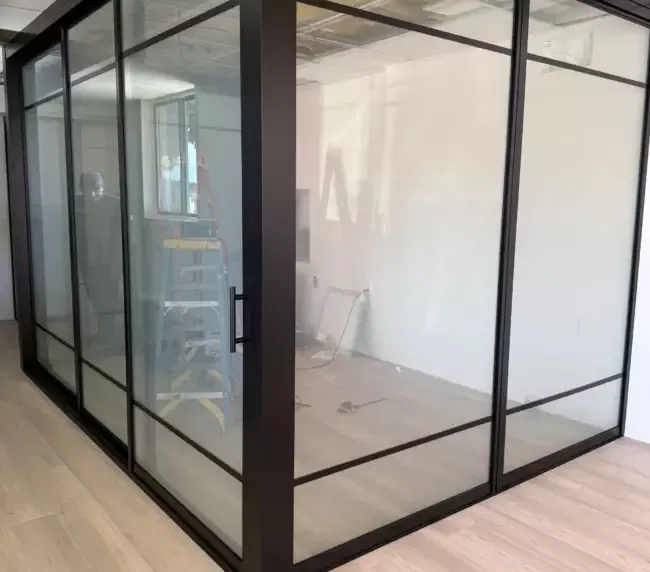
For a concrete example of these setups applied end-to-end on a single residential project, our Beverly Hills front-door install hits four of the seven directly. Lutron Caseta integration on the front-door sidelight glass (setup #1), voice control via Alexa (setup #5), scheduled-mode automation for sunrise/sunset (setup #7), and smartphone fallback control (setup #6) — all unified under one Caseta scene that triggers from the existing keypad ecosystem.
It’s also an example of the mistakes list caught in time: the original spec had a standalone switch and no Lutron tie-in — both fixed during the design walk, before any glass was ordered.
Full project breakdown: smart glass front door in Beverly Hills — single residential scope, full integration playbook applied.
Planning a Smart-Home-Integrated Switchable Glass Install?
The fastest way to a real number is a free written estimate. Tell us the room, the rough glass dimensions, and whether it is a retrofit or new construction through our contact page, and we will send pricing back in writing — no obligation to book anything.