
Smart Glass for Culver City Offices: 7 Real Uses (2026)

Culver City has quietly become one of LA’s densest creative-office submarkets — Sony, Amazon Studios, and a wave of tech and post-production tenants have reshaped how the area’s office stock gets used. Glass-walled conference rooms, hybrid-work home offices, and small commercial suites all hit the same privacy challenge: open during the work day, private when the call goes confidential, no compromise on daylight.
This guide walks seven real use cases for smart glass for Culver City offices, drawn from actual residential and commercial installs we’ve shipped across the area in the last 12 months. Every use case below has run end-to-end on a real project — none are speculative.
Why Switchable Glass Fits the Local Submarket
Culver City’s office mix skews toward mid-size creative and tech tenants in renovated industrial and Class B+ commercial — different from Beverly Hills (luxury residential) or Santa Monica (corporate Class A). The privacy patterns are correspondingly different: more open-plan with bookable conference rooms, more home-office hybrid setups in the residential stock, and more storefront-adjacent small commercial where glass is part of the brand. Switchable smart glass fits each of these patterns specifically because it’s privacy-on-demand rather than privacy-permanent.
The seven uses below cover the patterns we see most often on Culver City projects.
7 Real Uses, From Conference Rooms to Storefronts
- 1. Bookable conference-room glass walls. Most Culver City creative offices run open floor plans with 2–4 bookable conference rooms ringed in glass. Switchable film on the conference glass lets the room flip from “visible and approachable” to “confidential” in about a second — no curtains, no acoustic foam panels visible from the floor.
- 2. Hybrid-work home-office partitions. The Culver City residential stock includes a lot of converted lofts and split-level homes where a hybrid worker carved out a home office from a shared space. Switchable film on the partition glass gives camera-ready privacy on demand without committing the partition to permanent frost.
- 3. Small-commercial street-facing glass for design firms. Culver City has a dense pocket of design studios, architecture firms, and post-production houses with street-facing glass facades. Daytime clear shows the brand and the work; evening frosted protects the workspace. Same window, two modes.
- 4. Home-office French-door installs in residential conversions. French doors separating a home office from the rest of a residence are a common Culver City configuration. Switchable film on the door glass keeps the office camera-ready during work hours and visually closes off when work ends.
- 5. Bathroom-adjacent home offices in older apartments. Several of Culver City’s older multifamily properties have unconventional floor plans where a home office shares a wall with a bathroom or bedroom. Switchable film on shared interior glass gives privacy without losing the borrowed light from the adjacent room.
- 6. Conference-room glass with brand-logo frost. Custom-cut switchable film with a frosted-only brand mark works particularly well for the design and creative tenants in the Culver City market — the brand shows up in privacy mode, disappears in clear mode, and lives on the glass surface rather than printed signage.
- 7. Street-side small commercial with after-hours brand display. For Culver City retail-adjacent offices on Washington Boulevard or Venice Boulevard, switchable film handles daytime clear (storefront merchandising) AND after-hours frosted (security + branded display) on the same glass.
Where It Earns Its Cost Most Clearly
Three Culver City office types make the strongest economic case for switchable glass:
- Mid-size creative offices with high tenant turnover. Switchable film is tenant-configurable via control system; one install covers the building’s lease cycles instead of being torn out and replaced at every turnover.
- Converted residential home-offices. Privacy-on-demand without permanent visual commitment lets the home office return to full residential use when the homeowner moves on.
- Street-facing small commercial with brand-defined glass. The dual-mode use of clear-during-day + frosted-after-hours is uniquely valuable on Culver City’s high-foot-traffic corridors.
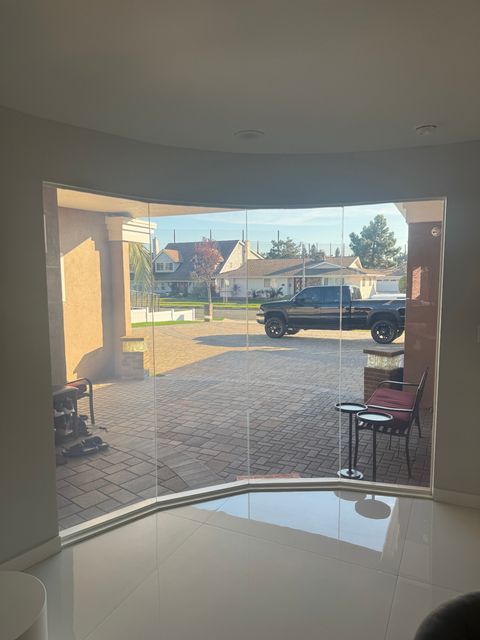
For broader context on the install-side mechanics across the LA region, see our smart glass installation in Los Angeles overview — same install process applied across LA-region cities.
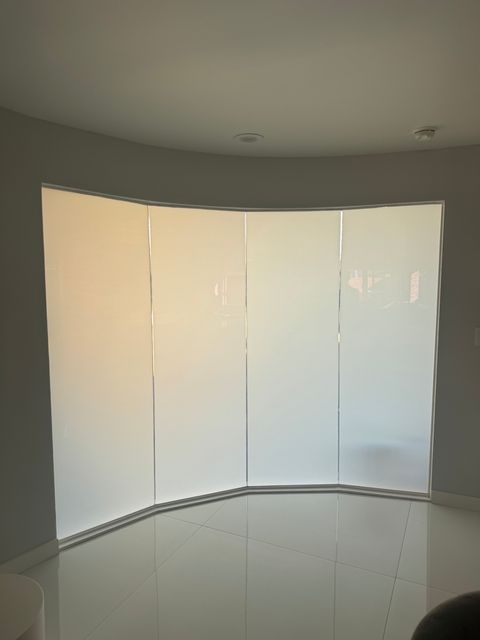
A Buena Park Home-Office Reference
The cleanest example of the home-office pattern (use case #2 above) is a study-room install we shipped recently in Buena Park. Same hybrid-worker scenario, same converted-home-to-home-office pattern that Culver City sees constantly. The Buena Park install ran clean across the standard 8-day timeline; control wired to wall switch + smartphone app.
Full project breakdown: smart glass in a Buena Park study room — same use case as Culver City home offices, single residential scope.
Planning a Culver City Office Install?
If price is what you are weighing, start on our smart glass cost page for the published per-square-foot numbers, then send us your details and we will turn that into a firm quote for your actual glass.