Smart Film for Instant Privacy: 5 Essential Facts (2026)
The question we hear most often — usually right after someone touches a frosted panel and sees it flip clear — is “so how does switchable film actually work?” The answer is simpler than people expect.
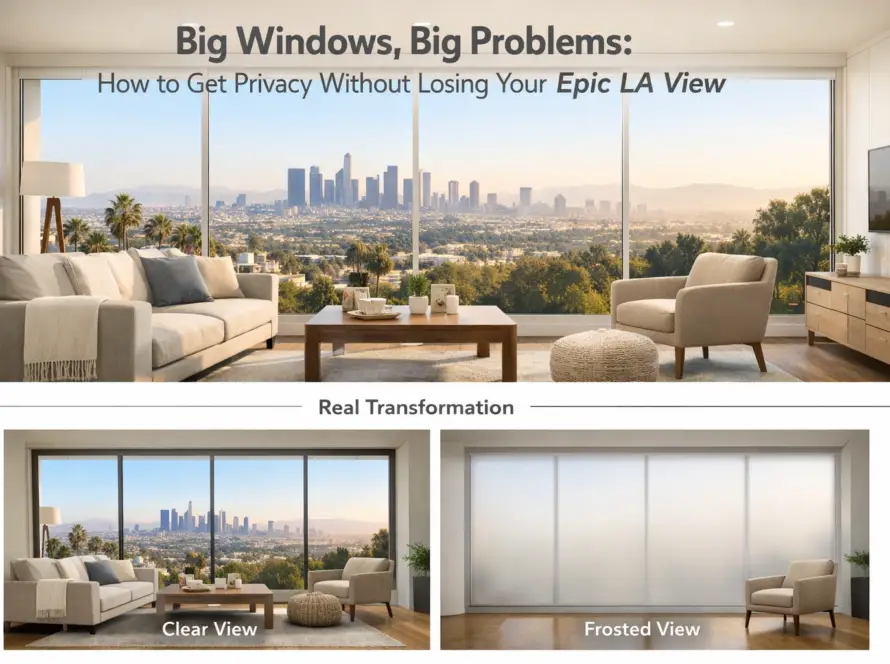
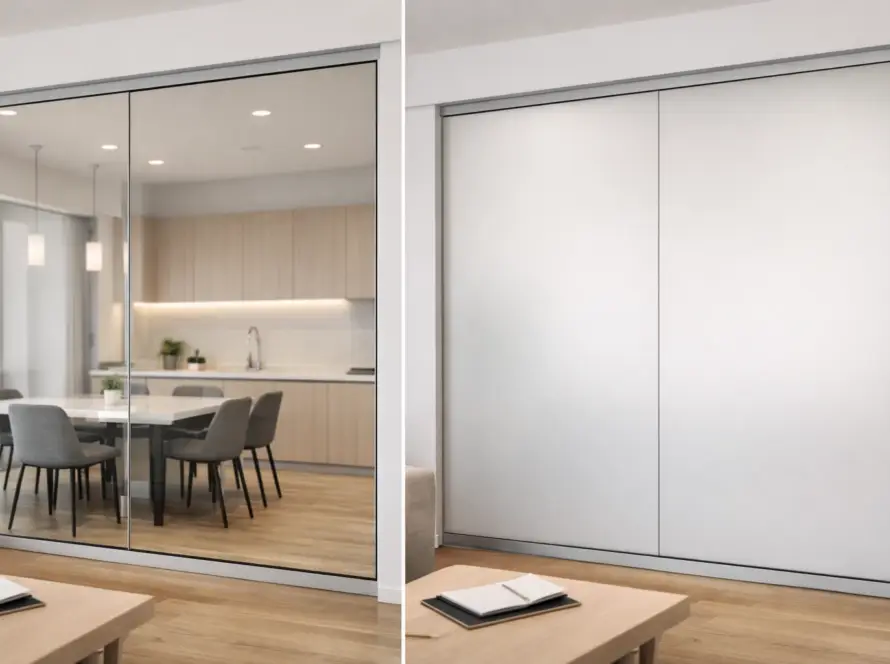
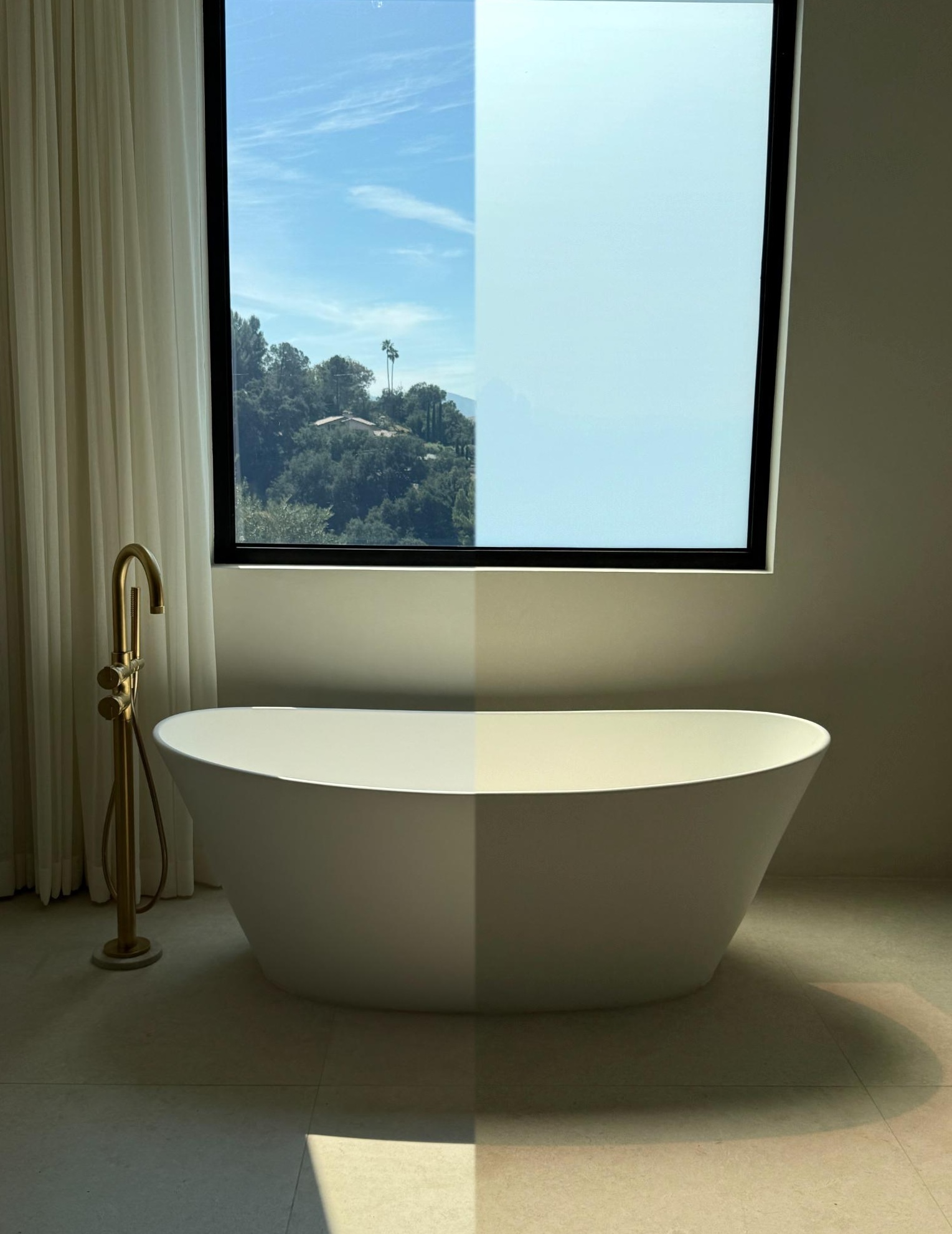
Smart film for instant privacy is a thin switchable layer bonded to existing glass. Power off, it scatters light and reads as fully frosted. Power on, it aligns and reads as crystal clear. No mechanical blinds, no motorized shades, no trade-offs. This guide walks through the 5 essentials you actually need to know before spec’ing or installing it.
The Problem — Privacy That Can’t Be Instant
Before switchable film existed, privacy on a glass window meant a compromise you couldn’t undo in the moment:
- Blinds or drapes block light along with sightlines, and they have to be opened and closed by hand every time.
- Static frosted vinyl is permanent — once applied, the window is frosted 24/7, even when you want the view back.
- Tinted glass darkens the room without really hiding what’s behind it.
None of these flip. None respond to context. The window’s state is set on install day, and that’s what you live with.
The Solution — Smart Film for Instant Privacy
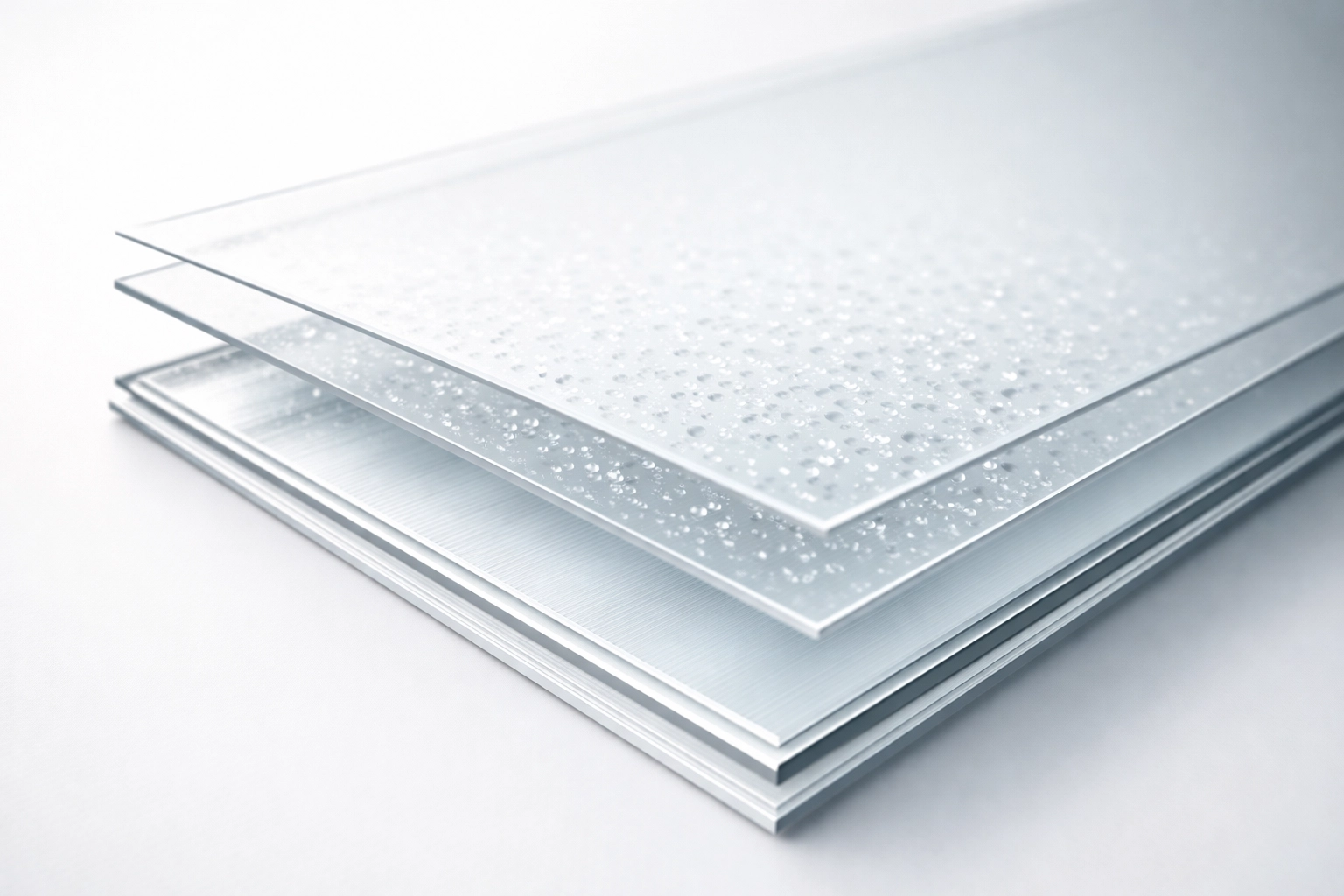
Smart film for instant privacy changes the problem by making the glass itself switchable. When the film is energized, its internal particles align and let light pass through cleanly — the glass reads as clear. When the power drops, the particles scatter, and the glass reads as fully frosted. The transition takes about a second, and it’s reversible indefinitely.
That’s the whole idea. No motors, no moving parts, no maintenance cycle. Just a thin film, a low-voltage power supply, and a switch.
The 5 Essential Facts About How Switchable Film Really Works
Across the hundreds of 50–100 sq ft installs we’ve shipped in Los Angeles, five things consistently matter more than the deep tech spec sheets:
- 1. It’s applied to existing glass, not into the glass. The film bonds to the interior face of a window or partition. You don’t have to rip out glazing to retrofit — that’s the main reason it’s the default upgrade path.
- 2. It needs low-voltage power, wired like any light circuit. A small driver steps mains power down to what the film uses. The switch itself feels and behaves exactly like a dimmer.
- 3. Default state is frosted. When the power is off, the film is opaque. A power failure defaults to privacy, not to exposure — clients consistently mention appreciating this without us having to explain it.
- 4. The transition is instant enough that people notice it. About one second, clear to frosted or back. Fast enough to feel responsive in a meeting. Fast enough to feel like magic the first time.
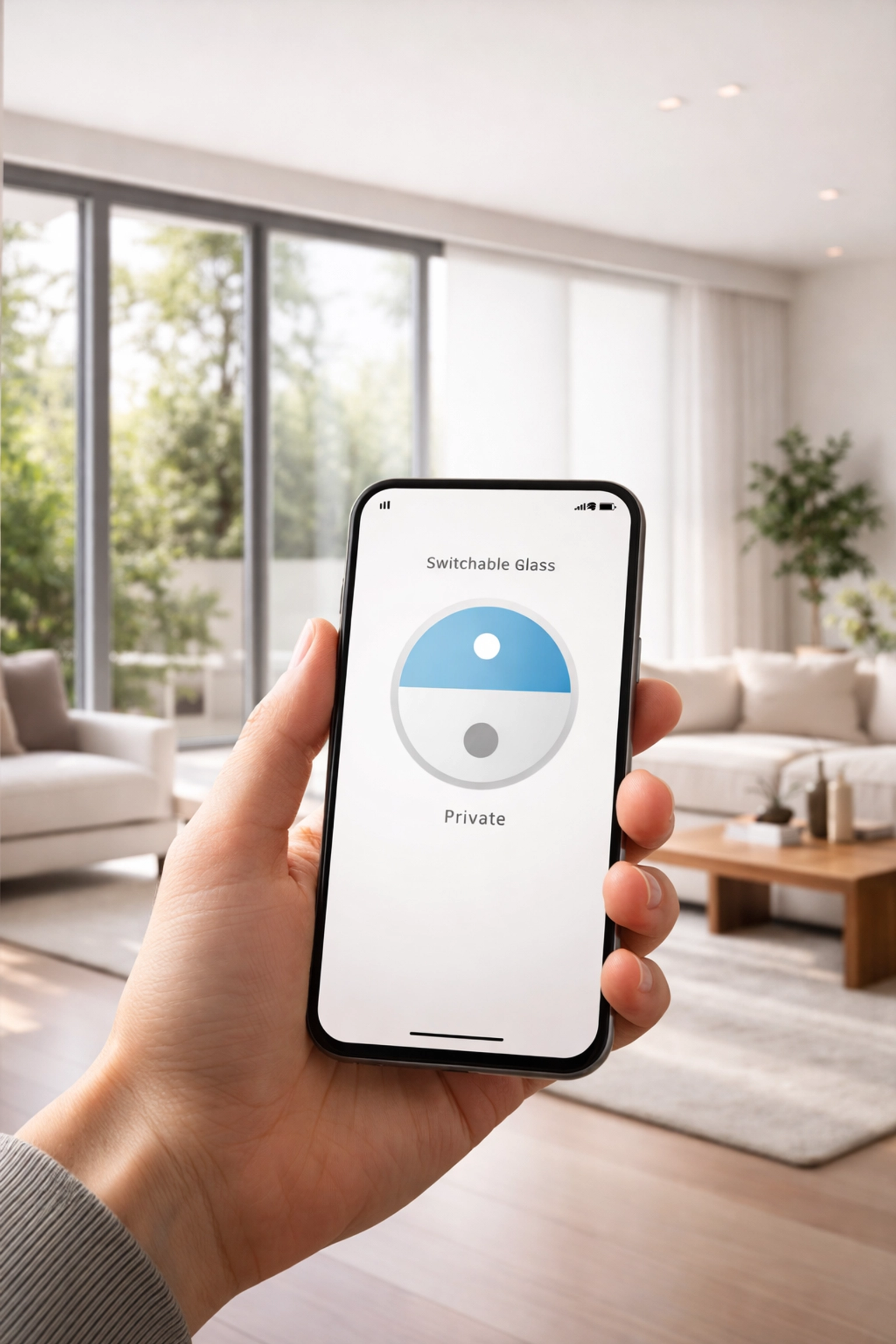
- 5. Controls can be layered. Wall switch is the default; remote, app, and smart-home integration (Lutron, common voice assistants) stack on top if you want them. We wire most 2026 installs to be smart-home-ready even when the client isn’t using an app on day one.
Where Smart Film for Instant Privacy Fits Best
The rooms where smart film for instant privacy earns its price are the ones where privacy is situational — you want it on demand, not permanently.
- Medical and clinical rooms — exam rooms, consultation rooms, and surgical suites where the same space alternates between open collaboration and private patient time.
- Conference rooms and private offices — glass partitions that stay clear most of the day and frost for focused calls, interviews, or confidential discussions.
- Residential bathrooms, bedrooms, and street-facing windows — rooms that feel open during daylight but expose you to sightlines once the sun drops.
- Storefronts and retail display glass — daytime visibility, after-hours privacy, no shutters required.

A Real Medical-Office Parallel in Beverly Hills
For a concrete example of switchable film doing exactly the job it’s designed for, our install inside a Beverly Hills surgical practice is the cleanest parallel. The clinic needed glass that was open and welcoming during consultations and fully private during procedures — the switch happens multiple times a day, and traditional privacy fixes couldn’t keep up.
Full project breakdown: smart glass in a Beverly Hills surgical clinic — same technology as this explainer, scoped to a real clinical workflow.
Planning Your Own Install?
If you’ve got a room — medical, office, or residential — where privacy needs to be there when you want it and gone when you don’t, switchable film is usually the cleanest answer. We’ll scope it against your space and your controls.
Contact Smart View for a straight quote on a setup that matches your room size, control preference, and install timeline.