
PDLC Smart Film Power: Watts Per Square Meter

PDLC smart film power consumption runs about 5 watts per square meter — roughly half a watt per square foot — and the film draws that only while it is powered clear. Frosted, its unpowered resting state, uses no electricity at all. Even a wall-sized run of switchable film draws less than a single LED bulb.
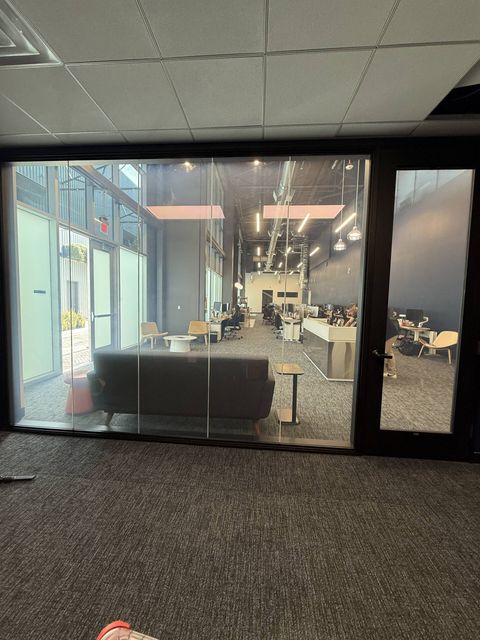
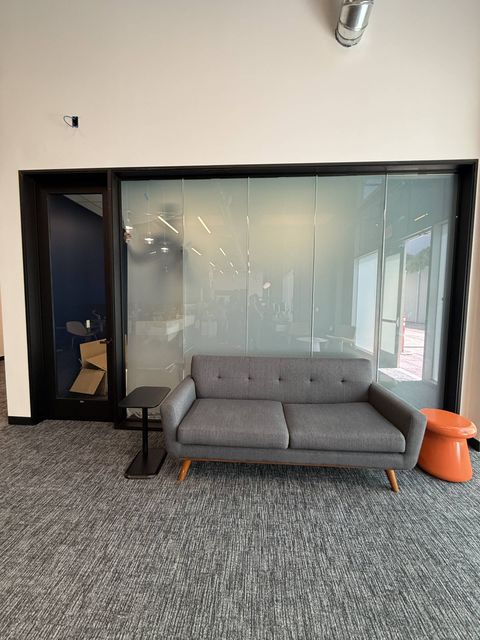
The question comes up in almost every estimate, and it usually arrives with the wrong mental picture. "Electric glass" sounds like an appliance, so buyers brace for heater-sized numbers. The reality is closer to a phone charger, because the electricity is not heating or moving anything — it is only holding microscopic crystals in line.
Where the electricity actually goes
Inside the film, liquid-crystal droplets sit scattered in a polymer layer. Scattered droplets scatter light — that is the frost. A low AC voltage, stepped down to 60V by a transformer, lines the droplets up so light passes straight through and the glass reads clear. Holding that alignment is an electric field, not a current doing work, which is why the draw stays in single-digit watts per square meter. Cut the power and the droplets relax back to scattered: the film frosts on its own, at zero draw. Privacy is the default; electricity is only ever spent on transparency.
What a real installation draws
Numbers per square meter stay abstract until they land on a real wall. Our smart glass partition wall at an LAX-area office in Inglewood is a useful benchmark: five floor-height switchable panels plus a matching door, 75 square feet of active film separating a guest lounge from the open office. That is about 7 square meters — roughly 35 watts with every panel held clear at once. The ceiling lights over the same lounge use more. Scale the math to your own project and it stays boring in the best way: a bathroom window is 1–2 watts, a conference front maybe 40, and none of it changes how the rest of the room is wired.
What switchable film adds to an electricity bill
Take that office wall and run it hard: clear ten hours a day, five days a week, at Los Angeles electricity rates of around thirty cents per kilowatt-hour. That is about 0.35 kWh a workday — somewhere between two and three dollars a month. A residential window that rests frosted most of the day rounds to zero, because the resting state is free. The pattern surprises people: the more privacy you use, the less you spend. Budget-wise, the meter is a rounding error — the real number to understand is the installation itself, which the smart glass cost page breaks down by project type.
Does the transformer change the math?
Every installation includes a step-down transformer that converts household power to the film's 60V AC. It is sized to the total film area it serves — one per switching zone — and it adds only a small idle draw of its own when the film is frosted, single-digit watts on typical residential units. The smart glass transformers page covers sizing and replacement units in detail, and the sizing rule itself — how many watts a given square footage of film needs — is worked through in what size transformer your smart film needs. The wiring itself is low-voltage work our own licensed crew (CA lic. #1134029) handles as part of the install, so the electrical side arrives planned, not improvised.
Power questions buyers ask before installing
Does smart glass need electricity?
Yes, but only to be clear. Smart glass and smart film need a small, steady low-voltage supply from a transformer to stay transparent; with the power off, they rest frosted. That means a wired connection to every switching panel, planned before install day, and no batteries to replace. The draw is modest, as the real-installation numbers above show.
Does smart film use electricity when it is frosted?
No. Frosted is the unpowered state — the film sits at zero watts until you switch it clear. A power outage simply leaves the glass private, which is the fail-safe direction most owners prefer.
Can the film stay clear all day, every day?
Yes. Quality PDLC film is rated for 80,000+ hours in the powered-clear state — nine-plus years of continuous use — and most rooms switch far less than that in practice. Leaving an office front clear through every working day is exactly what the film is built for.
Do smart glass panels draw more than retrofit film?
No. A laminated switchable glass panel carries the same PDLC layer sealed inside the glass, so the per-area draw is the same. What changes between the two is construction and where each belongs — not consumption. Both are described, with the full spec table, on our PDLC smart film page.
How much does switchable film cost to install?
A single small window usually starts around $1,500 fully installed and scales from there with glass area and controls. Send photos and rough dimensions to Smart View Film Solutions at (866) 728-9888 and you'll have real numbers within one to two business days.
If the running cost was the last open question, the next step is sizing the install itself. Request your free estimate with photos and rough measurements, and we'll come back with panel-by-panel numbers within one to two business days.