Smart Film for Workspace Layouts: 7 Top Patterns (2026)
Workspace layouts in modern LA commercial buildings change more than they used to. Hybrid-work patterns, lease-cycle tenant turnover, and the move from fixed-office to reconfigurable floor plans all push privacy spec toward solutions that adapt rather than persist. Smart film for workspace layouts is the privacy treatment that scales across those changes — one product, multiple layout patterns, no rip-and-replace at every reconfiguration.
This guide walks the seven smart film for workspace layouts patterns we ship most often on LA commercial projects. Each comes from real installs across mixed-use offices, creative-tech floors, professional-services tenants, and hybrid-work conversions in the last 12 months.
Why Smart Film for Workspace Layouts Beats Layout-Specific Spec
Most legacy privacy spec is layout-locked — frosted vinyl on specific glass panels, blinds on specific windows, partition walls in specific positions. When the layout changes, the spec gets ripped out and rebuilt. Switchable film inverts that pattern: the privacy spec stays put through layout changes because it’s controllable rather than permanent. The seven patterns below are the layout-flexibility wins that make this product family fit modern commercial floor planning.
The 7 Smart Film for Workspace Layouts Patterns
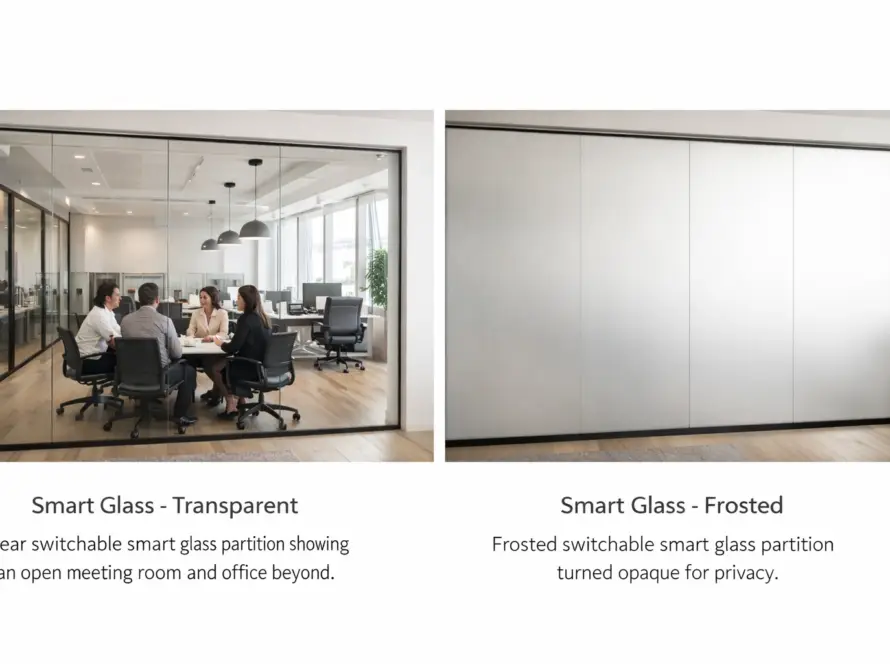
- 1. Reconfigurable conference rooms. Modern open-plan offices increasingly use movable conference rooms that get repositioned every 12–24 months as team structure shifts. Smart film for workspace layouts on the conference glass holds through repositioning — the privacy spec moves with the room rather than getting torn out and reinstalled at each shuffle.
- 2. Per-team privacy zones in open floor plans. Open-plan tenants increasingly want quiet-time and focus-time privacy on team zones without permanently enclosing them. Switchable film on partition glass converts open team zones to private mode on demand, then back to open at the end of the focus block. Particularly common on creative-tech floors.
- 3. Hybrid-work hotelling and bookable spaces. Hotelling and bookable focus rooms need privacy on demand for the booking holder without permanent visual treatment that hurts the room’s open default. Switchable spec on bookable-room glass flips private when the booking starts and clear when it ends.
- 4. Mixed retail-office floor plans on creative tenant floors. Some creative tenants run mixed retail and office layouts on the same floor — showroom space adjacent to working space, brand-display surfaces near collaboration zones. Switchable film on the dividing glass lets the floor present as showroom-forward during client visits and work-forward during deep-work blocks.
- 5. Reconfigurable executive suites. Executive suites in higher-end buildings increasingly support hot-desking by senior leadership rather than fixed-office assignment. Switchable film on the suite glass adapts to whoever’s using the space that week — exec retreating into focus mode, or open-glass leadership-by-walking-around mode.
- 6. After-hours global-private mode. Modern building automation supports closing-routine triggers that flip every glass surface to frosted at the end of the business day — security signal, after-hours visibility reduction, branded after-hours appearance. Switchable spec integrates cleanly with the BMS to support this pattern building-wide.
- 7. Project-room and war-room privacy spec. Project rooms used for sprint sessions, deal rooms, and board-prep need full confidentiality during use and full openness between use cycles. Switchable film delivers both modes from one product — the room stays open and inviting between sprints, fully private during them.
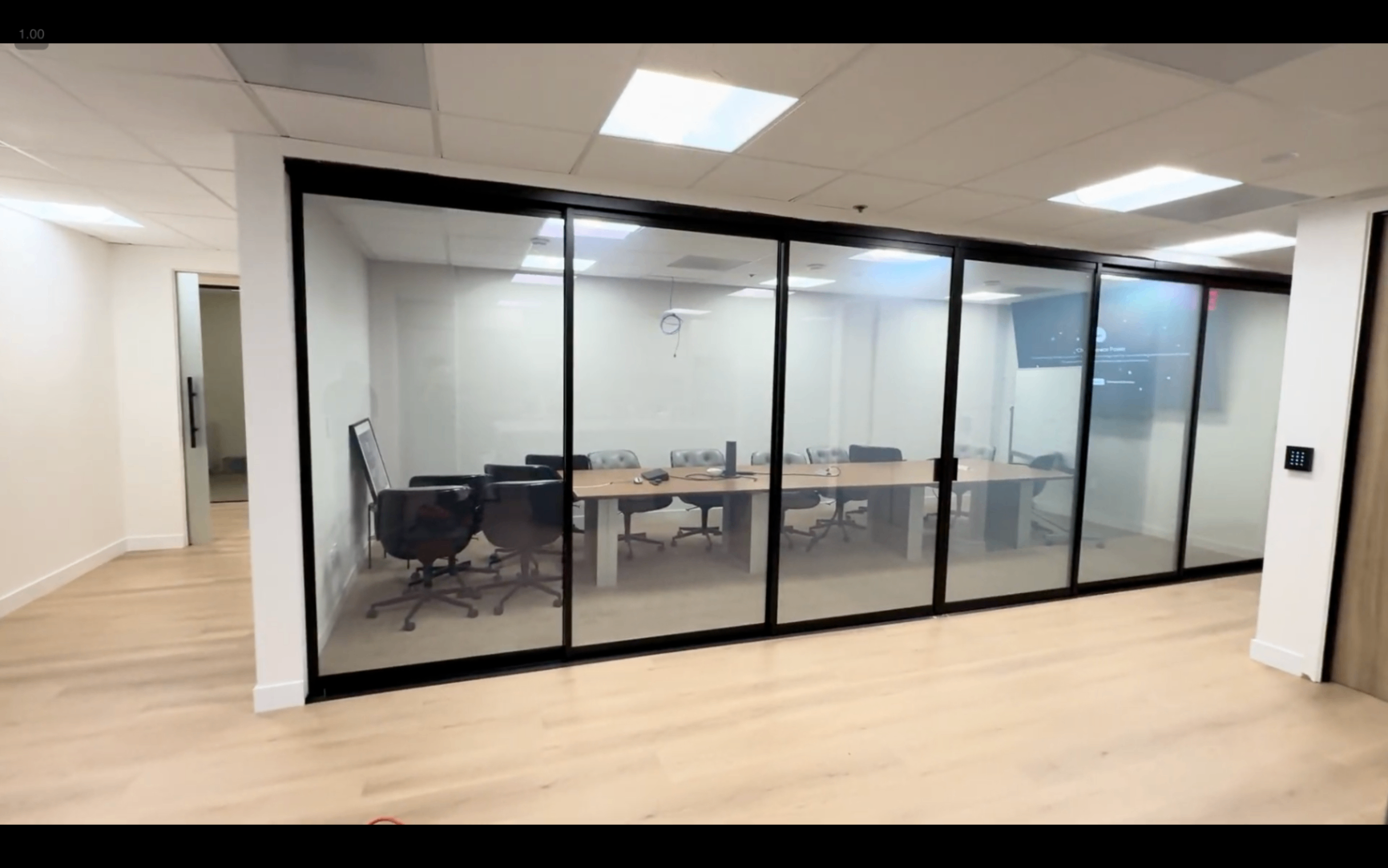
For broader install context across LA-area service that supports smart film for workspace layouts deployments, see our smart film installation in Los Angeles overview — covers the install-side discipline and BMS integration patterns for commercial workspace projects.
Where Smart Film for Workspace Layouts Pays Back Most Clearly
Across LA-area commercial installs we ship, the smart film for workspace layouts spec earns its cost back fastest on three workspace types:
- Creative-tech tenants on 5,000–25,000 sq ft floors. Patterns #1 (reconfigurable conference rooms) and #2 (per-team zones) compound — the layout shifts every 12–18 months on these tenants, and the recurring spec-rebuild cost dominates the math without switchable film.
- Hybrid-work converted offices in older building stock. Patterns #3 (hotelling) and #5 (reconfigurable execs) are decisive — the conversion strategy depends on layout flexibility, and switchable spec is the privacy treatment that supports flexibility cleanly.
- Mixed-use creative floors with retail-adjacent space. Pattern #4 (mixed retail-office) plus pattern #6 (after-hours global-private) compound on the showroom-forward tenants who need both daytime brand visibility and after-hours security.
How Smart Film for Workspace Layouts Patterns Compound Across a Floor
The seven patterns above don’t sit in isolation — on a typical mid-size LA commercial floor (10,000–20,000 sq ft, 25+ glass partitions), four to six of these smart film for workspace layouts patterns compound on the same install. The cabling spec, driver placement, and BMS control scale cleanly across surfaces because the underlying product is the same — only the layout context differs by glass surface.
For multi-surface workspace installs, this means a floor-wide switchable-film standard can serve very different layout patterns under one BMS or app — reconfigurable conference rings, per-team zones, hotelling rooms, executive suites, after-hours global-private mode — all unified under one control system.
Smart Film for Workspace Layouts in Real Project Math
For a typical mid-size LA creative-tech floor (10,000 sq ft, 4 conference rooms + 8 partition surfaces + 2 hotelling rooms = ~250 sq ft of glass), smart film for workspace layouts spec runs roughly $18,000–28,000 installed. The recurring alternative cost — frosted vinyl reapplications at every layout shift, blinds replacement at tenant turnover, partition rebuild at reconfiguration — runs $5,000–8,000 per year across that surface count, so the switchable spec pays back in roughly 4–6 years on layout-flexibility savings alone.
For a Class A multi-tenant floor with mixed creative and professional-services tenants (~500 sq ft of glass), spec runs $36,000–55,000 installed. Same product family, scaled — the per-surface cost drops as the install scales across the floor.
A Reseda Storefront Reference
For a concrete example of smart film for workspace layouts patterns applied to a single project, our Reseda storefront install hits patterns #4 (mixed retail-office) and #6 (after-hours global-private) directly. The storefront spec ran clear during business hours and frosted after closing — supporting both the daytime merchandising visibility and the after-hours security signal that retail tenants require. Same product, same control logic, two distinct layout patterns from one install.
Full project breakdown: smart glass storefront in Reseda — single retail scope, mixed-use pattern playbook applied.
Planning a Workspace-Layout Smart Film Spec?
If you’re scoping switchable film on a commercial workspace project — new build-out, tenant improvement, layout reconfiguration, or building-wide upgrade — a 30-minute consult can identify which of the seven smart film for workspace layouts patterns fit your scope before glass is ordered. No sales pressure — straight read on which patterns drive the strongest payback.
Contact Smart View with the workspace type, tenant mix, total glass square footage, and your layout-flexibility expectations, and we’ll outline which patterns are most relevant.