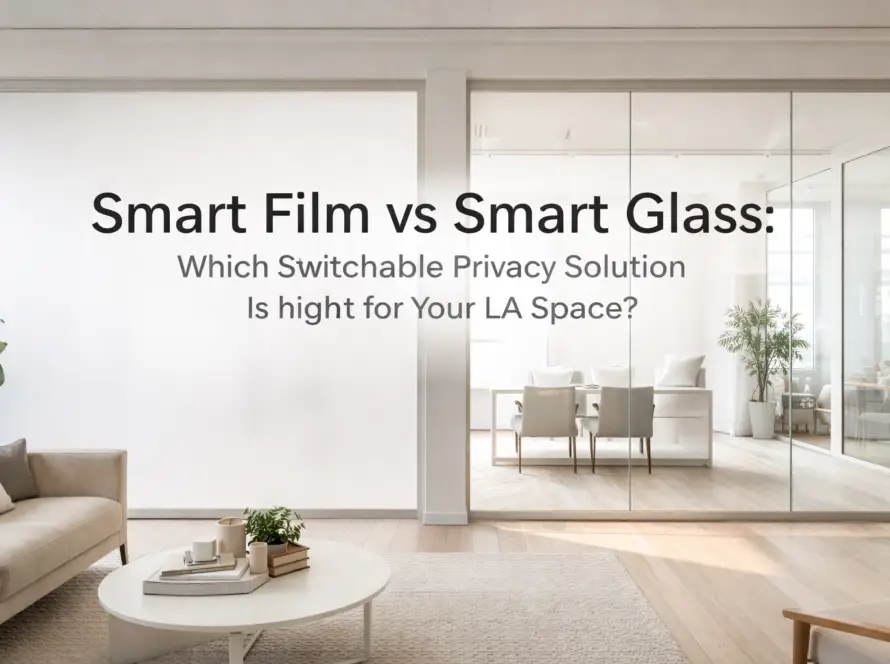
Common Office Privacy Film Mistakes: 7 Top Fixes (2026)
Every commercial office glass spec call starts with the same conversation. The developer, property manager, or GC wants privacy in conference rooms, executive offices, and break-glass partitions — but they’re getting it wrong in predictable ways. The same seven mistakes repeat across every spec we review.
This guide catalogs the common office privacy film mistakes we see in LA-area commercial buildouts and the fixes we apply before the glass goes in. Each fix saves a week of rework, a tenant complaint, or a chunk of the amenity budget — sometimes all three on the same project.
The Pattern Behind These Common Office Privacy Film Mistakes
The mistakes aren’t random — they cluster into two categories: picking the wrong privacy mechanism (blinds, frosted glass, cheap DIY film) and underspec’ing the install (ignoring HVAC, acoustic, or tenant-turnover impact). Almost every spec error we fix lives inside one of those two buckets.
Here are the 7 common office privacy film mistakes we flag on every project review, with the switchable-film fix for each.
Mistake #1 — Relying on Blinds or Curtains for “Privacy”
The problem. Blinds look like a cheap privacy solution on the spec sheet but fail in practice: they collect dust, break, tangle, look residential in a Class A commercial context, and require someone to physically open/close them every transition.
The fix. Switchable smart film on the existing glass gives the same privacy-on-demand effect without any mechanical parts. One wall switch or BMS tie-in controls the whole room. Maintenance cost over 10 years is a fraction of replacing blinds on commercial turnover cycles.
Mistake #2 — Installing Permanent Frosted Glass Instead of Switchable
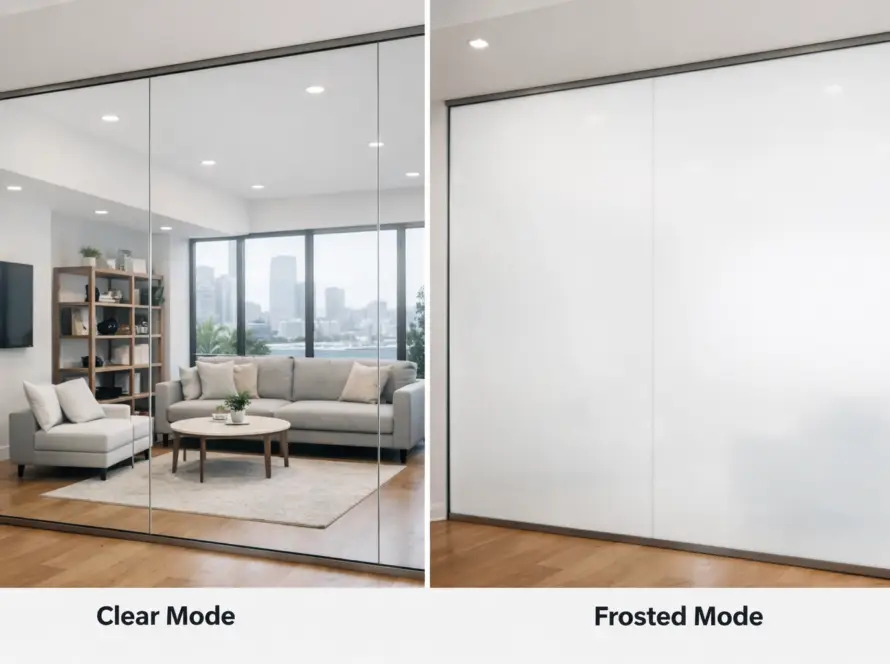
The problem. Permanent frosted glass solves privacy but locks the space into a single mode. Conference rooms and executive offices need to flip between open/collaborative (clear) and focused/private (frosted) throughout a workday.
The fix. Spec switchable film (for retrofits) or laminated smart glass (for new construction). Either gives you on-demand transitions in about one second. The space can be collaborative in the morning and confidential by 2pm without any physical reconfiguration.
Mistake #3 — Sacrificing Natural Light to Solve for Privacy
The problem. A common reaction to privacy concerns is to reduce glazing or darken the glass — but daylight exposure is one of the highest-leverage amenity factors in Class A office lease-up.
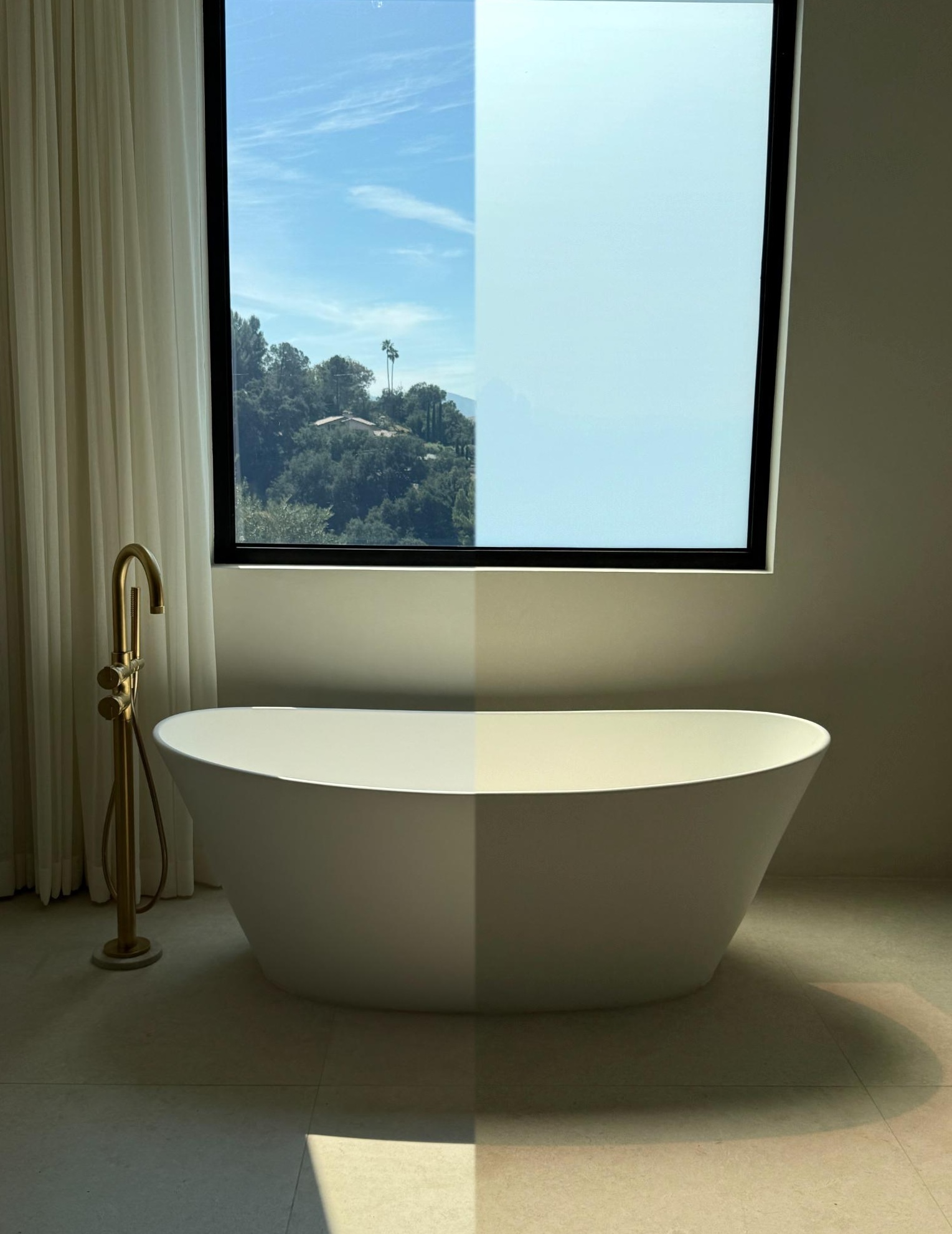
The fix. Smart film in frosted mode is obscuring, not darkening. Light still comes through; sightlines don’t. The natural-light story your leasing deck promised stays intact while privacy still works when it’s needed.
Mistake #4 — Underestimating Tenant Turnover Costs Without Switchable Glass
The problem. Commercial tenants have different privacy preferences. A law firm wants frosted; a design studio wants mostly clear with occasional privacy. Static treatments (frosted vinyl, blinds) get ripped out and replaced at every turnover — a recurring capex line item.
The fix. Switchable film is tenant-configurable via a switch or app. One install works for every tenant across the building’s life. The financial model changes from “replace at every turnover” to “install once, reconfigure as needed.”
Mistake #5 — Overlooking HVAC and Energy-Efficiency Impact
The problem. Frosted glass or heavy drapes reduce effective glazing area for thermal gain/loss calculations — or get factored into HVAC sizing incorrectly. Mid-project surprises on mechanical load are expensive and slow to resolve.
The fix. Switchable film has a documented, stable thermal profile (published U-values and SHGC figures). HVAC engineers can design around known numbers from day one instead of “it depends on what tenant does with the blinds.”
Mistake #6 — Neglecting Acoustic Privacy Along With Visual Privacy
The problem. Visual privacy without acoustic privacy is a half-solution. A conference room that goes frosted but still transmits sound through thin single-pane glass doesn’t actually feel private — the client can hear the meeting from the hallway.
The fix. Spec laminated or double-pane glass with switchable film applied to one face. The lamination adds significant STC (acoustic) performance; the film handles visual. Solve both together during glazing spec, not after.
Mistake #7 — Choosing Cheap DIY Film Kits Over Professional Installation
The problem. Commercial buyers occasionally route “glass privacy” through facilities managers who spec cheap Amazon DIY kits. These fail under UV exposure, delaminate within 12 months, and often get installed with visible bubbles. The reputational cost on a Class A asset dwarfs the “savings.”
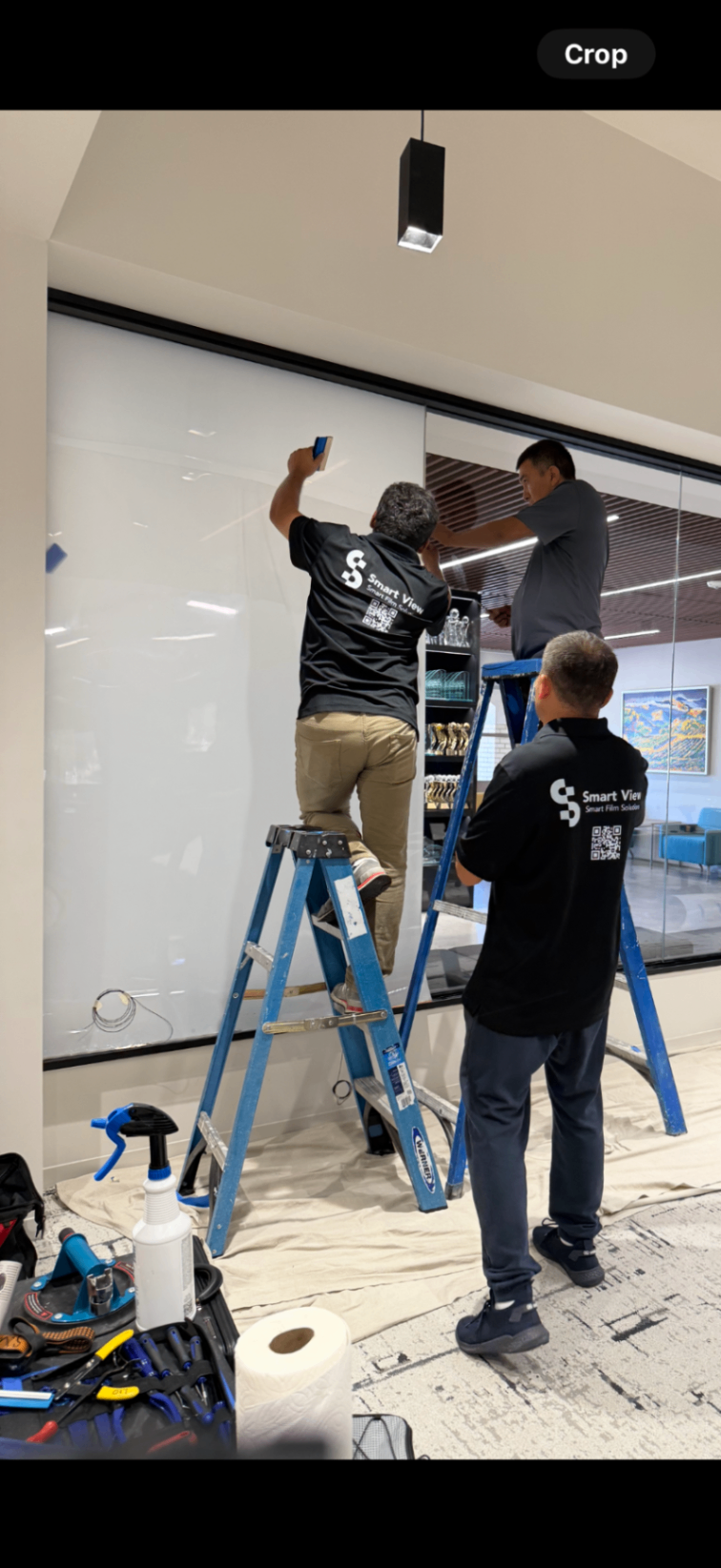
The fix. Specify professional-grade PDLC film with warranted install. The install cost difference vs DIY is typically under 2× on commercial square footage; the quality + lifetime is 10×. The math favors pro installation on every commercial project we’ve benchmarked.
How These Common Office Privacy Film Mistakes Compound on Larger Projects
On a single conference room, any one of these mistakes is recoverable. On a 50,000 sq ft commercial floor with 30+ glass partitions, the compounding is brutal: cheap blinds break across 30 rooms simultaneously, acoustic complaints escalate to facilities tickets, HVAC gets resized mid-project. The pattern we see: small spec errors scale to 10–20× the cost of the original “cheap” decision.
The good news is that none of these mistakes is hard to avoid if the spec is reviewed before the glass is ordered. Most get caught in a 30-minute design-walk we do with the GC or property manager.
A Beverly Hills Conference-Room Install That Avoided All 7
For a concrete example of the full 7-fix playbook applied to a single project, our Beverly Hills boardroom install is the cleanest reference. The client’s spec originally included blinds (mistake #1), standard single-pane glass (mistake #6), and no HVAC-coordination meeting (mistake #5) — we caught all three during design review and reshaped the glazing + film spec before order.
Full project breakdown: smart glass conference rooms in Beverly Hills — same playbook, single real client scope.
Planning an Office Privacy Install?
If you’re spec’ing glass for a new commercial buildout or a tenant-improvement, a 30-minute design review can flush out these common office privacy film mistakes before the glass is ordered. No sales pressure — just a second set of eyes on the glazing + film spec.
Contact Smart View with the project details — floor plan, glazing schedule, tenant mix, timeline — and we’ll tell you which of the 7 mistakes are baked into the current spec and what it takes to fix them.