Switchable Film for Retail Stores: 7 Top Picks (2026)
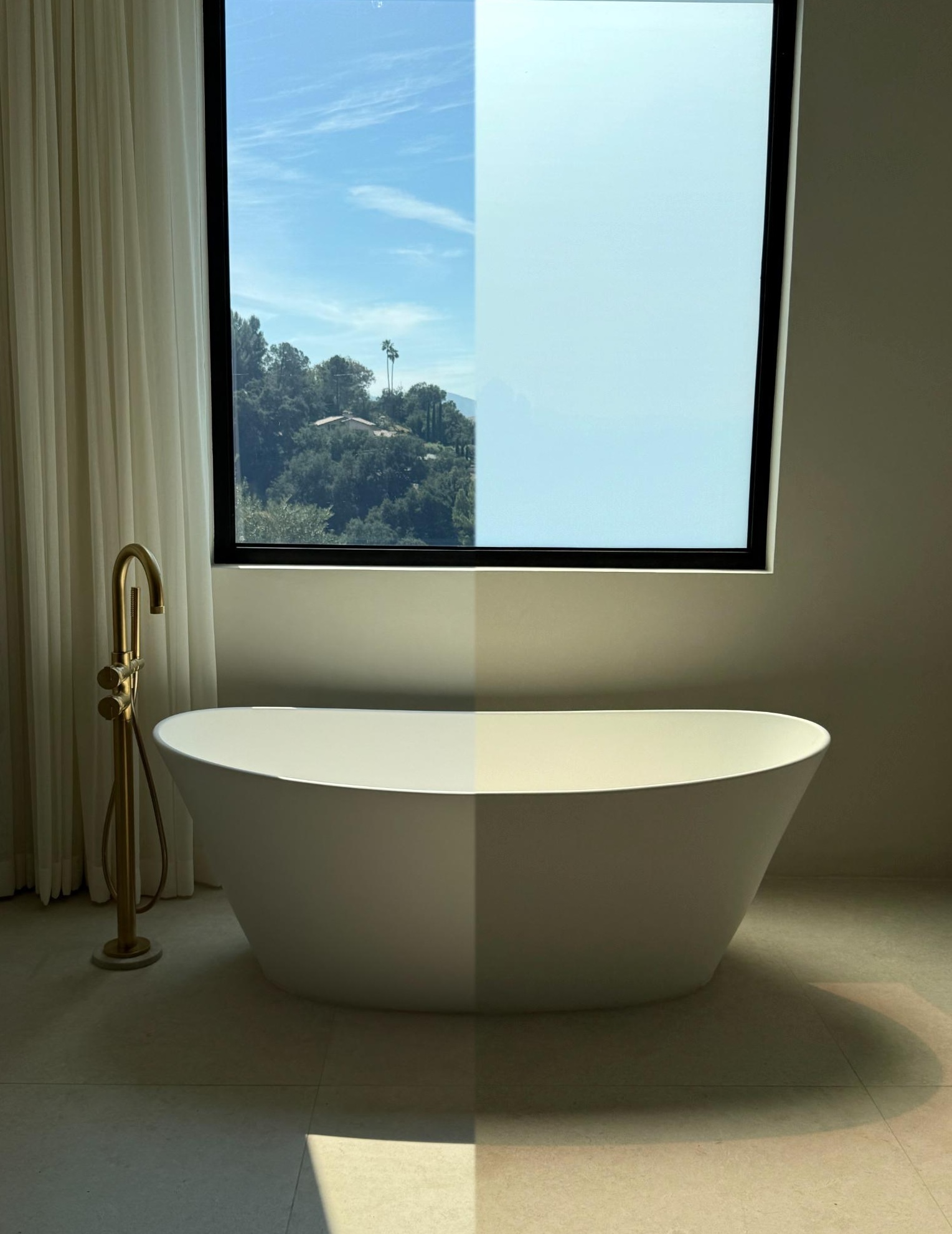
Retail storefronts and in-store privacy spec hit a different math than office or residential. Storefront glass is brand surface — visible during business hours, security surface after hours. Fitting room and back-office glass need privacy on demand without permanent treatments that age the store’s design. Switchable film for retail stores solves both fronts with one product family, and the seven picks below cover the spec patterns we ship most often on LA-area retail installs.
This guide walks the seven switchable film for retail stores picks we recommend on every retail consult. Each comes from real installs we’ve shipped across LA-area boutiques, mid-tier retail, brand flagships, and shopping-district storefronts in the last 12 months.
Why Switchable Film for Retail Stores Fits the Retail Spec
Retail storefront design is increasingly glass-forward — frameless storefronts, floor-to-ceiling glass walls, brand-display windows. Traditional privacy treatments (frosted vinyl, retractable mesh, blinds) compromise the design intent during business hours and don’t scale across multi-store portfolios. Switchable film for retail stores delivers the privacy or after-hours opacity on demand without compromising the glass-forward design vocabulary that retail buyers expect.
The seven picks below are the spec patterns that retail tenants surface most often during the consult.
The 7 Switchable Film for Retail Stores Spec Picks
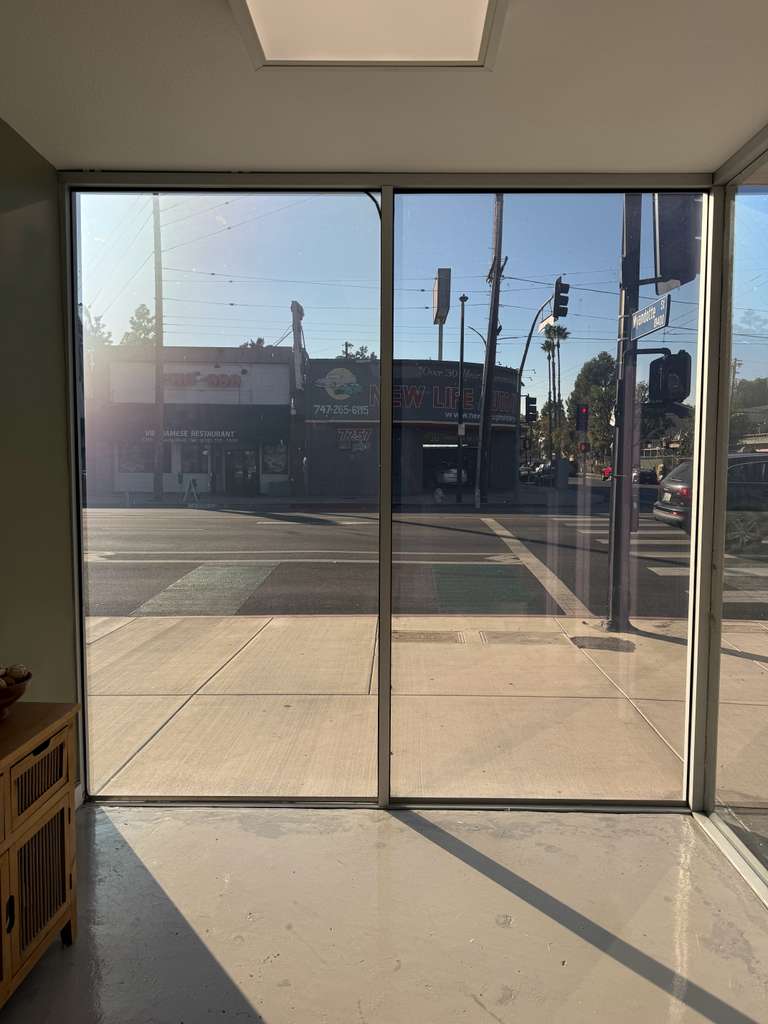
- 1. Storefront-glass after-hours privacy frost. The most common retail spec. Switchable film for retail stores on the street-facing storefront glass stays clear during business hours (full merchandising visibility) and frosts after closing (security signal + reduced smash-and-grab visibility into displayed inventory). Tied to the closing-routine schedule via app or BMS for hands-off operation.
- 2. Fitting-room glass-wall privacy. Modern retail favors open-plan fitting rooms with glass walls instead of curtains. Switchable film on the fitting-room glass gives the customer instant privacy on entry without the visual clutter of curtains — premium experience that supports the store’s brand positioning.
- 3. Back-of-house storage and stockroom privacy. Retail stockrooms and inventory areas need to stay invisible from the sales floor — both for theft prevention and merchandising aesthetics. Switchable film on the stockroom-facing glass stays opaque during business hours and clears for staff visibility during inventory restocking.
- 4. Brand-mark frosted-state custom-cut spec. Custom-cut switchable film for retail stores with the brand logo or wordmark in the frosted state turns the storefront into a brand-display surface during after-hours privacy mode. The brand mark appears when the glass frosts; disappears in clear mode during business hours. Particularly effective for design-forward and luxury retail.
- 5. Cash-wrap and POS-area sight-line management. Many retail formats have a cash-wrap visible from the storefront — exposing register screens, transaction details, and customer payment info. Switchable film on the relevant glass gives the cashier per-transaction privacy on demand without permanent treatments.
- 6. Office and back-office partition privacy. Retail back-office partitions where managers handle scheduling, payroll, and confidential meetings benefit from switchable glass on the partition wall — open and approachable by default, private during sensitive conversations.
- 7. Window-display rotation prep privacy. Retailers who rotate window displays weekly or monthly benefit from switchable film for retail stores on the display glass — frost during display setup so passersby don’t see the merchandising in progress, then clear when the display is reveal-ready. Eliminates the “sorry we’re rearranging” signage entirely.
For broader install context across LA-area retail and commercial service, see our smart film installation in Los Angeles overview — covers the install side at the city-coverage level, with notes that apply equally to retail storefront and office installs.
Where Switchable Film for Retail Stores Pays Back Most Clearly
Across the retail installs we ship, the switchable film for retail stores spec earns its cost back fastest in three retail formats:
- High-foot-traffic street-facing retail (Robertson, Melrose, Abbot Kinney, Larchmont). Picks #1 (after-hours frost) and #4 (brand-mark frosted state) compound — the storefront glass works as both daytime visibility and after-hours brand-display security surface.
- Premium fitting-room retail (boutique, designer, specialty). Pick #2 (fitting-room glass) is decisive on its own — switchable glass replaces curtains as a premium-experience signal. Customers notice; brand positioning benefits.
- Multi-location retail brands with consistent storefront spec. A switchable-film standard across stores supports building-wide design consistency without re-spec at each location, and the after-hours security value scales across the entire footprint.
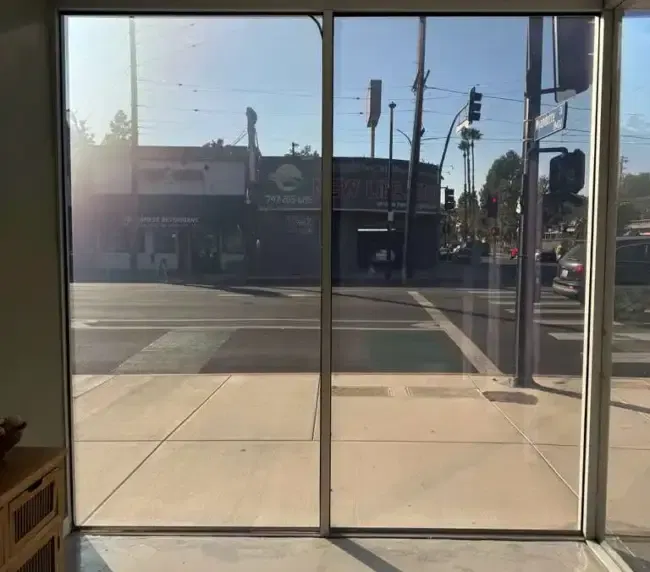
How Switchable Film for Retail Stores Specs Compound Across a Single Store
The seven picks above don’t sit in isolation — on a typical mid-size LA retail store with storefront glass, fitting rooms, stockroom, and back-office partition, four to six of these picks compound on the same install. The cabling spec, driver placement, and BMS or app control scale cleanly across surfaces because the underlying switchable film for retail stores product is the same — only the use case differs by glass surface.
For multi-surface retail specs, this means a store-wide switchable-film standard can serve very different spec roles under one control system — storefront security, fitting-room customer experience, stockroom invisibility, back-office privacy, all unified under one BMS or smartphone app. The per-surface cost drops as the store-wide install scales.
Switchable Film for Retail Stores in Real Project Math
For a typical LA boutique storefront with storefront glass plus 2 fitting rooms (~100 sq ft of glass total), switchable film for retail stores runs roughly $5,500–8,500 installed. For a full mid-size retail spec covering storefront + fitting rooms + stockroom + back-office partition (~250 sq ft total), spec runs $14,000–22,000 installed — the per-surface cost drops as the store-wide install scales.
The recurring alternative cost — frosted vinyl maintenance, blinds replacement, pull-down mesh repairs — runs $2,500–5,000 per year across a mid-size retail store, so the switchable spec pays back in roughly 4–6 years on maintenance alone, not counting the merchandising-visibility and brand-positioning value during business hours.
A Reseda Storefront Reference
For a concrete example of switchable film for retail stores applied end-to-end on a single project, our Reseda storefront install hits four of the seven picks directly. Storefront glass after-hours frost (pick #1) tied to the closing routine, brand-mark frosted-state spec (pick #4) on the primary display window, back-office partition privacy (pick #6), and stockroom-facing glass (pick #3) all on a unified app-control system.
Full project breakdown: smart glass storefront in Reseda — same spec playbook applied to a single retail project.
Planning a Retail Switchable-Film Spec?
If you’re a retail tenant or property manager spec’ing switchable film on a storefront, fitting-room buildout, or full retail tenant-improvement, a 30-minute consult can identify which of the seven switchable film for retail stores picks fit your scope before glass is ordered. No sales pressure — straight read on which picks fit your retail format and brand positioning.
Contact Smart View with the retail format, glass count, and your tenant or brand profile, and we’ll outline which picks are most relevant to your scope.