Modern Retail Storefront Privacy: 7 Top Specs (2026)
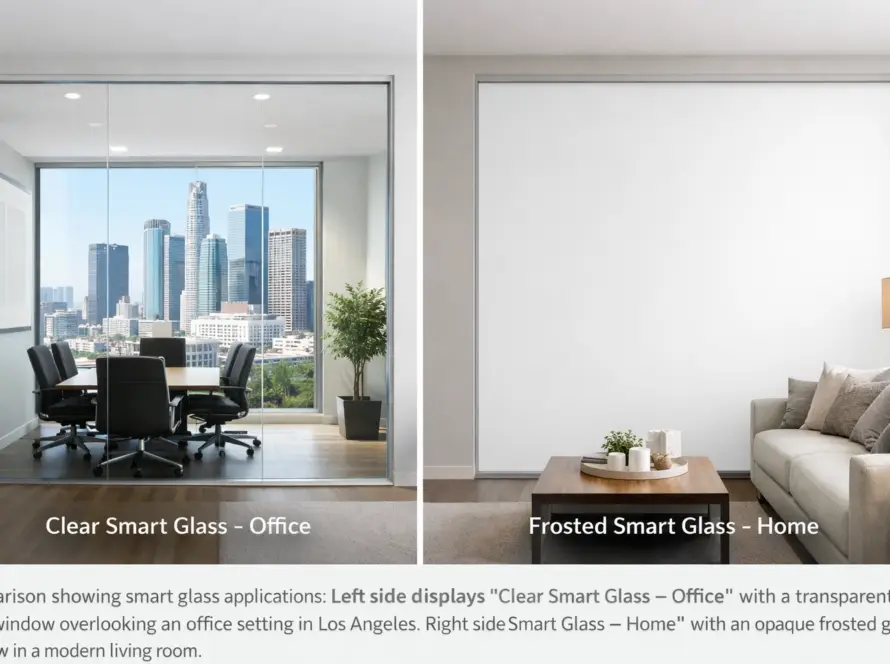
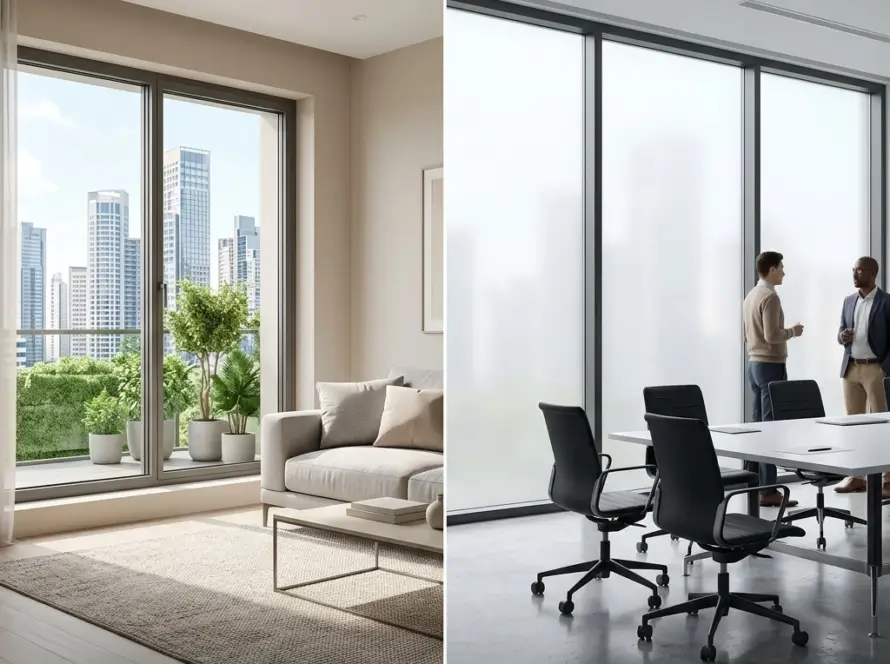
Storefront glass has a specific job that traditional privacy treatments can’t do well: it needs to be transparent during business hours (so the merchandise sells itself), private after hours (so the merchandise isn’t on display when no one’s there to defend it), and adaptable for events, displays, and seasonal resets. Switchable smart glass is the category that handles all three modes cleanly.
This guide walks the seven specs that matter most on modern retail storefront privacy projects: what we spec, what we avoid, and why each detail compounds across the storefront’s lease cycle. Every spec below comes from a real LA-area retail install we’ve shipped in the last year.
Why Modern Retail Storefront Privacy Demands More Than Vinyl or Pull-Down Gates
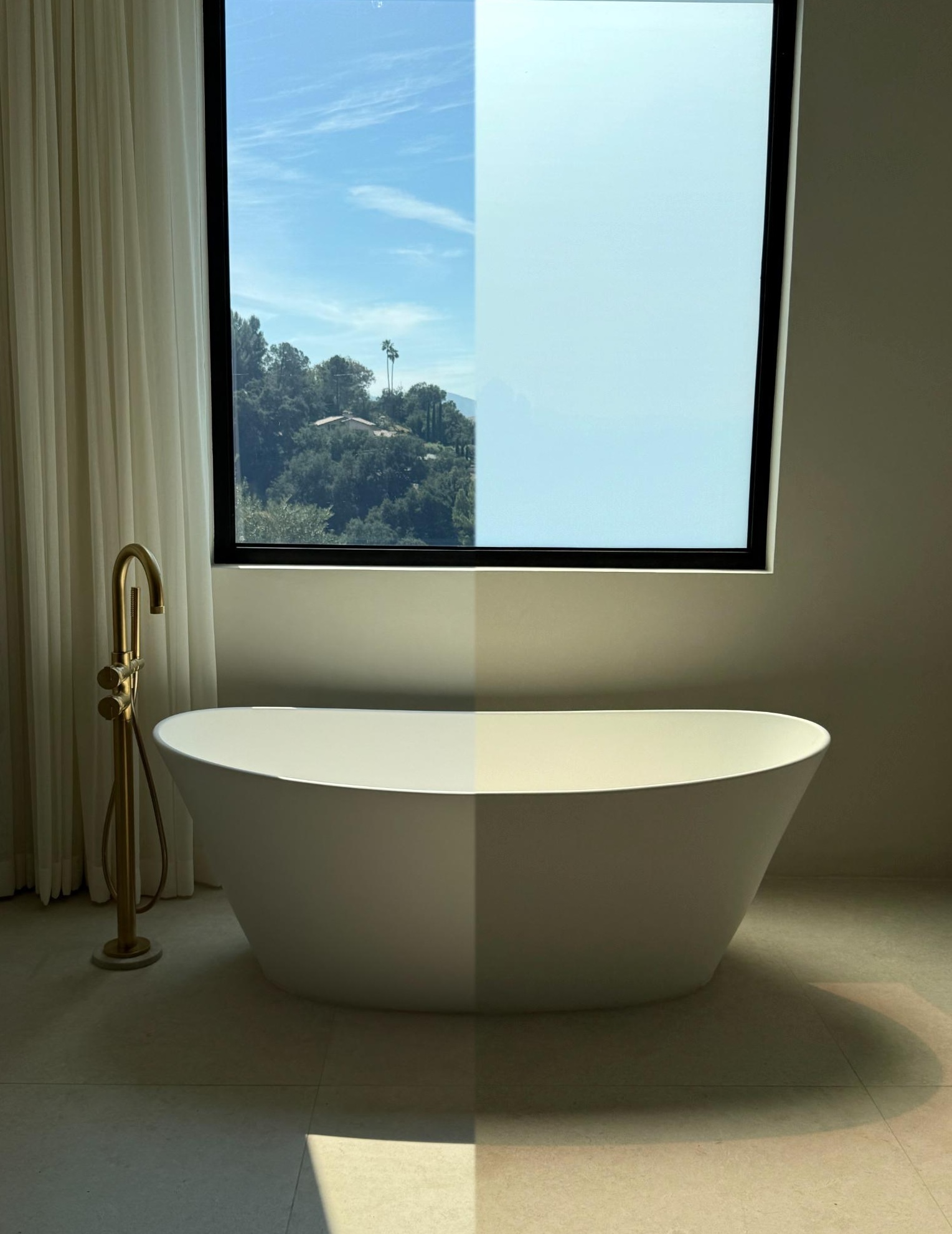
Three failure modes show up on every retail privacy review we run. Vinyl frost is permanent — the storefront stays frosted even during the merchandising hours that drive sales. Pull-down gates work for security but look industrial and signal “closed for business” even during legitimate slow hours. Tinted glass darkens the merchandise during daytime, hurting visual conversion. Switchable smart film avoids all three by putting the privacy decision on a switch.
The catch: the spec needs to fit retail’s specific operational rhythm. The seven specs below address that.
The 7 Specs That Matter for Modern Retail Storefront Privacy
- 1. Daily-mode switching pattern. Retail storefronts typically need clear during business hours, frosted after hours, and an “open for events” mode for evening receptions. Switchable film handles all three from a single wall switch or a scheduled controller. Decide the daily routine during spec — it drives the controller choice.
- 2. After-hours privacy depth. Quality PDLC film in frosted mode obscures sightlines but doesn’t go fully opaque. For high-value retail (jewelry, electronics, fashion), spec the highest-opacity film variant or layer with a vinyl backing for after-hours-only opacity. Standard opacity is fine for general retail.
- 3. Brand window options. Switchable film can be cut with a frosted-only brand mark or pattern that’s invisible during clear-mode and visible (against the frosted background) during private-mode. Powerful for retailers who want their logo on the storefront only after hours.
- 4. Control accessibility for retail staff. Wall switch is the default, but for retail spec a master switch near the back-of-house exit so the closing manager can flip privacy on as part of the lock-up sequence. Add a scheduled controller backup so the switch state recovers if a staff member forgets.
- 5. Glass type for storefront durability. Storefront glass needs to handle UV exposure, occasional impacts, and HVAC differential. Spec laminated or tempered glass with switchable film on the interior face — the glass holds up to retail use, the film stays protected from exterior weather.
- 6. Driver and wiring placement for retail back-of-house. Drivers belong somewhere staff can access them but customers can’t. Most retail installs put them in the back utility area with the wiring run concealed in the existing cable tray. Decide during spec — install day shouldn’t be the conversation.
- 7. Seasonal-display planning. Retail seasons (holidays, sales, brand launches) often involve temporary storefront treatments — vinyl, signage, displays. Confirm during spec that any temporary treatments install on top of switchable film without damaging the film itself. Most quality films handle this fine; some cheap kits don’t.
How Modern Retail Storefront Privacy Pays Back Over a Lease Cycle
Retail tenants think about storefront treatments in lease cycles, not in months. Modern retail storefront privacy via switchable film typically pays back across three dimensions over a 5-year lease:
- Reduced after-hours security risk — frosted glass after hours removes the “merchandise visible from the street” signal that drives smash-and-grab incidents.
- Higher daytime visual conversion — clear glass during business hours maximizes the storefront’s role as a sales channel; no permanent frost or pull-down treatments to take down each morning.
- Lower fixturing replacement cost — switchable film outlasts blinds, shades, or vinyl across the lease term. Single capex line replaces 2–3 cycles of replacement treatments.
For broader context on how retail storefront installs fit into the wider LA-area service framework, see our smart glass installation in Los Angeles overview — service-level detail and city coverage notes.
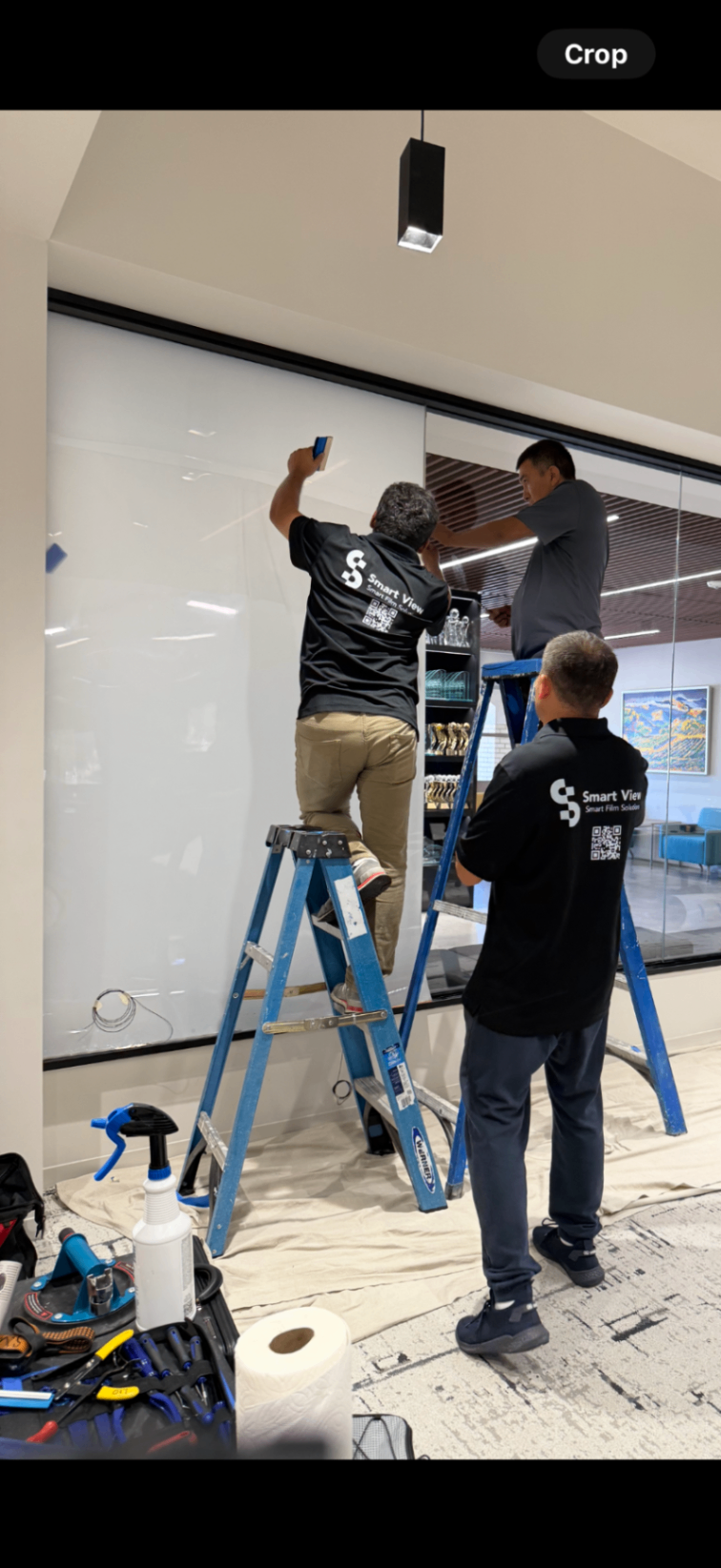
A Reseda Storefront Reference
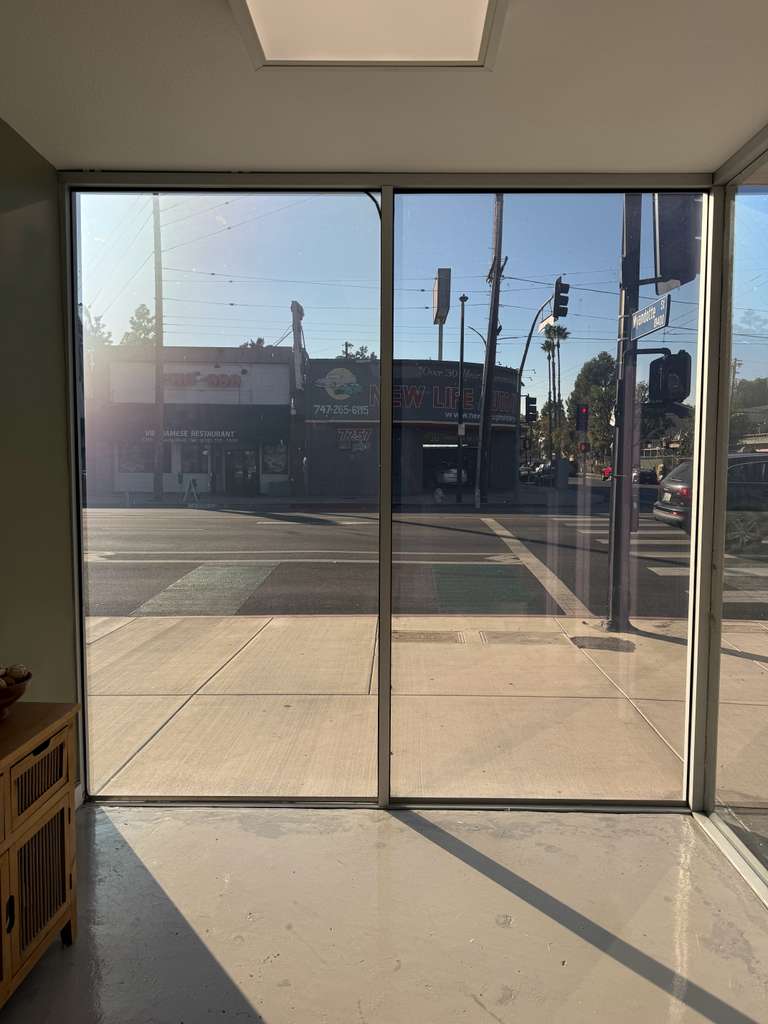
The cleanest example of modern retail storefront privacy applied end-to-end is a Reseda storefront install we shipped this year. Existing commercial glass on a high-traffic retail facade; spec ran clear-mode during business hours, frosted-mode after hours, with the switchable circuit tied to the closing routine. All seven specs above made it into the project plan; install completed across two working days for the full storefront.
Full project breakdown: smart glass storefront in Reseda — same spec playbook, single retail scope.
Planning a Storefront Smart Glass Install?
If you’re spec’ing privacy on a new retail buildout or a tenant-improvement, a 30-minute spec review can catch the fit issues above before glass is ordered. No pressure — a second pair of eyes on the spec before commit.
Contact Smart View with the storefront sq ft, glass type, and your daily mode pattern, and we’ll flag which of these 7 specs need attention in the current plan.