Skip to content Skip to footer

7 Mistakes Office Managers Make with Conference Room Privacy (And How Smart Glass Fixes Them)

Conference room privacy determines whether your teams can focus, collaborate confidently, and hold sensitive discussions without distraction or exposure. Yet most office managers unknowingly undermine conference room privacy through design choices that seem modern but fail to deliver functional control. Traditional glass walls, outdated blinds, and static frosted panels create more problems than they solve.

Switchable smart glass offers a proven alternative. By retrofitting existing glass with PDLC (polymer-dispersed liquid crystal) film, you gain instant on-demand privacy without sacrificing natural light, modern aesthetics, or operational flexibility. Below are seven critical mistakes office managers make with conference room privacy: and the specific ways professional smart film installation addresses each one.

Why Do Office Managers Install Permanent Frosted Film That Blocks Transparency Year-Round?

Permanent frosted vinyl or etched glass provides consistent visual privacy, but it eliminates transparency when you don't need privacy. Open office culture values visibility, collaboration, and natural light distribution. Static frosted panels block sightlines and reduce perceived openness even when conference rooms sit empty.

Switchable smart film operates on a 48–65V AC transformer and transitions from transparent to opaque in under one second. When the room is vacant or hosting informal collaboration, flip the switch to clear mode. Natural light flows into adjacent workspaces, and the office feels larger and more connected. When confidential meetings begin, activate privacy mode instantly. You maintain both openness and discretion without compromising either.

How Does Relying on Manual Blinds or Curtains Fail Conference Room Privacy Standards?

Manual blinds and curtains require occupants to remember to close them before meetings start. Employees forget, meetings begin with blinds open, and sensitive discussions occur in full view of passersby. Even when closed correctly, fabric blinds collect dust, degrade over time, and require regular maintenance. Cords tangle, slats break, and mechanisms fail within three to five years under daily use.

Smart glass eliminates manual operation entirely. Integrate PDLC film with wall switches, remote controls, or building automation systems. Program privacy activation based on calendar bookings, occupancy sensors, or access control triggers. The system ensures privacy mode engages automatically when scheduled meetings begin, removing reliance on user behavior. No maintenance beyond occasional glass cleaning. No moving parts to repair or replace.

Why Do Clear Glass Walls Create Visual Distractions That Reduce Meeting Productivity?

Clear glass conference room walls allow movement, foot traffic, and workspace activity to distract meeting participants. Visual interruptions reduce focus, extend meeting duration, and lower decision-making quality. Employees seated facing outward spend cognitive energy filtering external movement rather than engaging with presentation content or discussion.

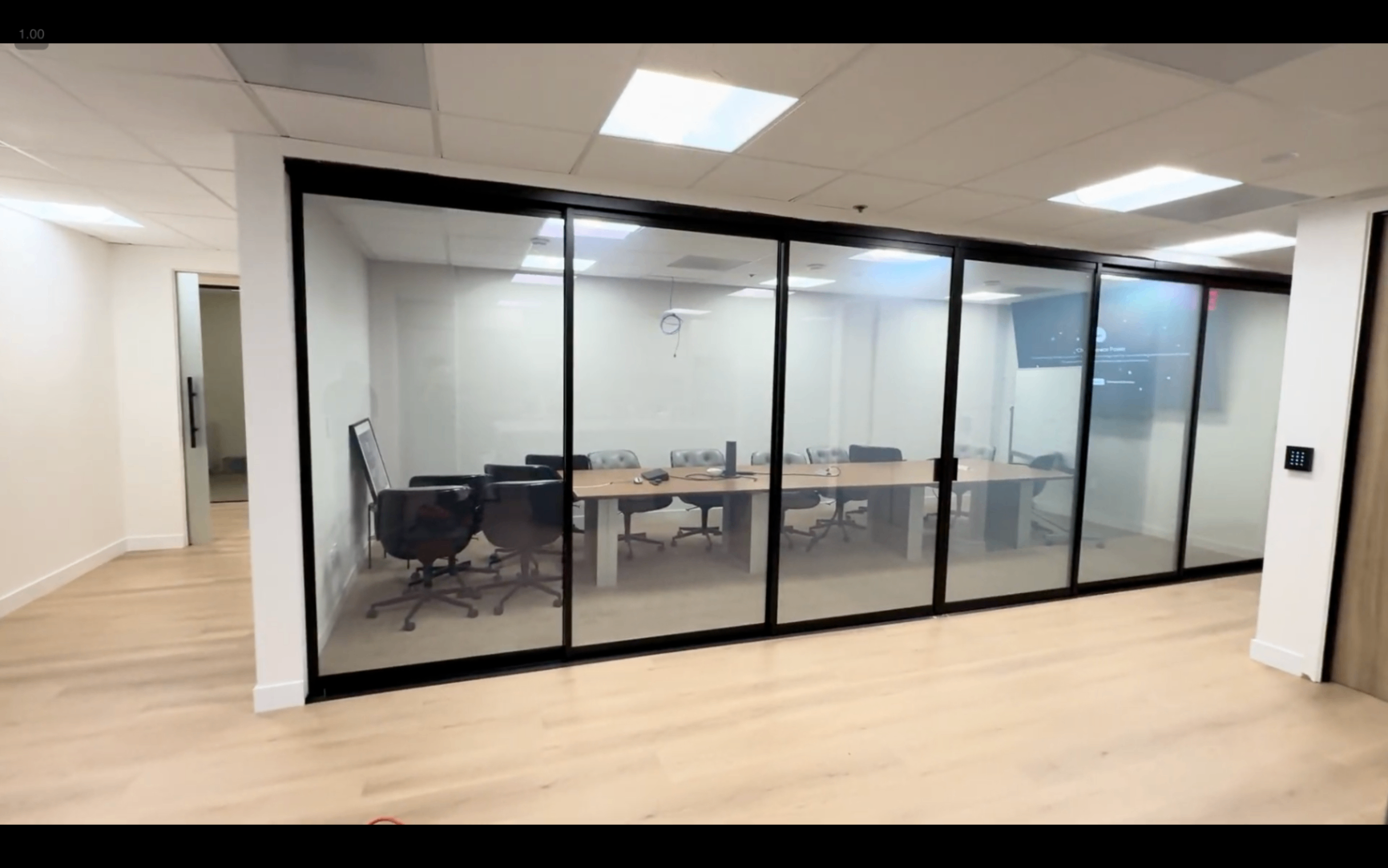
Glass-walled conference room with switchable Smart View film
Switchable smart film provides instant privacy on demand while maintaining the modern aesthetic of glass-walled conference rooms.

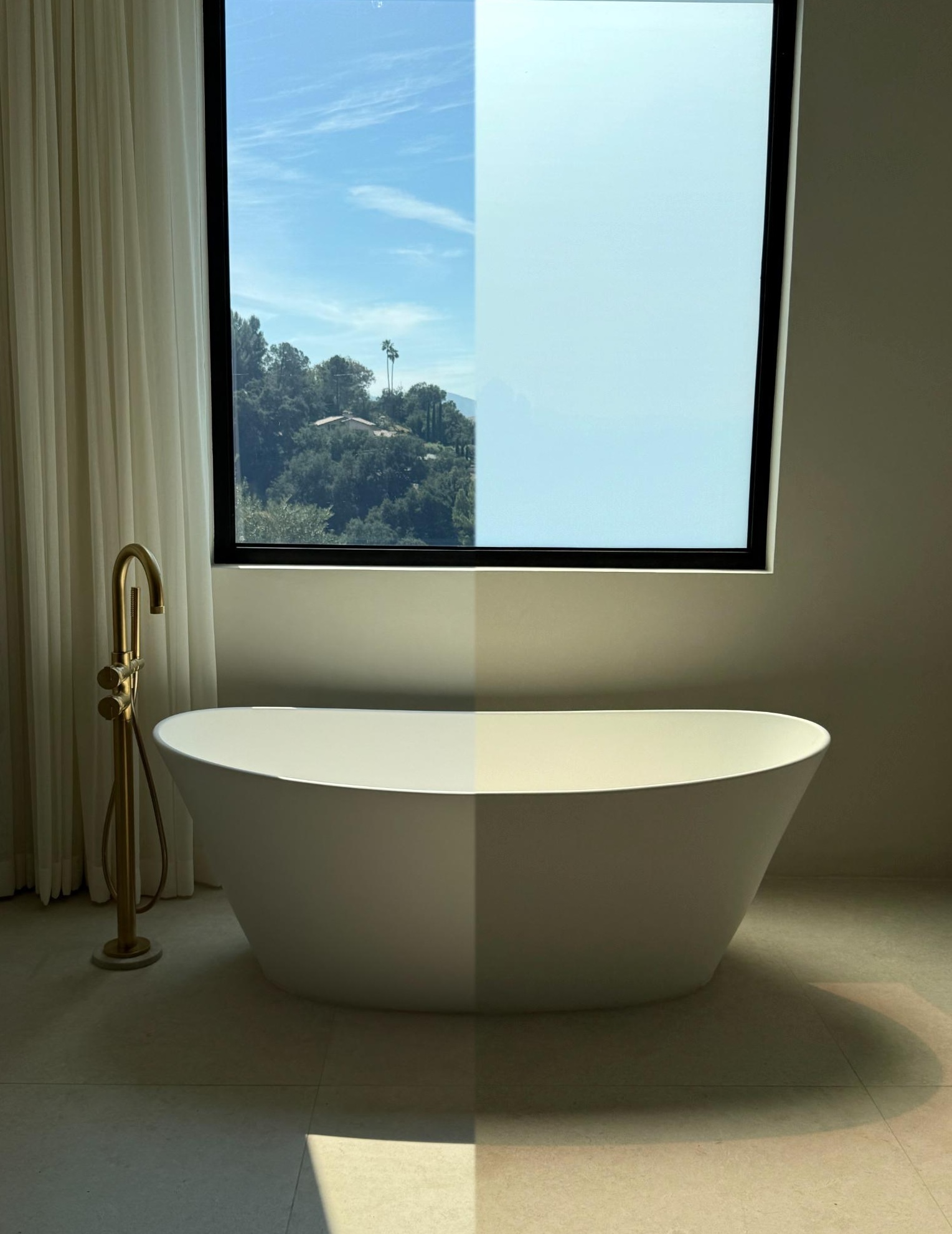
PDLC film in privacy mode diffuses external movement into soft, uniform opacity. Participants no longer track people walking past. The frosted state eliminates visual noise while retaining full natural light transmission, so rooms remain bright without glare or harsh artificial lighting. When meetings conclude, restore transparency to reconnect the space visually with the broader office environment. You control distraction levels based on meeting type and sensitivity rather than accepting permanent compromise.

How Do Office Managers Underestimate the Acoustic Privacy Gap in All-Glass Conference Rooms?

Glass walls alone provide minimal sound isolation. Single-pane glass transmits speech frequencies easily, and conversations remain intelligible in adjacent spaces even when visual privacy exists. Office managers often assume that visual barriers equal acoustic barriers. They do not. Standard glass walls deliver STC (Sound Transmission Class) ratings between 28 and 34, far below the STC 45–50 required for true speech privacy.

While switchable custom smart glass systems do not replace acoustic design, laminated smart glass panels improve sound isolation compared to standard single-pane installations. PDLC interlayers add mass and damping, raising STC ratings by 3–6 points depending on laminate construction. For maximum acoustic performance, specify laminated smart glass with acoustic PVB interlayers during new construction. Retrofit projects benefit from pairing smart film installation with perimeter acoustic seals, suspended acoustic ceiling panels, and sound masking in adjacent zones. Address both visual and acoustic privacy simultaneously rather than treating them as separate problems.

Why Does Inconsistent Privacy Between Conference Rooms Create Operational Confusion?

Many offices mix privacy solutions across different conference rooms: some have blinds, others have frosted panels, a few have curtains. Employees waste time determining which rooms offer adequate privacy for specific meeting types. Booking systems fail to communicate privacy capabilities, and sensitive discussions end up scheduled in spaces with inadequate visual control.

Standardizing conference room privacy with switchable smart film creates consistent user experience across all meeting spaces. Every room offers identical on-demand privacy functionality. Employees know that any conference room can support confidential discussions with a single switch activation. Facilities teams manage one technology platform rather than multiple blind styles, curtain types, and frosted film products. Standardization reduces training requirements, simplifies troubleshooting, and delivers predictable lifecycle costs.

How Do Static Privacy Solutions Limit Conference Room Flexibility and Multi-Use Functionality?

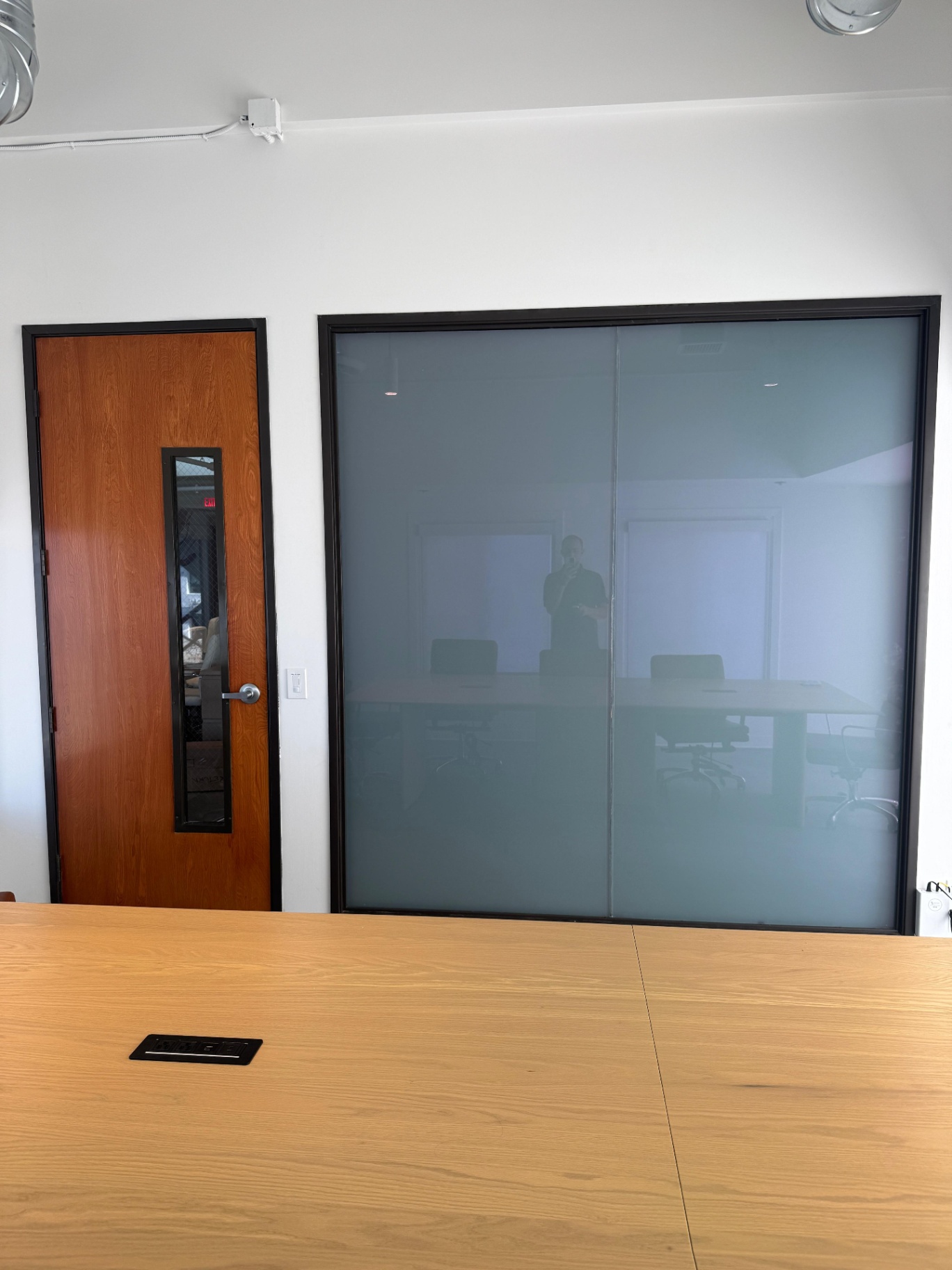
Conference Room with Smart Glass Panel
Smart film retrofit onto existing glass partitions enables flexible space use without physical blinds or curtains.

Permanent frosted glass or fixed blinds force every meeting into the same privacy mode regardless of purpose. Training sessions benefit from visibility to energize participants and encourage open interaction. Board meetings require full privacy. Client presentations need controlled transparency to project professionalism while maintaining discretion during negotiation phases.

Switchable smart glass supports multiple meeting types within the same physical space. Toggle between transparent and private modes based on real-time needs rather than static design decisions made during construction. Combine smart film with dimmable lighting and movable furniture to create truly adaptable conference environments. Maximize space utilization without building separate rooms for different privacy requirements. For portfolio examples showing multi-use conference room installations, explore our recent smart film projects.

Why Do Office Managers Ignore UV Damage and Glare Issues in South- and West-Facing Conference Rooms?

Conference rooms with southern or western exposure suffer from intense afternoon glare and UV degradation. Occupants close blinds to reduce screen glare, then work in artificial light even on sunny days. UV radiation fades furniture, damages AV equipment, and creates uncomfortable hot spots near windows. Office managers address symptoms (glare) without solving root causes (uncontrolled solar gain and UV transmission).

PDLC smart film blocks 99% of UV radiation in both transparent and opaque modes. The film layer filters harmful wavelengths continuously, protecting interior finishes and occupants regardless of privacy state. In privacy mode, smart film diffuses direct sunlight into soft, even illumination that reduces glare without eliminating natural light. You maintain connection to outdoor views when transparency is desired while controlling brightness and heat gain when necessary. For southern California offices dealing with intense sun exposure, this dual functionality delivers measurable energy savings and occupant comfort improvements without sacrificing the modern aesthetic of glass architecture. When evaluating cost factors including UV protection, installation complexity, and long-term performance, request a custom quote specific to your conference room configuration.

Frequently Asked Questions About Conference Room Privacy and Smart Glass Solutions

What is PDLC smart film and how does it provide instant privacy?

PDLC (polymer-dispersed liquid crystal) film consists of liquid crystal droplets suspended in a polymer matrix, sandwiched between two conductive layers. When powered off, the droplets scatter light randomly, creating an opaque frosted appearance. When 48–65V AC current is applied, the droplets align to allow light transmission, making the film transparent. The transition occurs in under one second and can be toggled unlimited times without degrading performance.

Can smart film be installed on existing conference room glass without replacement?

Yes. Retrofit smart film installation applies PDLC film directly to existing glass surfaces using optically clear adhesive. The process does not require glass removal or replacement. Installation teams clean the glass, apply the film, trim edges, and connect electrical wiring to transformers and switches. Typical conference room installations complete within one to two days depending on glass area and access constraints. The existing glass must be structurally sound, clean, and free from cracks or delamination.

How much power does smart film consume in conference rooms?

PDLC smart film draws approximately 5–7 watts per square meter when in transparent (powered) mode. Privacy mode requires no power: the film defaults to opaque when electricity is off. A typical 10' × 6' conference room glass wall consumes roughly 30–40 watts while transparent, comparable to a single LED light fixture. Annual operating costs remain negligible even with continuous transparency. For offices prioritizing energy efficiency, program smart film to default to privacy mode when conference rooms are unoccupied.

Does smart film reduce noise transmission between conference rooms and open office areas?

Smart film alone provides minimal acoustic improvement. However, laminated smart glass panels (where PDLC film is embedded between two glass layers during fabrication) deliver STC ratings 3–6 points higher than standard single-pane glass. For retrofit projects, combine smart film installation with acoustic seals around door perimeters, acoustic ceiling tiles, and sound masking systems in adjacent areas. Address visual and acoustic privacy as integrated design challenges rather than isolated problems.

How long does smart film last in commercial conference room applications?

Quality PDLC film carries manufacturer warranties of 10–15 years and demonstrated lifespans exceeding 20 years in controlled indoor environments. The film resists yellowing, delamination, and performance degradation when protected from physical impact and extreme temperature fluctuations. Conference room installations experience minimal wear compared to exterior applications. Regular cleaning with non-abrasive glass cleaners maintains optical clarity. Unlike mechanical blinds requiring replacement every 5–7 years, smart film delivers decades of maintenance-free operation with no moving parts to fail.

Upgrade Conference Room Privacy with Professional Smart Glass Installation

Conference room privacy failures cost your organization productivity, confidentiality, and employee satisfaction. Static solutions force permanent compromises. Smart glass delivers instant control, consistent performance, and operational flexibility that adapts to real meeting needs rather than fixed design assumptions.

Smart View Smart Film Solutions fabricates and installs PDLC smart film systems throughout Los Angeles and Southern California. We evaluate your existing conference room glass, specify appropriate transformer and control configurations, and complete retrofit installations with minimal operational disruption. Our in-house fabrication ensures quality control from material selection through final commissioning.

Stop managing conference room privacy with outdated blinds and static frosted panels. Contact Smart View Smart Film Solutions today to schedule a site evaluation and receive a detailed installation proposal. Call now or request a consultation through our website. Transform your conference rooms into adaptable, professional spaces that support every meeting type without compromise.

Leave a comment

0.0/5

Blind glass

Get in Touch!

icon
icon Hide
Contact Us Now