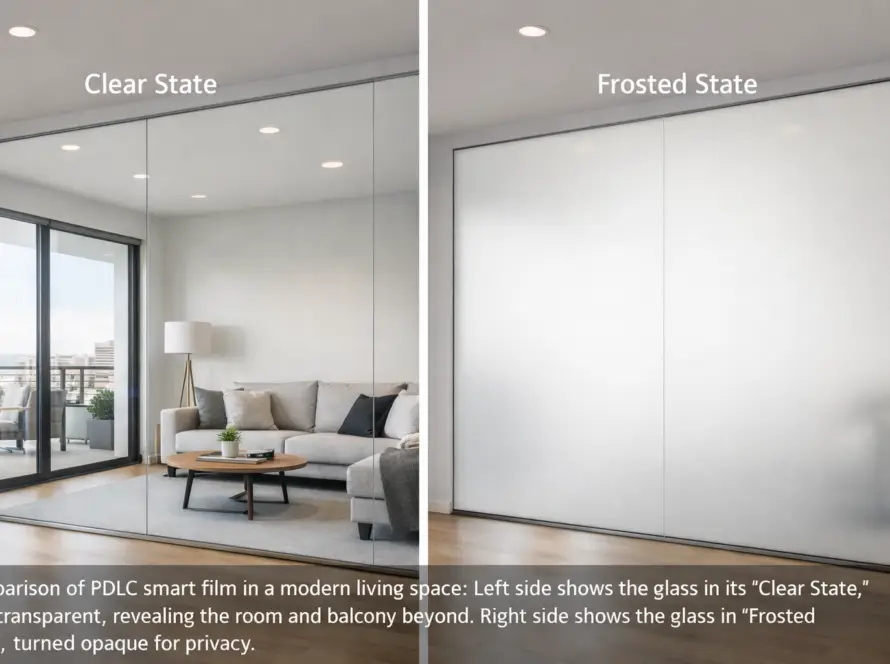
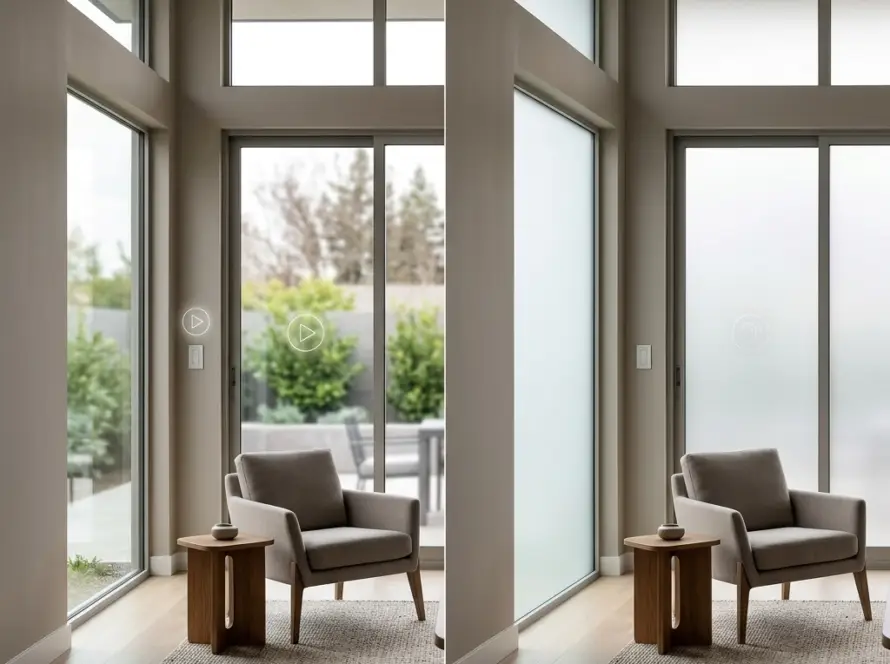
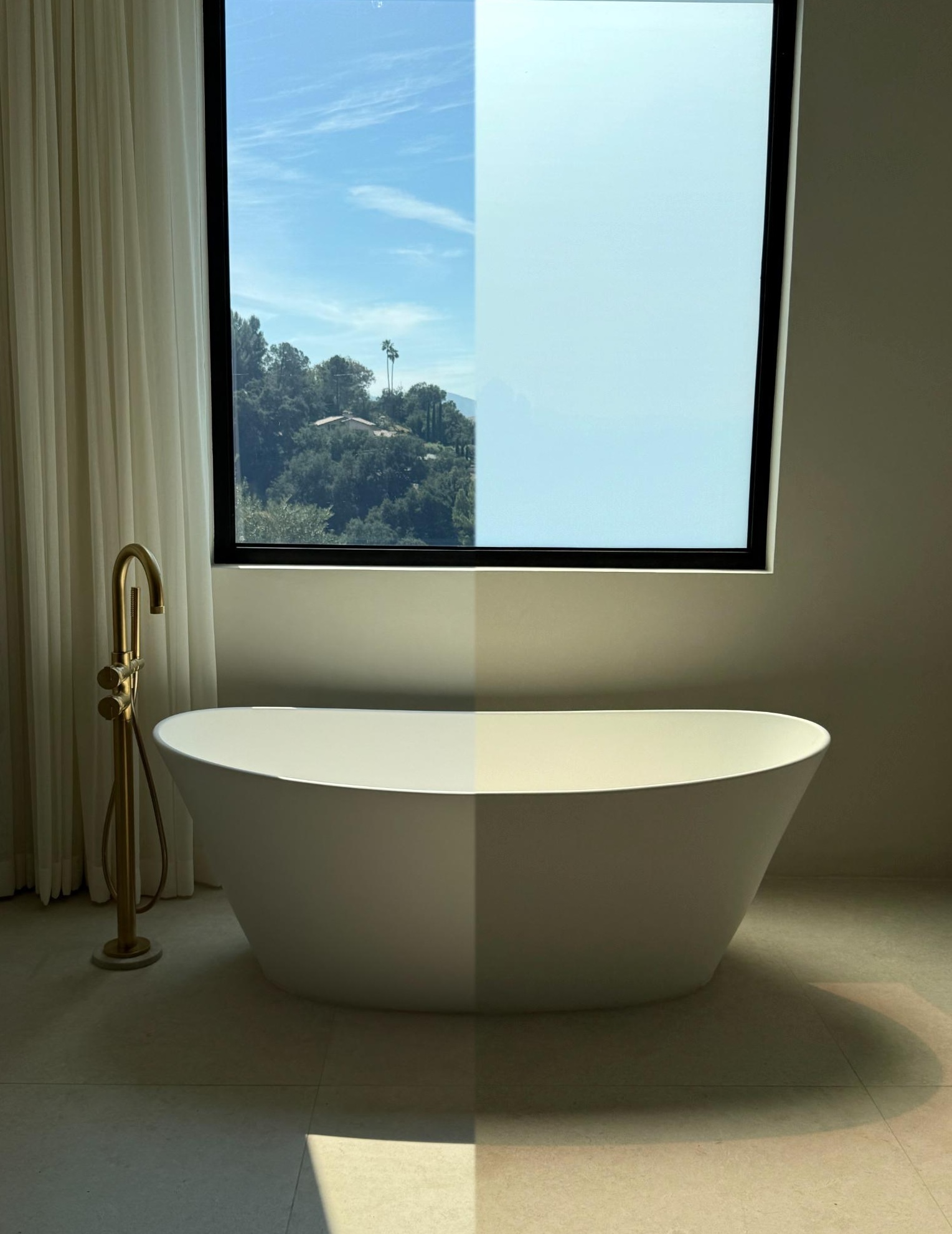
Voice and App Smart Glass Control: 7 Top Setups (2026)
Switchable smart glass works fine with a wall switch — flip a toggle, glass frosts. The lifestyle layer that makes the install feel native to a modern LA home shows up only when voice and app smart glass control gets layered on top. Voice triggers, smartphone scenes, scheduled automation, and smart-home hub integration are what convert a privacy upgrade into part of the connected-home stack, and the seven setups below are the patterns we ship most often on LA-area smart-home-equipped residences.
This guide walks the seven voice and app smart glass control setups we run on every smart-home consult. Each comes from real LA-area installs we’ve shipped in the last 12 months across Lutron Caseta, Lutron RA3, Savant, Crestron, Alexa, Google Home, and Apple HomeKit ecosystems.
Why Voice and App Smart Glass Control Earns the Setup Time
A wall switch alone costs nothing extra and works reliably. So why bother with the voice and app layer? Three reasons surface on every consult: hands-free triggering matters when hands are full or wet (bathrooms, kitchens), scene-based control compounds across multiple surfaces (one tap frosts every bedroom and bathroom at sunset), and integration with the existing smart-home hub makes switchable glass feel native rather than retrofitted. The seven setups below are how the lifestyle layer typically gets built out.
The 7 Voice and App Smart Glass Control Setups
- 1. Smartphone-only direct app control. The simplest entry point. Manufacturer’s smartphone app provides direct switchable-glass control without needing a smart-home hub. Per-room toggle, basic scenes, scheduling — the lowest-friction setup for residences without existing Lutron, Savant, or HomeKit infrastructure.
- 2. Lutron Caseta integration with Pico remotes. The most common LA residential setup. Lutron Caseta is the de facto smart-home standard in LA luxury and mid-century homes. Switchable glass appears as a Caseta device in the app, supports scenes, and triggers from the existing Pico remotes scattered around the house. Voice control via the bundled Caseta-Alexa or Caseta-Google bridge.
- 3. Alexa native voice triggering. “Alexa, frost the master bath” or “Alexa, clear the front-door glass” — voice is the lowest-friction layer for daily-use scenarios where hands are occupied (cooking, holding kids, just out of the shower). The voice setup typically rides on top of an existing Lutron, Savant, or direct-product Alexa skill bridge.
- 4. Google Home and Google Assistant control. Functionally identical to Alexa for switchable glass purposes, with Google’s voice recognition and Google Home routine engine on top. Common in LA tech-class residences with Nest Hub displays or Pixel-ecosystem households. Same per-glass control vocabulary; same scene-based routine integration.
- 5. Apple HomeKit and Siri integration. Apple-ecosystem households favor HomeKit-native control via Apple Home app and Siri. The integration usually rides on top of a Lutron Caseta-HomeKit bridge or a direct-product HomeKit accessory; supports Siri voice triggering and Home app scene control across iPhone, iPad, Apple Watch, and HomePod.
- 6. Savant Pro full-home integration. Savant-equipped LA luxury homes can integrate switchable glass directly into the Savant Pro Remote and Savant scenes. Voice triggering rides on top of Savant’s Alexa/Google bridge, with the audio-visual integration layer letting privacy trigger as part of “movie mode” alongside lighting, audio, and shade control.
- 7. Time-based and event-based scheduled automation. The setup that runs in the background. Voice and app smart glass control with scheduling enables sunrise/sunset auto-frost, time-of-day privacy modes, and event-triggered scenes (bedroom glass auto-frosts at 9pm, west-facing windows frost at peak sun for thermal management). Hands-off automation that delivers daily privacy control without active user input.
For technical context on the underlying switchable-glass technology that supports the seven setups above, see our smart glass PDLC page — covers the spec details that determine how the product behaves under any control surface.
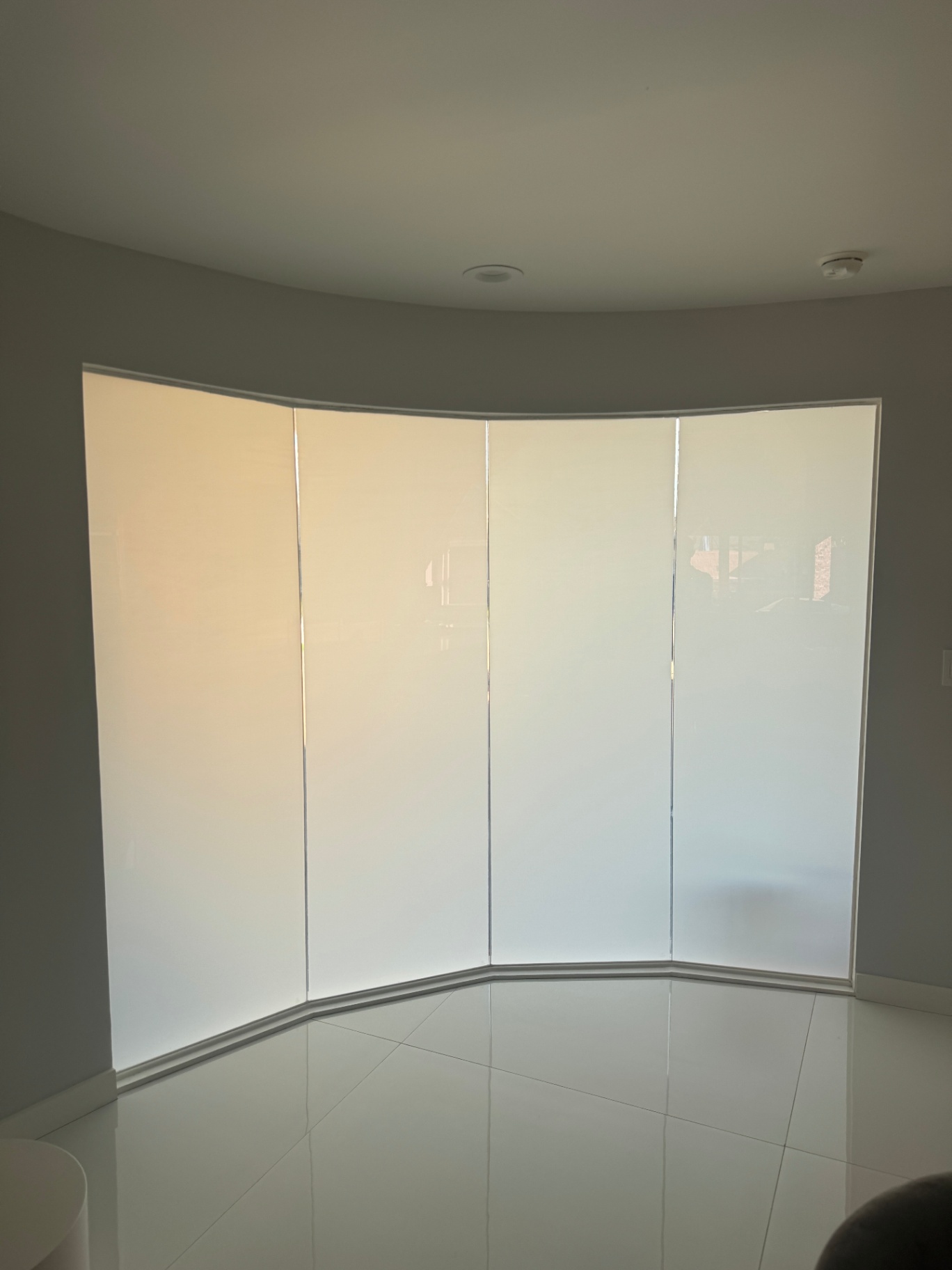
Where Voice and App Smart Glass Control Pays Back Fastest
Across the smart-home-equipped residential installs we ship, the voice and app smart glass control layer pays back fastest on three home types:
- Lutron- or Savant-equipped luxury residential. The hub is already paid for; adding voice and app smart glass control as a scene element is incremental cost with high lifestyle return. Setups #2 and #6 are typical entry points.
- Smart-home retrofitted modern and mid-century homes. Owners who’ve added Caseta, Hue, Nest, or comparable systems benefit from extending the smart-home layer into privacy spec. Setups #2, #3, and #4 are common.
- Multi-glass residential projects (4+ surfaces). Per-glass app control becomes unwieldy at 5+ surfaces — scene-based control via setup #2 or #6 dramatically improves daily usability and reduces the friction of using switchable glass throughout the home.
How Voice and App Smart Glass Control Setups Compound Across a Whole-Home Install
The seven setups don’t sit in isolation — on a typical whole-home smart-glass install (4–8 glass surfaces across bathrooms, bedrooms, French doors, and front-door sidelights), three to five of these voice and app smart glass control setups compound on the same project. The cabling spec, driver placement, and BMS integration scale cleanly across rooms because the underlying control logic is the same — only the per-room scene assignment differs. The per-room integration cost drops as the install scales.
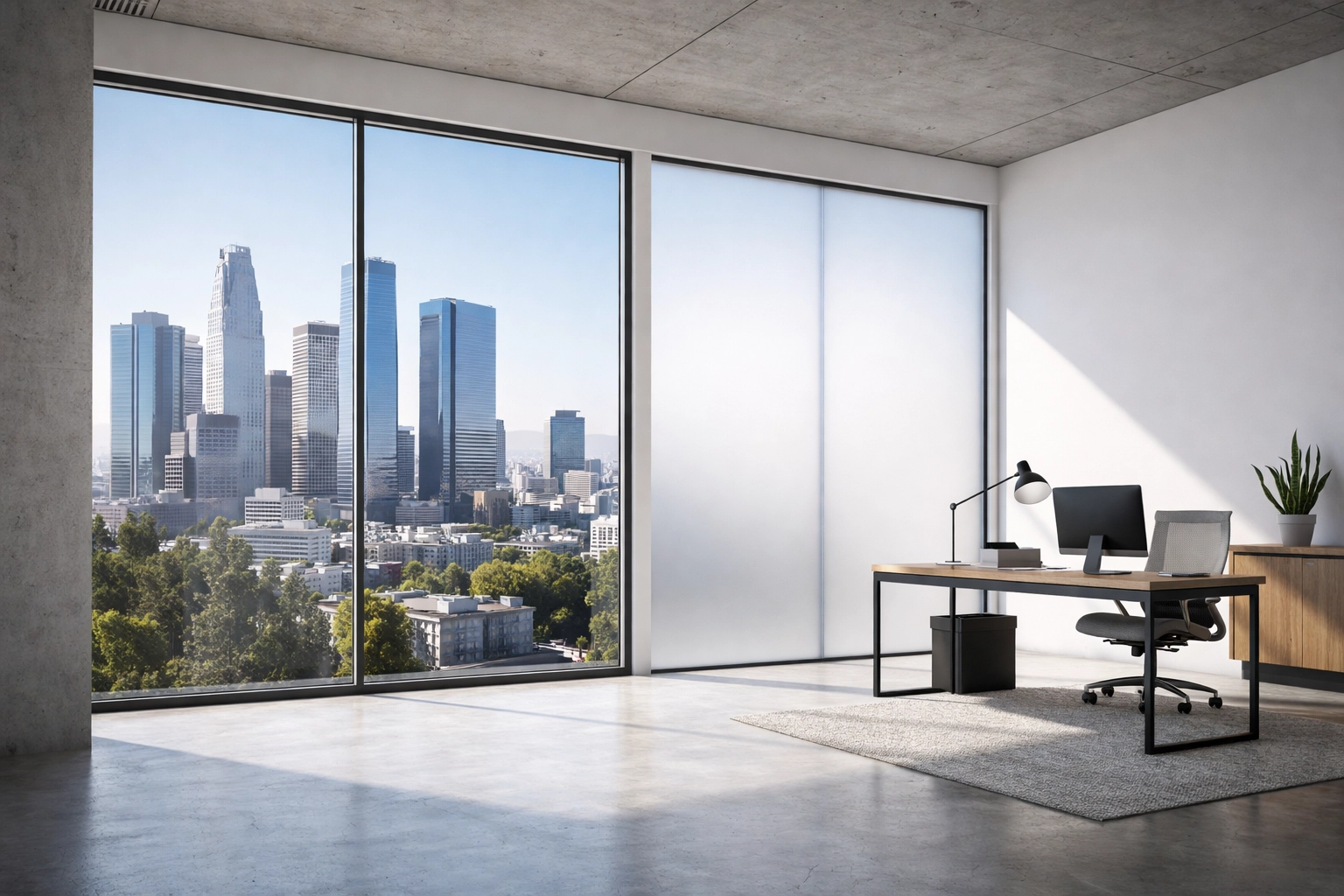
For multi-room luxury residential, this means a unified voice and app smart glass control standard can serve very different room contexts under one app and one set of physical control surfaces. The integration story becomes a meaningful resale value contributor as well — buyers in the LA luxury-residential market expect connected-home spec across all major systems.
Voice and App Smart Glass Control in Real Project Math
For a typical LA luxury residential install with Lutron Caseta integration on 4 glass surfaces, voice and app smart glass control setup adds roughly $400–800 above the base switchable-glass install — the Caseta dimmer modules, the integration scene programming, the smartphone app setup. For Savant or Crestron whole-home integration on 6+ surfaces, integration setup runs $1,500–3,500 above base — significantly higher complexity, programmed by certified Savant or Crestron integrators.
For voice-assistant integration (setups #3, #4, #5) layered onto an existing Lutron or Savant install, the incremental cost is essentially zero — the voice bridge is already part of the smart-home hub. For smartphone-only direct app control (setup #1), no additional setup cost beyond the manufacturer’s free app.
A Beverly Hills Front-Door Reference
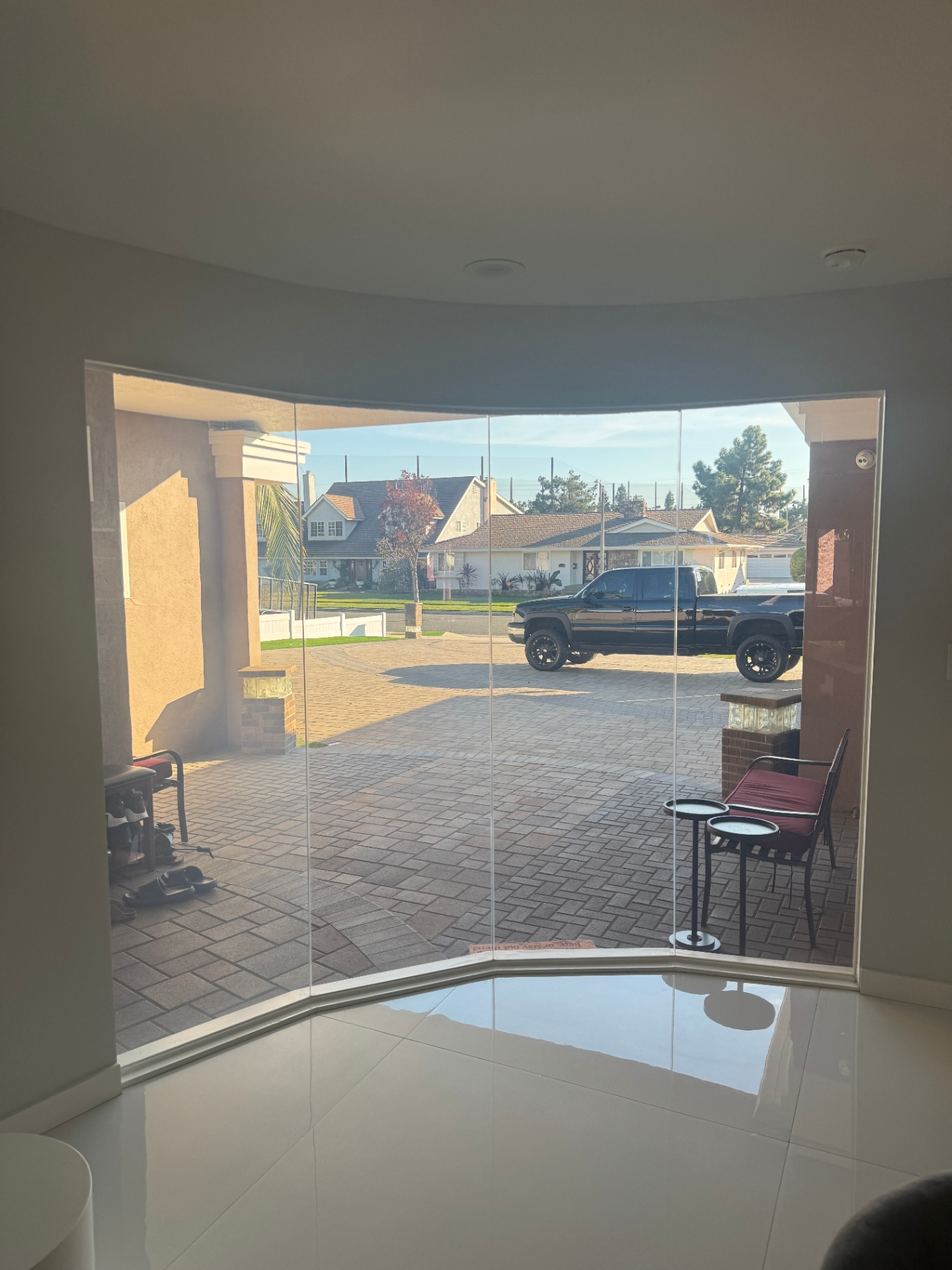
For a concrete example of voice and app smart glass control applied end-to-end on a single residential project, our Beverly Hills front-door install hits four of the seven setups directly. Lutron Caseta integration on the front-door sidelight glass (setup #2), voice control via Alexa (setup #3), scheduled-mode automation tying to sunrise/sunset (setup #7), and smartphone fallback control (setup #1) — all unified under one Caseta scene that triggers from the existing keypad ecosystem.
Full project breakdown: smart glass front door in Beverly Hills — single residential scope, partial seven-setup playbook applied.
Planning a Smart-Home-Integrated Switchable-Glass Install?
If you’re spec’ing switchable glass for a smart-home-equipped residence and want help planning the voice and app smart glass control layer before glass is ordered, a 30-minute consult can identify which of the seven setups fit your existing hub. No sales pressure — straight read on which integration path is cheapest and most reliable for your spec.
Contact Smart View with the home type, glass count, and your existing smart-home hub (Lutron, Savant, Crestron, Alexa, HomeKit), and we’ll outline which setups are most relevant.