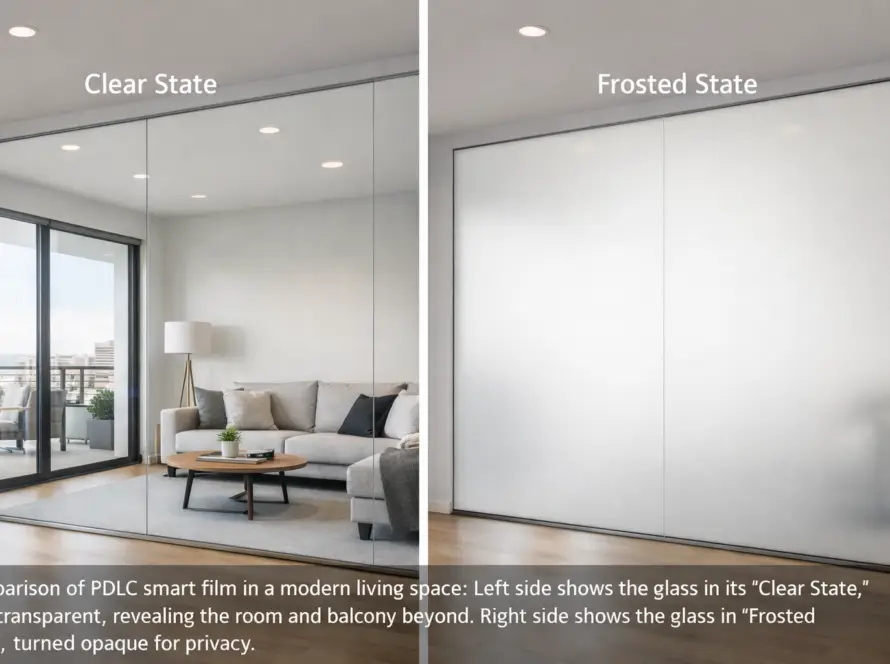
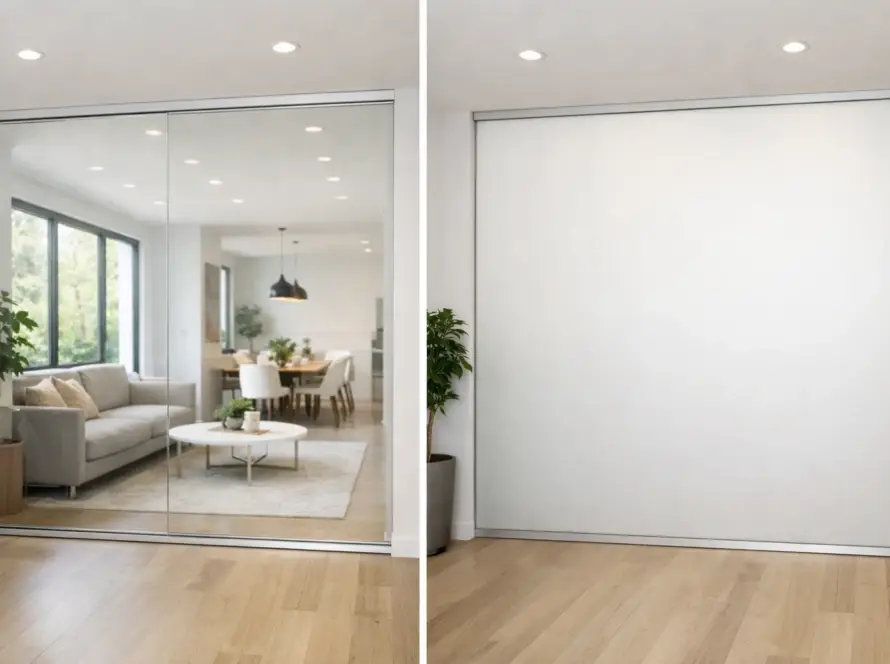
Office Privacy Redefined: The Impact of Switchable Smart Film on Conference Room Management
Modern corporate environments demand a balance between open-concept transparency and the absolute necessity for confidential meeting spaces. Smart film offers a high-performance solution for developers and office managers looking to maximize square footage without sacrificing professional discretion.
The modern workplace has undergone a radical transformation. Traditional drywall partitions have been replaced by expansive glass walls to encourage natural light and a sense of organizational transparency. However, this aesthetic shift often creates a significant challenge: the loss of visual and acoustic privacy during critical board meetings or HR sessions. For facility managers and commercial developers, managing this conflict usually involves installing outdated blinds or permanent frosting that defeats the purpose of the glass.
The introduction of PDLC (Polymer Dispersed Liquid Crystal) technology has fundamentally altered this landscape. By opting for professional smart film installation, businesses can now toggle between total transparency and complete opacity in less than 40 milliseconds. This capability effectively turns every glass surface into an on-demand privacy screen, allowing for a dynamic use of space that traditional materials cannot match.
How Does Smart Film Function in a High-Traffic Corporate Environment?
At its core, smart film is a multi-layered laminate containing liquid crystal molecules. When an electrical current is applied via a dedicated transformer, these molecules align, allowing light to pass through and making the glass clear. When the power is cut, the molecules scatter, creating a frosted effect that blocks vision while still allowing approximately two-thirds of natural light to permeate the room.
For a developer, the technical reliability of this system is paramount. The film is designed for high-frequency switching, meaning it can transition thousands of times a day without degradation in performance. In large-scale office layouts, these systems are often integrated into the building’s centralized management system (BMS), allowing a facility manager to clear or frost entire wings of a building from a single interface. This level of control is a significant upgrade from manual blinds, which require constant maintenance and individual adjustment.
Why is Smart Film a Better Investment Than Traditional Partitions?
When evaluating the lifecycle value of office assets, smart film consistently outperforms traditional privacy solutions. Dust-collecting curtains and mechanical blinds represent a recurring maintenance cost and a potential hygiene liability in shared spaces. Smart film, conversely, is applied directly to the existing glass and requires no more maintenance than a standard window.
Furthermore, many developers are surprised to learn that smart film provides acoustic benefits. Because the film adds a specialized layer of tempered material to the glass, it aids in dampening sound vibrations. While some projects may require custom smart glass systems where the PDLC is sandwiched between two panes of glass for maximum sound attenuation, the retrofit film still provides a measurable improvement in speech privacy. This dual-purpose functionality, visual privacy and acoustic softening, increases the overall ROI of the installation by reducing the need for additional sound-dampening treatments.
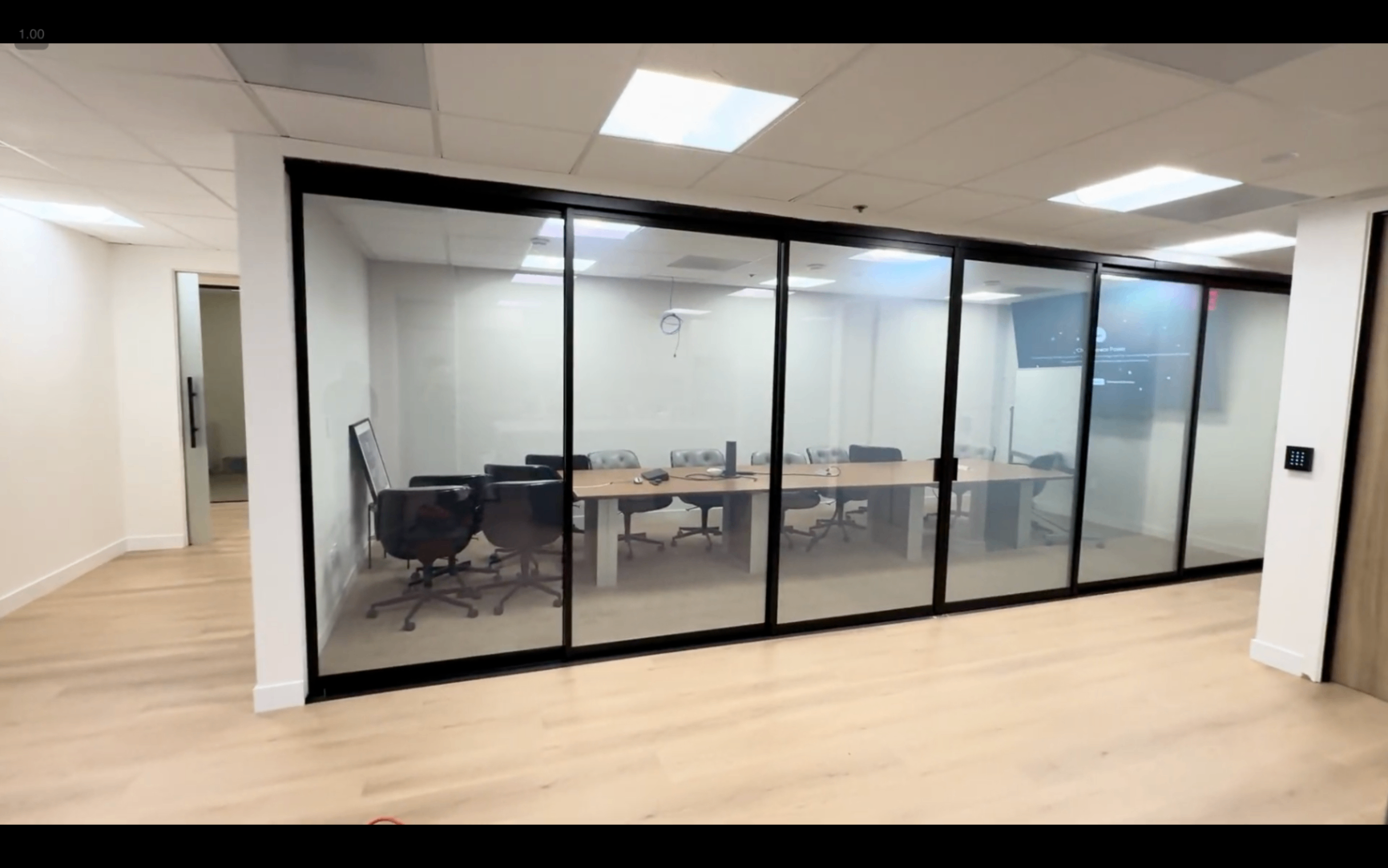
What Technical Specifications Should Developers Consider?
From an engineering perspective, the deployment of smart film in a commercial setting requires attention to electrical infrastructure. The film operates on low-voltage AC (typically 48V to 60V), which is converted from standard building power via a transformer. These transformers must be housed in accessible locations, such as above drop ceilings or within dedicated electrical closets.
The durability of the film is also a key selling point for commercial property owners. High-quality PDLC film is treated with a hard coat to resist scratching and can block over 98% of harmful UV rays. This protection is vital for preserving expensive office furniture and flooring from sun damage. In Los Angeles, where solar heat gain can significantly increase cooling costs, the IR-rejection properties of the film help stabilize interior temperatures, contributing to a more energy-efficient building envelope.
How Does Switchable Technology Impact Office Design Flexibility?
Flexibility is the primary currency of modern office design. A conference room that is opaque for a morning legal deposition might need to be fully transparent for an afternoon team-building session. Smart film enables this "multi-mode" functionality without requiring any physical changes to the room.
The aesthetic impact is also significant. Clean, edge-to-edge installations ensure that the film appears as part of the glass itself rather than an aftermarket addition. Because the film is cut to the exact dimensions of the existing panels, there are no unsightly gaps or overlaps. This creates a sleek, high-tech environment that appeals to high-value tenants and forward-thinking corporations.
What Factors Determine the Total Cost of a Commercial Installation?
When budgeting for a project, it is important to understand that several variables influence the final investment. Unlike off-the-shelf products, smart film is a precision-engineered solution tailored to the specific geometry of your office glass.
The primary cost drivers include the total square footage of the glass, the complexity of the wiring paths, and the type of control systems required (e.g., remote, wall switch, or smartphone integration). Larger panes may require specialized handling, and projects with curved glass or frameless doors involve a higher degree of installation expertise. To get a granular understanding of the requirements for your specific site, it is best to schedule a pricing consultation with an expert installer who can evaluate the electrical layout and glass conditions.
How Does Smart Film Improve the Tenant Experience?
For commercial landlords, offering "smart" amenities is a proven way to increase lease rates and tenant retention. Tenants value the ability to control their environment. Beyond privacy, smart film serves as a high-definition projection screen when in its opaque state. This allows conference rooms to function as presentation hubs without the need for bulky drop-down screens or specialized hardware.
The ease of use cannot be overstated. With a simple wall-mounted button or a voice command via an integrated office assistant, the room transforms. This seamless integration of technology into the physical workspace is a hallmark of premium commercial real estate in Southern California.
FAQ
What are the most common questions regarding smart film in offices?
Does smart film require a constant draw of electricity to remain clear?
Yes, PDLC film requires a small amount of electrical current to stay in its transparent state. When the power is turned off, the crystals scatter and the film returns to its natural opaque state. However, the energy consumption is extremely low, typically less than five watts per square meter, making it a very efficient addition to a modern office.
Can smart film be applied to existing glass doors and partitions?
Absolutely. One of the greatest advantages of smart film is that it is a retrofit product. We can apply the film to almost any smooth glass surface, including sliding doors, swinging glass doors, and curved partitions. The wiring is carefully concealed along the frames or through specialized power transfer hinges to maintain a clean appearance.
How do you clean and maintain the film after installation?
Maintaining smart film is straightforward. You clean it just like regular glass using a soft microfiber cloth and a non-abrasive, alcohol-based glass cleaner. It is important to avoid saturating the edges of the film with liquid. Because the film is an electrical component, a dry-wipe or light-mist approach is recommended to ensure the longevity of the busbars and connections.
What happens if the power goes out?
The film is designed to fail-to-private. This means that if there is a power outage or the system is unplugged, the film will automatically default to its frosted, opaque state. This ensures that privacy is maintained even in the event of an electrical failure, which is a critical safety and security feature for sensitive corporate environments.
How long does the installation process typically take?
The timeline for installation depends on the number of glass panels and the complexity of the electrical routing. A standard conference room can often be completed in a single day with minimal disruption to office operations. For larger multi-floor deployments, we work in phases to ensure the project stays on schedule and coordinates with other trades on-site. You can view completed installations to see how these systems look across various commercial scales.
Is the film durable enough for a busy office?
Yes, the smart film we use is designed for commercial durability. It features a scratch-resistant coating and is manufactured to withstand the rigors of a high-traffic environment. When installed by professionals, the film is securely bonded to the glass, preventing bubbling or peeling over time.
Upgrading your office conference rooms with smart film is more than just an aesthetic choice; it is a strategic investment in privacy, efficiency, and modern design. By eliminating the need for traditional window treatments and providing instant, switchable control, you create a workspace that can adapt to any professional requirement. For more insights into how switchable technology is evolving, read our post on innovative office design trends.
If you are ready to modernize your commercial space with a high-performance privacy solution, contact Smart View Smart Film Solutions today. Our team provides comprehensive site evaluations and expert installation to ensure your project meets the highest technical standards. Reach out now to request a professional installation proposal and discover how switchable glass technology can transform your business environment.