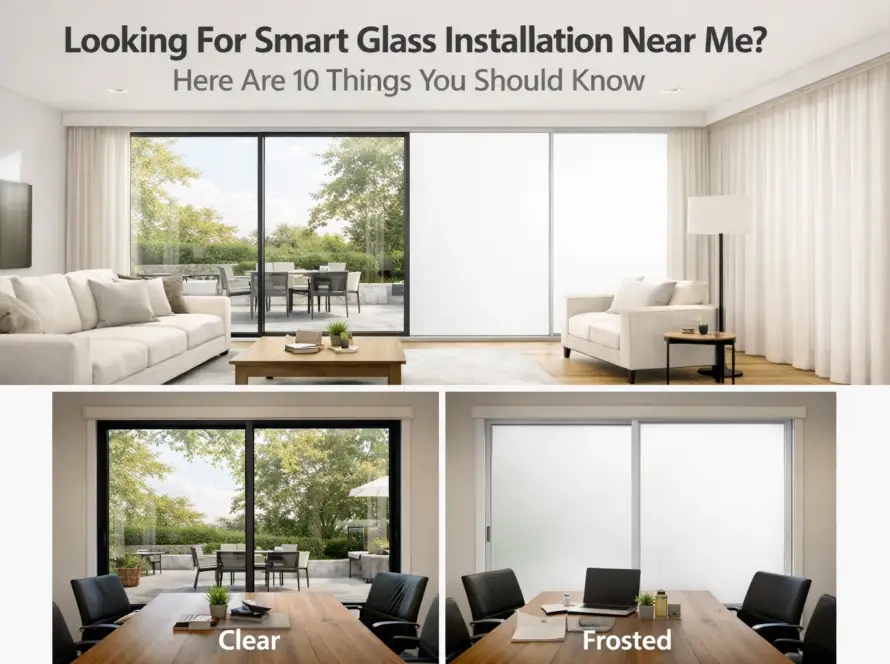
Smart Glass Installation: 10 Things You Should Know About Retrofitting Existing Windows
Retrofitting smart glass or smart film onto existing windows sounds simple until you get into the details: glass type, moisture exposure, wiring paths, transformer sizing, and edge sealing. Get those wrong and you’ll see haze, bubbling, premature edge failure, or panels that don’t switch evenly.
This guide is written from an installer’s perspective for anyone planning a smart glass installation as a retrofit. Use it to vet your site conditions, set realistic expectations, and avoid the most common mistakes.
1) Is retrofitting with smart film or replacing with switchable laminated glass the right move?
Most retrofit projects fall into one of two paths:
- Interior retrofit: Apply self-adhesive PDLC smart film to the inside surface of existing glass. This is the fastest route for partitions, conference rooms, sidelites, and interior-facing windows in dry conditions.
- Glass replacement retrofit: Remove the existing pane and replace it with switchable laminated smart glass. Choose this when you need a sealed, durable unit for wet zones or exterior-facing glazing.
If you’re in early planning and need a reality check on feasibility, start by reviewing what a professional smart film installation typically requires in an occupied space (power, access, and clean-room-level prep). Even when the end product looks seamless, the process is technical.
2) Can you retrofit smart film in bathrooms, wet rooms, or exterior windows?
Treat moisture exposure as a hard line.
Smart film is an interior product. Do not install it where it can be exposed to direct water, persistent humidity, or weather. That includes:
- Shower enclosures or glass that gets sprayed
- Steam rooms
- Exterior glazing exposed to rain, sprinklers, or condensation cycles that can migrate into edges
For these areas, plan on switchable laminated smart glass so the active layer is encapsulated within the laminate and the glazing system can be sealed properly. This is the correct approach for long-term durability and warranty compliance.
3) Will your existing frames and glass thickness support a retrofit smart glass installation?
Before you order anything, verify what your frames can accept.
For glass replacement retrofits, your frame must have enough bite and depth to safely hold the thicker laminated unit, plus gaskets, setting blocks, and sealant. A few things we check on site:
- Frame pocket depth and glazing bead clearance
- Structural support points and setting blocks
- Clear routing path for low-voltage wiring out of the frame
- Access for re-glazing without damaging surrounding finishes
If your goal is a clean, permanent solution (especially for higher-traffic areas), consider planning it as a custom smart glass system rather than forcing a film solution where the environment isn’t suitable.
4) What does “good surface prep” actually mean for PDLC smart film?
Surface prep is where most retrofit failures begin. PDLC film is unforgiving. If dust or debris gets trapped, it becomes a permanent visual defect.
Use this prep standard:
- Clean the glass repeatedly using isopropyl alcohol and lint-free wipes
- Work top-to-bottom and edge-to-edge
- Inspect under strong raking light (a bright work light held at an angle)
- Confirm there are no stickers, silicone residue, paint mist, or cleaning film
- Control airflow: turn off nearby fans and avoid HVAC blasts during install
A retrofit smart glass installation should look like a factory finish. That only happens when the glass is genuinely contamination-free.
5) Why do edges fail, and how do you prevent browning or delamination?
Edge detailing is not cosmetic. It’s protection.
The single biggest avoidable mistake in retrofit work is using the wrong sealant. Do not use acid-cure silicone. It releases acetic acid as it cures, which can attack the PDLC layer and cause edge discoloration, browning, or long-term failure.
Use only:
- Neutral-cure, non-corrosive silicone approved for smart film applications
- Proper edge coverage to protect busbars and keep moisture and cleaners out
- Trim or glazing bead solutions that don’t pinch wiring
If you want your smart glass installation to last, treat the edges like the most critical detail, because they are.
6) How should power, transformers, and wiring be planned for a retrofit?
Smart film and switchable laminated glass require power to switch states. Plan the electrical early, because hiding wiring after the fact is where retrofits get expensive.
Installer planning basics:
- Keep the transformer within a reasonable run of the panels so voltage remains stable (long runs can reduce performance).
- Size the transformer to the total active area and load. Under-sizing leads to partial switching or slow transitions.
- Use dedicated low-voltage wiring paths and label everything for future service.
- Choose control options up front: wall switch, remote, automation relay, or smart home integration.
Also plan how you will conceal the busbar and wire exit. Options include routing into the frame, using discreet trim, or micro-trunking where drilling is not allowed.
In commercial retrofits across Southern California, we often coordinate power and control rough-in before finishes to keep the final result clean and serviceable.
7) What should you test before the film goes on the glass?
Always test the panel before committing it to the glass surface.
Minimum pre-install checks:
- Dry-fit the film for alignment and wire exit location
- Power it on to confirm it switches uniformly (clear to opaque and back)
- Inspect for visible defects under light while energized
- Verify controls operate as specified (switch, remote, automation)
This step prevents the worst-case scenario: discovering a power or panel issue after the adhesive is down and trimmed.
8) How do you get a clean look when retrofitting existing windows?
Most clients don’t mind that smart film needs power. They mind seeing it.
A clean retrofit smart glass installation depends on making wiring and edges disappear:
- Route wiring into the window frame immediately when possible
- Keep the wire exit consistent across multiple panels
- Use uniform trim lines and tight, straight cuts
- Avoid “patchwork” silicone blobs and exposed connectors
If you’re planning a multi-panel office buildout, standardize wire exits and transformer locations. This reduces install time and makes future service faster.
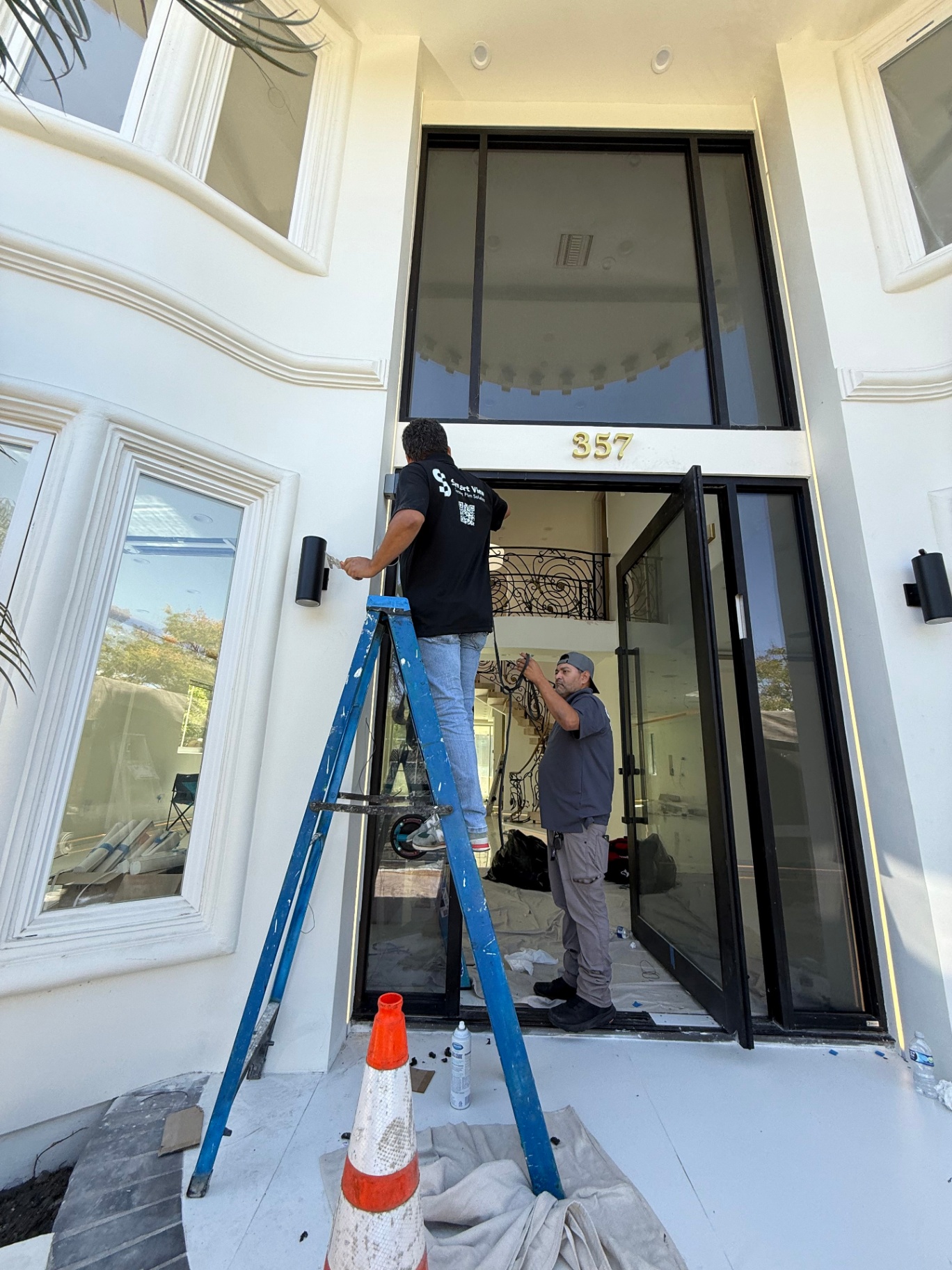
Alt text: Smart View technicians applying PDLC smart film to entry glass with hidden wire routing for a clean retrofit finish.
9) What affects cost when retrofitting smart glass or smart film?
Pricing varies because retrofits vary. The cost depends on:
- Total square footage and number of panels (more seams, more wiring)
- Film vs laminated smart glass replacement
- Glass shape complexity and edge detailing requirements
- Transformer sizing and control type (single switch vs zoned controls)
- Access constraints (lifts, after-hours work, protected interiors)
- Electrical scope and finish repairs after routing wiring
When you’re ready to estimate your project, start with a pricing consultation for smart film so your quote reflects your real site conditions and control goals, not generic averages.
10) What does a realistic retrofit timeline look like?
Timelines are driven by method:
- Interior smart film retrofit is typically faster once glass is ready, power is available, and access is scheduled.
- Switchable laminated smart glass replacement often takes longer due to glass fabrication lead time and glazing work.
Your timeline also depends on coordination: electricians, security requirements, site access, and whether the space is occupied.
If you want to see how different retrofit conditions affect scheduling and finish quality, view completed installations and note the difference between simple interior partitions and full glazing replacements.
FAQ: Retrofitting Smart Glass Installation on Existing Windows
Can you retrofit smart glass installation without replacing the window?
Yes, if the glass is interior and dry.
For many interior applications, you can retrofit by applying PDLC smart film to existing glass. Confirm you have a clean surface, a wiring path, and protection for the film edges. For wet or exterior exposure, replace the pane with switchable laminated smart glass.
Does smart film work on double-pane or tempered glass?
Usually, yes for interior-facing applications.
Film can be installed on the interior surface of many glass types if the surface is smooth, clean, and accessible. Tempered or insulated glass does not automatically block film retrofits, but coatings, textures, and edge constraints can.
What happens if the wrong silicone is used?
You can get edge browning and premature failure.
Avoid acid-cure silicone. Use only neutral-cure, non-corrosive sealants specified for smart film and smart glass applications. This is one of the most common avoidable retrofit mistakes.
How much power does a retrofit smart glass installation require?
It depends on the total active area and transformer sizing.
Smart film and switchable laminated glass run on low-voltage power through a transformer. Larger total square footage and multiple zones require properly sized drivers and sensible cable runs to keep switching uniform.
How do you choose between smart film and switchable laminated smart glass?
Choose film for interior, laminated glass for wet/exterior or higher durability demands.
Film is excellent for interior partitions and existing windows when you want minimal disruption. Laminated smart glass is the correct solution for shower areas, exterior-facing glazing, and applications where encapsulation and sealing are mandatory.
Where can I learn more before requesting an on-site retrofit plan?
Start with our most recent retrofit guidance and then schedule a site review.
Read our previous blog post for additional planning considerations around controls, visual privacy strategies, and finished aesthetics, then come to your walkthrough with photos and dimensions.
Request a retrofit installation proposal
If you’re planning a retrofit smart glass installation, do not guess on film suitability, transformer placement, or edge sealing. Send us photos of your windows, frame profiles, and a rough panel list. We’ll confirm feasibility, recommend the correct retrofit method, and provide a clean wiring and control plan.
For projects in the Los Angeles area, work with smart film installers in Los Angeles who can evaluate your site conditions and deliver an installation proposal built for durability, not shortcuts.
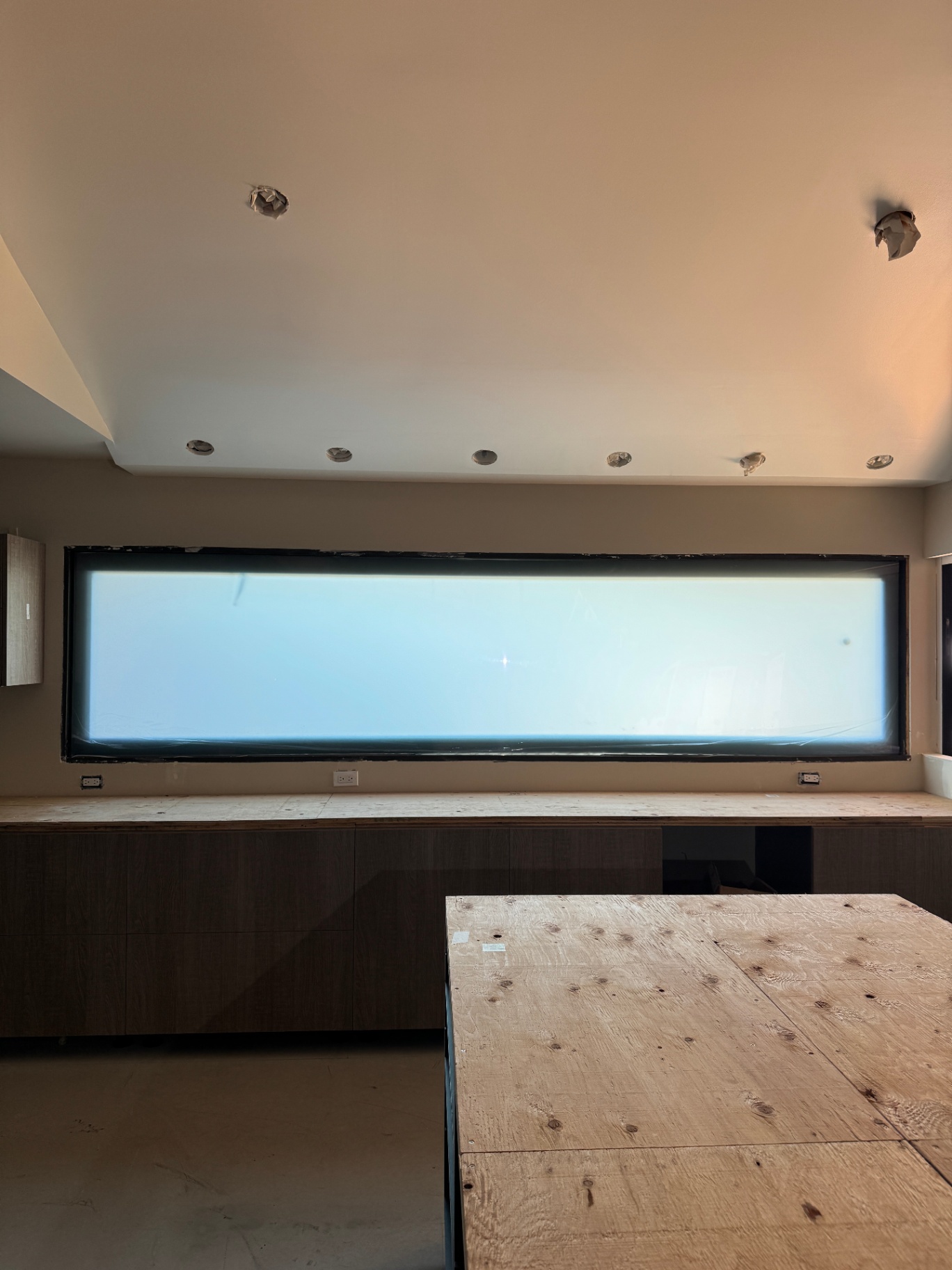
Alt text: Retrofit smart film on a large interior window showing frosted privacy mode with edge-to-edge coverage.