PDLC Technology 101: The Ultimate Guide to Switchable Glass
Master the basics of PDLC technology. Learn how switchable smart glass works, technical specifications, and why it is the leading solution for modern privacy.
Architectural design is currently undergoing a massive shift toward transparency and open-concept environments. However, the need for functional privacy remains a constant requirement in both high-end residential and high-stakes commercial settings. This is where Polymer Dispersed Liquid Crystal (PDLC) technology comes into play. As an industry-leading solution for "switchable" glass, PDLC provides the ability to change glass from transparent to opaque in milliseconds.
For developers, architects, and homeowners, understanding the technical foundation of this technology is essential for making informed decisions regarding smart home integration and building efficiency. If you are looking for professional smart film installation, understanding the "how" and "why" behind the film is the first step toward a successful project.
What Exactly is PDLC Technology?
PDLC stands for Polymer Dispersed Liquid Crystal. In its simplest form, it is a specialized material consisting of liquid crystal droplets dispersed into a liquid polymer, which is then solidified. This mixture is sandwiched between two layers of transparent, conductive polyester film, usually coated with Indium Tin Oxide (ITO).
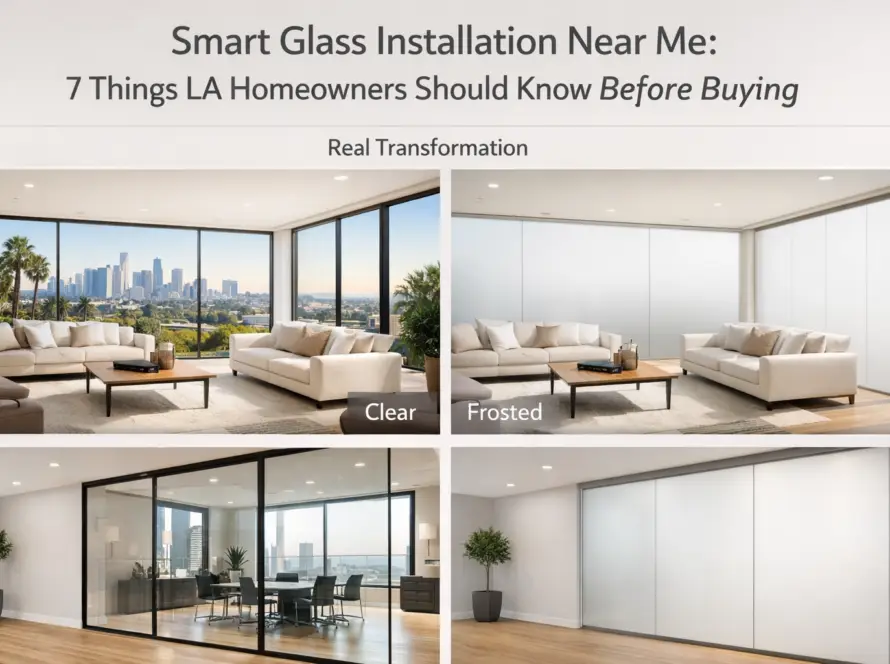
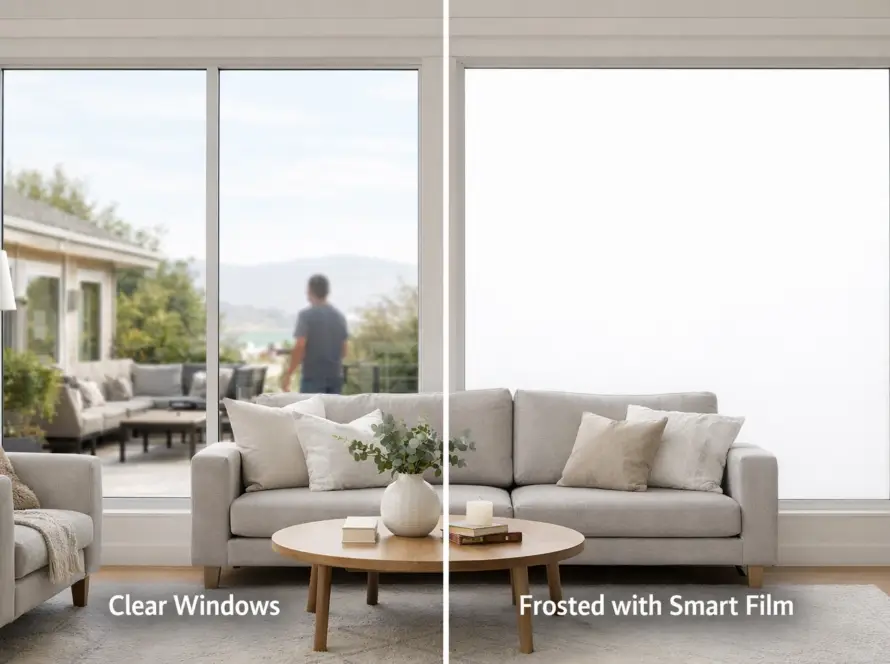
The core of PDLC technology lies in its reaction to an electric field. In its natural, "off" state, the liquid crystal molecules are randomly oriented. This random arrangement scatters light, creating a frosted, opaque appearance that blocks vision while still allowing a significant portion of natural light to diffuse into the room. When an electrical current is applied, the molecules align in a parallel fashion, allowing light to pass through with minimal scattering, rendering the glass clear.
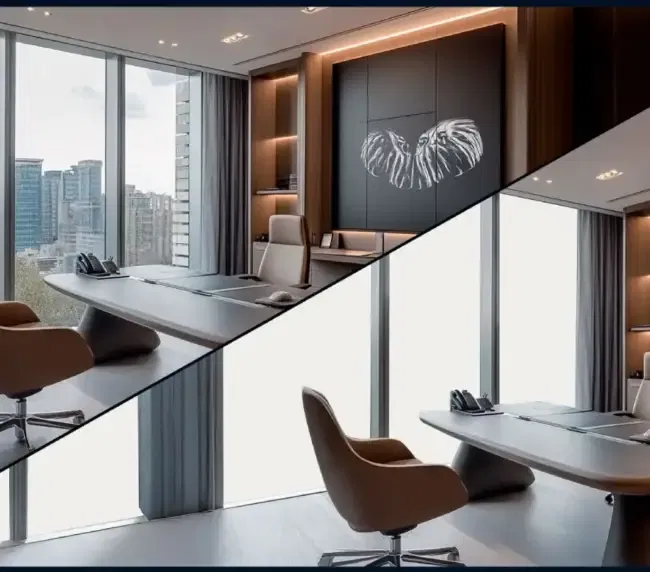
A modern executive office featuring PDLC technology, demonstrating the instant transition from clear views to frosted privacy.
How Does the Science of Switchable Glass Work?
To master the application of switchable glass, one must understand the interaction between voltage and light transmission. The "smart" aspect of the glass is purely electrochromic in nature, although technically it falls under the category of a non-emissive liquid crystal display.
When we install custom smart glass systems, we are essentially installing a large-scale electrical capacitor. The power supply, usually a specialized transformer, converts standard wall outlet power (110V AC) into a lower operating voltage (typically 36V to 60V AC).
The physics of the transition involves:
- Light Scattering (Off State): The refractive index of the liquid crystal droplets does not match the refractive index of the surrounding polymer matrix. Light hits these droplets and bounces in multiple directions.
- Light Alignment (On State): The electric field forces the liquid crystals to align their long axes perpendicular to the film surface. In this state, the refractive index of the crystals matches that of the polymer, creating a clear optical path.
What Are the Key Technical Specifications of PDLC Film?
When evaluating PDLC technology for a project, look beyond the simple "clear to frosted" switch. Technical performance metrics define the quality and longevity of the installation.
- Operating Voltage: Most high-quality films operate between 36V and 60V AC. Lower voltage systems are often preferred for safety in environments like bathrooms.
- Visible Light Transmittance (VLT): In the clear state, premium PDLC film typically achieves about 75% to 80% VLT. In the opaque state, the VLT remains surprisingly high (around 60% to 70%), meaning you don't lose the "feeling" of natural light even when you gain privacy.
- Haze Factor: This measures the clarity of the film. A haze of less than 3% in the "on" state is considered professional grade.
- UV and IR Rejection: One of the most significant benefits of PDLC technology is its ability to block 99% of harmful UV rays. This prevents the fading of expensive flooring, artwork, and furniture. Additionally, many films offer significant Infrared (IR) rejection, which helps in managing solar heat gain.
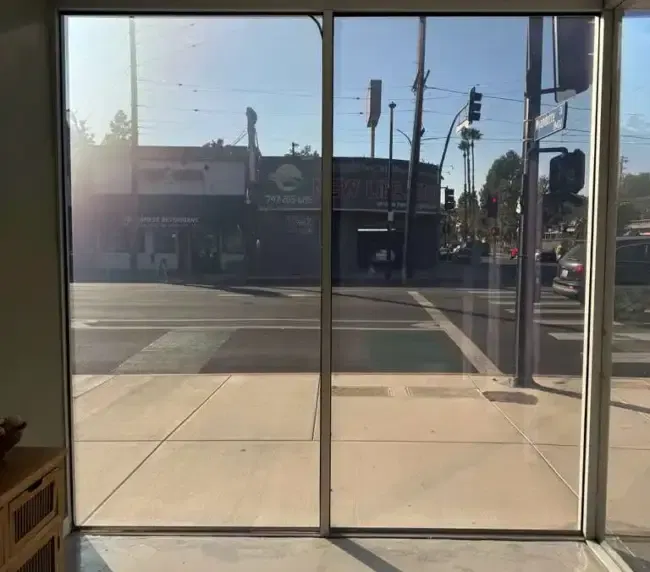
A comparison of standard glass versus glass treated with PDLC film, showing the reduction in glare and enhanced UV protection.
How Do You Install and Control PDLC Systems?
Installation of PDLC technology can happen in two ways: factory-laminated smart glass or retrofit smart film. Laminated glass is ideal for new construction where the film is permanently sealed between two panes of tempered glass. Retrofit film is a self-adhesive layer applied to existing windows, making it a favorite for modernizing existing offices or homes in Southern California.
The control side of the system is where smart home integration happens. Because the system runs on an electrical circuit, it can be triggered by:
- Standard wall switches.
- Remote controls or occupancy sensors.
- Smart home hubs (Lutron, Savant, Alexa, Google Home).
- Mobile apps for remote scheduling.
Proper wiring is critical. Every piece of glass requires a "busbar", a copper strip that connects the film to the power source. These wires are usually hidden within the window frame or behind professional-grade caulking for a seamless look.
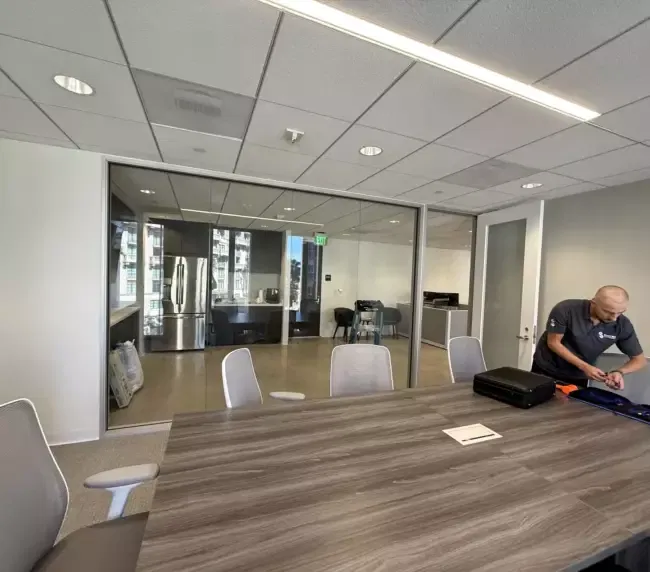
Expert technician preparing the glass surface and busbar connections for a precision PDLC smart film installation.
Is PDLC Smart Film Durable for Long-Term Use?
Durability is a common concern for beginners. However, PDLC technology is engineered for high-traffic environments. Most professional-grade films are rated for over 80 million switches. In a typical office or residential setting, this translates to decades of reliable use.
Environmental factors are also managed through engineering. High-quality films are designed to operate in temperatures ranging from -4°F to 158°F. For exterior-facing windows, the film’s UV-stable properties ensure that the polymer matrix does not yellow or degrade under the intense Los Angeles sun. Maintenance is as simple as cleaning standard glass, provided you use non-ammonia cleaners and follow the specific instructions of your installer to avoid damaging the electrical connections.
What Factors Influence the Cost of PDLC Technology?
When you request a custom quote, you will find that several variables dictate the final investment required for a PDLC system. It is not just the price per square foot of the material itself.
Factors that influence the total cost include:
- Square Footage: Larger areas require more material and higher-capacity transformers.
- Installation Complexity: Wiring a single fixed pane is simpler than wiring a sliding glass door or a folding wall system.
- Control Integration: Basic wall switches are the most cost-effective, while integration into complex building automation systems (Savant or Lutron) adds programming time and hardware costs.
- Retrofit vs. New Construction: Retrofitting existing glass with self-adhesive film is generally more accessible than replacing entire windows with factory-laminated smart glass.
The longevity and energy-saving properties of PDLC technology often provide a significant return on investment through reduced HVAC loads and the elimination of traditional window treatments.
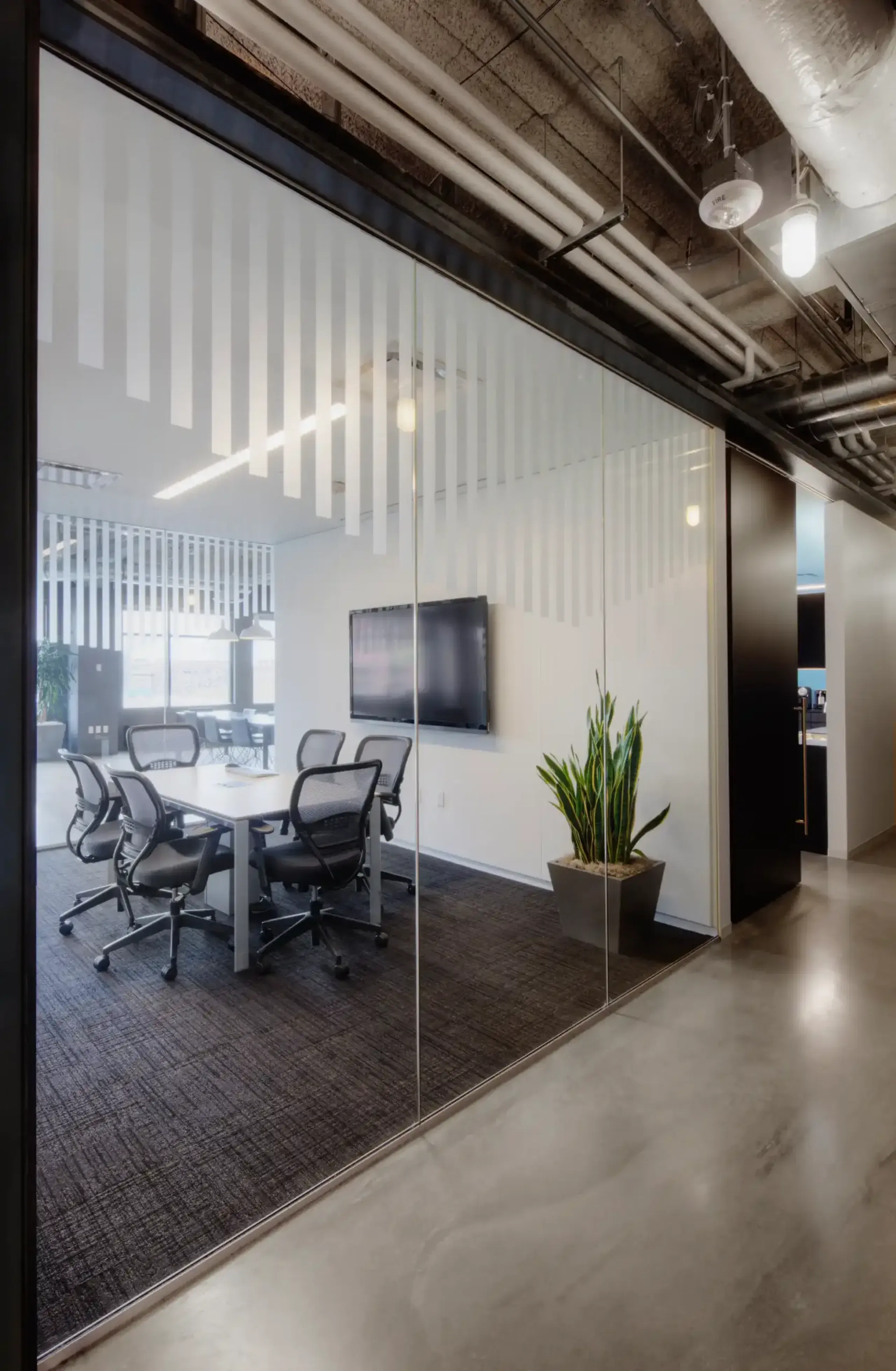
A custom PDLC installation featuring a striped pattern, showing the versatility of the technology for both style and privacy.
FAQ
Does smart glass require electricity to stay clear?
Yes. PDLC technology requires a constant (but low) electrical current to maintain the "clear" state. When the power is turned off, the molecules return to their random, scattered state, making the glass opaque.
Can PDLC film be installed on existing windows?
Absolutely. This is known as retrofit smart film. It uses a self-adhesive backing that allows it to be applied directly to the surface of your existing glass without the need for full window replacement.
What is the power consumption of switchable glass?
PDLC technology is remarkably energy-efficient. It typically consumes about 3 to 5 watts per square meter. For context, an entire wall of smart glass often uses less energy than a single traditional incandescent light bulb.
Is PDLC technology effective for UV protection?
Yes, it is highly effective. Most professional-grade PDLC films block 99% of UV rays in both the clear and frosted states. This is a primary benefit for protecting interior finishes and skin health.
Can I control smart film with my phone or voice?
Yes, when integrated with a smart home system or a Wi-Fi-enabled controller, you can use voice commands through Alexa or Google Home to switch your glass. You can explore our recent smart film projects to see various control integrations in action.
Take Control of Your Environment Today
PDLC technology is no longer a futuristic concept; it is a practical, durable, and highly efficient solution for modern privacy and light management. Whether you are looking to enhance an executive boardroom or create a luxury master suite, switchable glass provides the ultimate flexibility.
At Smart View Smart Film Solutions, we specialize in high-precision installations that integrate seamlessly with your architecture and lifestyle. From initial design to electrical calibration, our team ensures your PDLC system performs flawlessly for years to come. To learn more about how we transform spaces, check out our work on Smart Glass and Smart Film Installation in Santa Monica.
Ready to upgrade your space with the latest in PDLC technology?
Call Smart View Smart Film Solutions at (866) 728-9888 to discuss your project or schedule a professional site evaluation.