Why Smart Glass Matters in 2026: ROI and Property Value for Developers
Explore the measurable ROI of smart glass in 2026. From energy efficiency to LEED credits, learn how switchable technology increases commercial property value.
As we navigate the architectural landscape of 2026, the question for commercial developers and property owners is no longer whether smart glass works, but whether the investment yields a justifiable return. With the smart glass industry reaching a valuation of nearly $9 billion this year, switchable technology has transitioned from a futuristic novelty to a standard specification in Class A commercial real estate.
In high-stakes markets like Southern California, the push for sustainable, high-performance building envelopes has never been more intense. For many stakeholders, the decision to integrate professional smart film installation comes down to a hard look at lifecycle costs versus immediate capital expenditure. To understand if smart glass really matters in 2026, we must analyze the data regarding energy efficiency, tenant retention, and long-term asset appreciation.
Why is the smart glass market surging in 2026?
The surge in smart glass adoption is driven by a convergence of regulatory pressure and technological maturity. Modern building codes, particularly in major urban hubs, now mandate aggressive reductions in carbon footprints. Smart glass and PDLC (Polymer Dispersed Liquid Crystal) films provide a dynamic solution that traditional glazing simply cannot match. Unlike static tinted glass, switchable technology allows a building to respond in real-time to environmental conditions.
The market growth to $9 billion is a clear indicator that institutional investors view smart glass as a "future-proof" asset. In an era where "Net Zero" is a preferred status for commercial developments, the ability to control solar heat gain without sacrificing natural light is a significant competitive advantage. This momentum is further fueled by the decreasing cost of production and the refinement of installation techniques, making the technology accessible to a broader range of commercial projects, from boutique storefronts to massive office towers.
How does switchable technology impact operational expenses?
For any property manager, the primary driver of ROI is the reduction of operational expenses (OPEX). Smart glass delivers quantifiable savings by drastically reducing HVAC loads. In 2026, data suggests that electrochromic and PDLC solutions can reduce cooling requirements by 20% to 30%. By blocking up to 99% of UV rays and managing the Solar Heat Gain Coefficient (SHGC), these systems prevent the "greenhouse effect" common in glass-heavy modern architecture.
Beyond the energy bill, there are maintenance savings to consider. Traditional window treatments: blinds, shades, and curtains: are high-maintenance items. They collect dust, require mechanical repairs, and eventually need replacement due to sun damage. Smart film and glass eliminate these secondary costs. When you factor in the longevity of PDLC technology, which is rated for millions of switching cycles, the lifecycle value becomes evident.
Can smart glass directly increase commercial property appraisal?
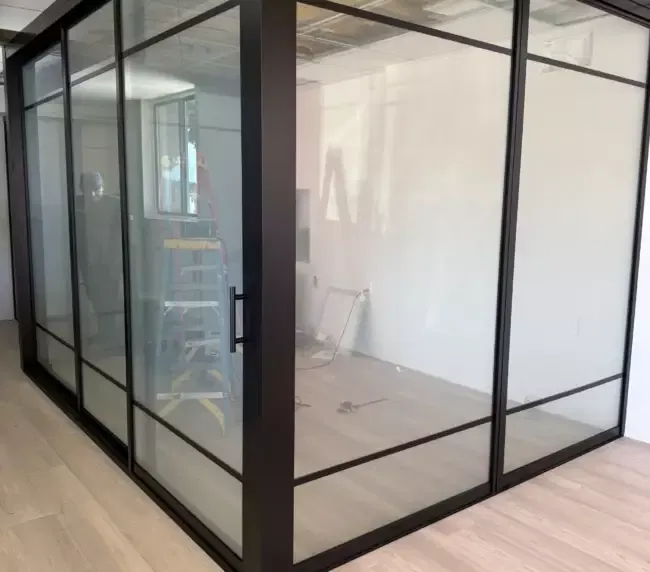
The impact on property valuation is perhaps the most compelling argument for developers. High-performance glazing systems contribute significantly to LEED (Leadership in Energy and Environmental Design) certification. In the 2026 real estate market, a higher LEED rating translates directly to higher appraisal values and the ability to command premium lease rates.
Investors are increasingly looking for ESG (Environmental, Social, and Governance) compliant assets. By installing custom smart glass systems, owners demonstrate a commitment to sustainability that appeals to high-tier corporate tenants. These tenants are often willing to pay a premium for spaces that enhance employee well-being through optimized natural light and superior thermal comfort. In competitive markets like Los Angeles, these technological upgrades can be the deciding factor in securing long-term, high-value leases.
What are the primary drivers of ROI for developers?
ROI in the context of smart glass is calculated through several vectors. First is the immediate reduction in energy consumption. Second is the potential reduction in the size of the HVAC plant required during the construction phase; if the building envelope is more efficient, the mechanical systems can be smaller and less expensive.
Thirdly, the flexibility of the space increases its utility. As discussed in our previous article regarding commercial retail applications, the ability to instantly transition a space from open to private allows for multi-functional use without expensive remodeling. For a developer, this means the property can adapt to different tenant needs over time, reducing vacancy periods and tenant improvement (TI) costs.
How does PDLC film differ from smart glass in terms of investment?
When evaluating the truth about smart glass ROI, it is essential to distinguish between factory-laminated smart glass and retrofit smart film. For new construction, integrated smart glass is often the gold standard. However, for existing assets, professional smart film installation offers a significantly faster path to ROI.
Retrofit film allows owners to upgrade existing glazing without the massive cost and disruption of replacing entire window units. The installation involves applying a PDLC layer to the interior surface of the glass and integrating it into the building’s electrical system. This approach provides the same UV protection and privacy benefits as integrated glass but at a fraction of the capital cost, making it an ideal solution for stabilizing older assets and increasing their market relevance in 2026.
What should developers know about durability and long-term performance?
Durability is a frequent concern for institutional investors. In 2026, PDLC technology has reached a level of reliability where it is considered a permanent building component. The films operate on low voltage (typically 48V to 65V AC) and consume minimal power: roughly equivalent to a small LED bulb per 100 square feet.
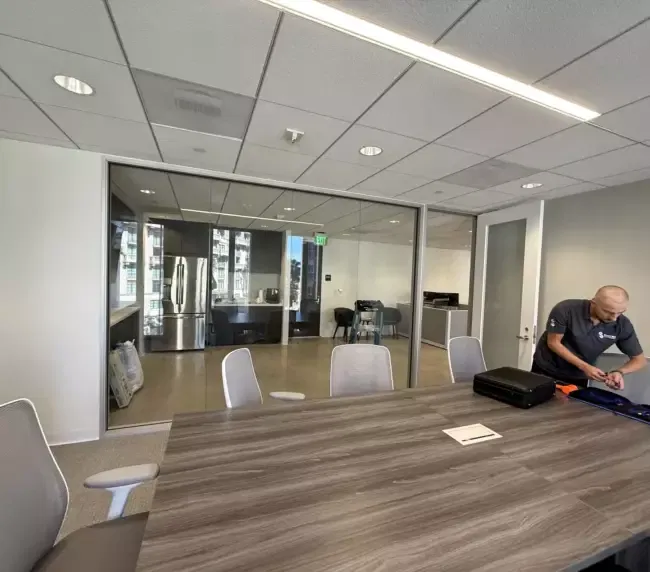
The primary factor in long-term performance is the quality of the installation and the electrical components. Using high-grade transformers and ensuring precise edge-to-edge application prevents delamination and ensures uniform switching. When properly installed, these systems require no specialized maintenance beyond standard non-abrasive cleaning, ensuring that the ROI is not eroded by unforeseen repair costs.
Is smart glass still considered a "luxury" or a "necessity" in 2026?
The classification of smart glass has shifted. While it remains a premium feature, it is increasingly viewed as a necessity for Class A office spaces and luxury hospitality projects. Tenants in 2026 expect a certain level of technological integration. A conference room that requires manual blinds is starting to look as dated as an office without high-speed Wi-Fi.
For developers, the "truth" about ROI is that smart glass acts as an insurance policy against obsolescence. As energy regulations tighten and tenant expectations rise, buildings that lack dynamic glass solutions will face higher vacancy rates and faster depreciation. Investing in switchable technology today ensures the asset remains competitive for the next decade of operation.
FAQ
How does the cost of smart glass compare to traditional privacy solutions?
While the initial investment for smart glass is higher than traditional blinds or curtains, the total cost of ownership is often lower over a five-to-ten-year period. Pricing depends on factors such as total square footage, the complexity of the wiring, and whether you are opting for a retrofit film or a full glass replacement. To get an accurate assessment for your specific project, we recommend you schedule a pricing consultation.
Does smart glass offer 100% UV protection?
Most high-quality PDLC films and smart glass systems block approximately 99% of harmful UV rays. This is a critical factor for commercial ROI, as it prevents the fading of expensive interior finishes, carpets, and artwork, thereby preserving the value of the interior assets.
Can smart glass be operated by batteries?
No. Smart glass and PDLC film require a consistent electrical current to align the liquid crystal molecules and transition the glass to a clear state. These systems are typically hard-wired into the building’s electrical system via a dedicated transformer.
How long does the installation process take for a commercial office?
The timeline varies based on the scale of the project. A standard conference room can often be retrofitted with smart film in a single day, while a full-floor commercial installation may take a week or more. Because it is a retrofit process, it can often be completed with minimal disruption to office operations.
Does smart glass work during a power outage?
PDLC technology is "opaque by default." This means that if the power goes out, the glass will automatically revert to its frosted/private state. This fail-safe ensures that privacy is maintained even in the event of a technical or power failure.
Conclusion
The data in 2026 is clear: smart glass is a high-value investment for the modern developer. Between the 20-30% reduction in HVAC costs, the significant contributions to LEED certification, and the undeniable appeal to high-tier tenants, the ROI is measurable and robust. Whether you are developing a new high-rise or stabilizing an existing commercial asset, switchable technology provides the edge needed in today's competitive real estate market.
Smart View Smart Film Solutions specializes in helping developers and property owners maximize their asset value through expert PDLC integration. Our team handles every aspect of the process, from technical specification to final electrical integration, ensuring a seamless upgrade to your building envelope.
To see how we have helped other developers achieve their goals, view completed installations in our project gallery.
Contact us today to discuss your project requirements and receive a comprehensive site evaluation.
Smart View Smart Film Solutions
(866) 728-9888