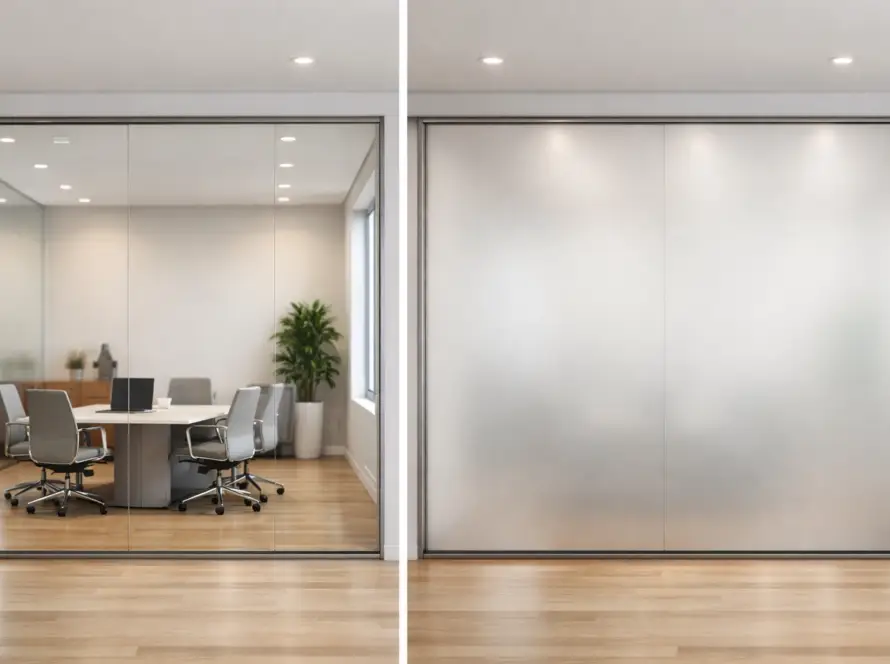
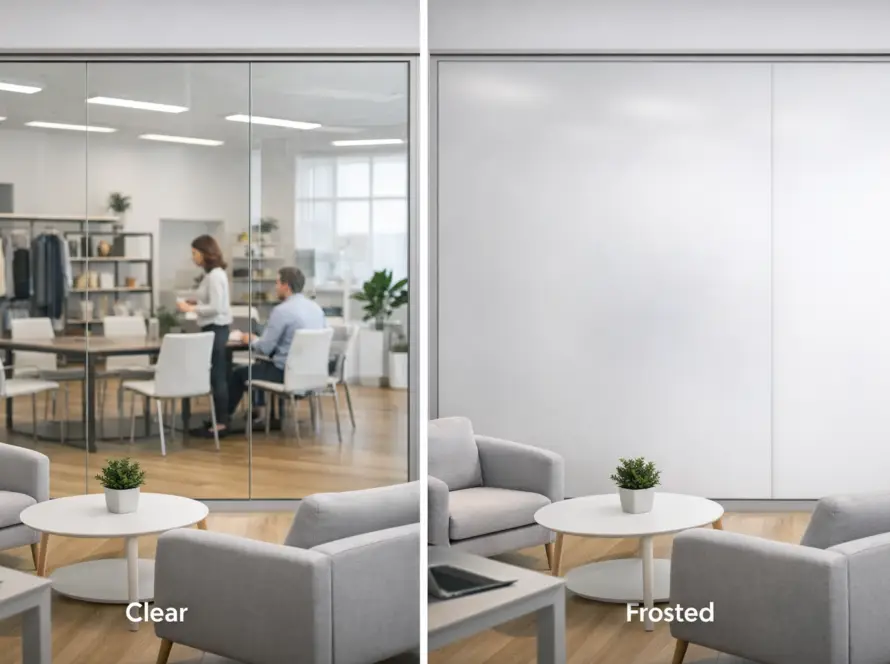
When upgrading existing commercial properties with privacy-on-demand technology, property managers and developers face a critical decision: retrofit with smart film or replace windows entirely with built-in smart glass? The choice significantly impacts project budgets, timelines, tenant disruption, and long-term building value.
For most retrofit projects, smart film installation delivers superior practical and financial outcomes. Unlike built-in smart glass, which requires complete window replacement and structural modifications, smart film adheres directly to your existing glazing: preserving your current window systems while adding instant switchable privacy functionality.
This comparison examines both solutions from an installer's perspective, focusing on the factors that matter most for commercial retrofit projects: installation complexity, cost drivers, performance characteristics, and return on investment.
What Makes Smart Film Installation Ideal for Retrofit Projects?
Smart film installation works with your existing glass infrastructure. The adhesive-backed PDLC (polymer-dispersed liquid crystal) film bonds directly to installed windows, curtain walls, and interior glass partitions without requiring glazing replacement or structural changes.
The installation process involves precise surface preparation, controlled application to eliminate air pockets, and integrated wiring to building management systems. Professional smart film installation typically completes within days rather than weeks, minimizing operational disruption in occupied buildings.
For commercial retrofits, this approach offers distinct advantages. Existing window frames remain intact, preserving building envelope integrity and avoiding costly facade work. The film accommodates irregular window shapes: including triangular, arched, or curved glass: by trimming to exact specifications during installation. This flexibility proves invaluable when upgrading older buildings with non-standard fenestration.
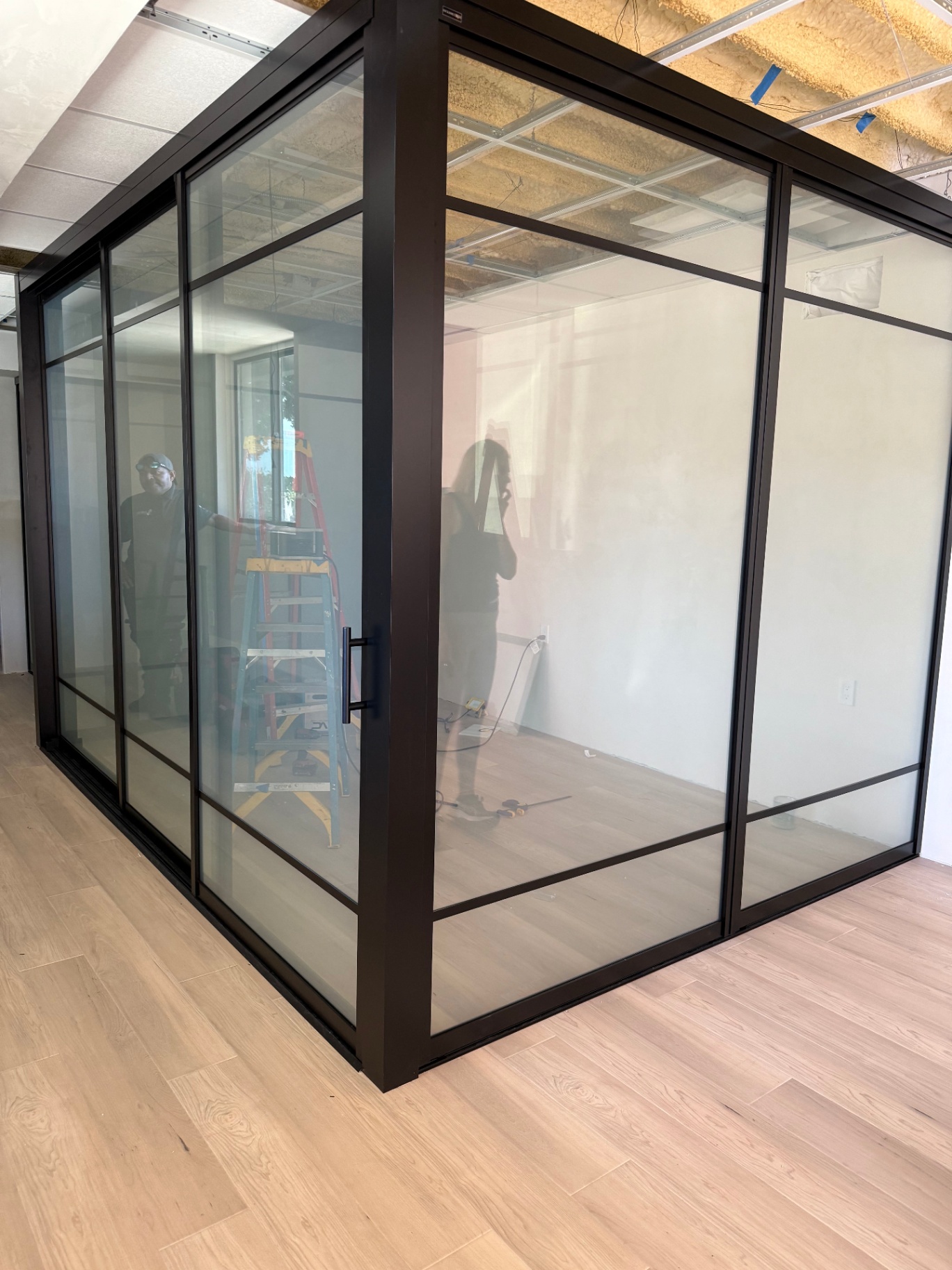
Smart film installation on office glass partitions demonstrates seamless integration with existing framing systems, delivering instant privacy control without replacement.
Procurement timelines also favor smart film for retrofit work. Material delivery typically requires two to three weeks, compared to six to twelve weeks for custom-fabricated smart glass units. When project schedules are tight: such as preparing Class A office space for new tenants: this timing difference becomes decisive.
Smart film installation preserves the thermal performance characteristics of your existing insulated glass units. If you've invested in high-performance low-E coatings or argon-filled IGUs, those energy efficiency benefits remain fully intact while adding smart glass functionality.
When Does Built-In Smart Glass Make Sense?
Built-in smart glass integrates the PDLC interlayer between two glass panes during factory fabrication, creating a sealed insulated glass unit with switchable privacy technology. This manufacturing approach produces the most durable and optically refined smart glass products available.
For new construction and ground-up development, built-in smart glass represents the premium solution. The technology is fully encapsulated within the IGU, eliminating visible edges, wiring transitions, or surface-applied components. This seamless aesthetic appeals to high-end commercial developments and architectural signature projects.
Built-in smart glass units offer superior longevity, with operational lifespans reaching ten to fifteen years under normal use conditions. The PDLC interlayer is protected from UV degradation, humidity exposure, and mechanical damage: factors that can affect surface-applied smart film performance over time.
Outdoor applications require built-in smart glass. Exterior-facing installations exposed to weather, temperature extremes, and condensation demand the waterproof construction that only factory-sealed IGUs provide. Custom smart glass systems for building exteriors, skylights, and canopies must use this approach for reliable long-term operation.
However, retrofit installations with built-in smart glass require complete window replacement: including removal of existing units, potential structural modifications to accommodate different glass weights and thicknesses, and coordination with glazing contractors and facade specialists. This scope expansion transforms a technology upgrade into a major construction project.
How Do Installation Timelines Compare?
Installation timeline directly impacts building operations, tenant relations, and carrying costs during vacancy periods. The contrast between smart film and built-in smart glass installations is substantial.
Smart film retrofit installations typically complete within one to three days per zone, depending on square footage and complexity. A 2,000-square-foot office floor with twenty windows might finish in two days, allowing immediate return to normal operations. The process generates minimal noise, dust, and disruption compared to window replacement activities.
Built-in smart glass retrofits require weeks of coordination and execution. Existing windows must be carefully removed without damaging surrounding finishes. New smart glass units: custom fabricated to exact specifications: must be delivered, staged, and installed using specialized glazing equipment. Each phase introduces scheduling dependencies and potential delays.
For occupied commercial buildings, extended construction timelines translate to lost productivity, tenant complaints, and potential lease complications. When upgrading executive conference rooms or sensitive areas in operating facilities, the expedited timeline of smart film installation becomes a determining factor.
Project mobilization differs significantly as well. Smart film installations require skilled technicians with specialized tools but minimal supporting trades. Built-in smart glass installations typically involve general contractors, glazing subcontractors, structural engineers, and building envelope consultants: each adding coordination complexity and schedule exposure.
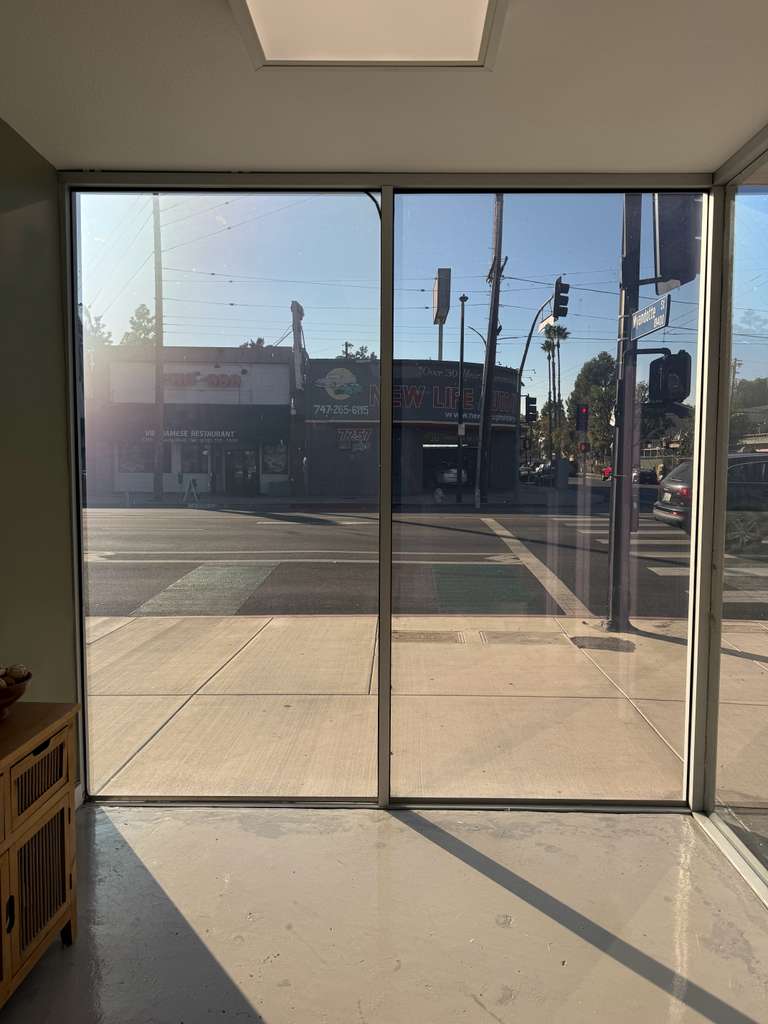
Commercial storefront glass demonstrates the ideal retrofit candidate: structurally sound existing glazing that can be upgraded with smart film installation in days rather than weeks.
What Are the Long-Term Performance Differences?
Performance characteristics matter for commercial property owners evaluating lifecycle value and tenant satisfaction. Both technologies deliver core smart glass functionality: instant privacy switching, natural light preservation, and glare control: but with different operational profiles.
Built-in smart glass offers superior optical clarity in the transparent state, with no perceptible difference from standard architectural glass. The encapsulated PDLC layer maintains consistent performance across the full viewing angle, critical for applications where visual quality drives design decisions.
Smart film installed on existing glass performs within five to ten percent of built-in smart glass optical clarity: a difference noticeable only under direct comparison. For most commercial applications, including conference rooms, private offices, and interior partitions, this variance has negligible impact on occupant experience.
Durability and maintenance requirements differ substantially. Built-in smart glass requires essentially no maintenance beyond standard glass cleaning. The sealed IGU construction protects the PDLC technology from environmental exposure, mechanical damage, and UV degradation.
Smart film surfaces require careful cleaning protocols to avoid damage. Abrasive cleaners, harsh chemicals, and aggressive wiping can scratch or degrade the film surface over time. However, proper maintenance extends smart film operational life considerably, and replacement: if needed: involves straightforward film removal and re-application rather than complete window replacement.
Energy performance impacts building operating costs. Both technologies reduce solar heat gain when activated, lowering HVAC loads during peak cooling periods. Smart film retrofits preserve the thermal performance of existing insulated glass units, while built-in smart glass installations provide opportunities to upgrade to current energy code requirements: particularly valuable when replacing single-pane or outdated glazing systems.
Which Solution Offers Better ROI for Commercial Properties?
Return on investment calculations for commercial property upgrades must account for initial costs, installation expenses, operational disruption, maintenance requirements, and useful service life. For retrofit applications, smart film consistently delivers superior financial performance.
Initial material and installation costs for smart film represent a fraction of built-in smart glass replacement expenses. Pricing varies based on project specifications, but the cost differential typically reaches three to four times between approaches: with smart film offering the more economical option.
This cost advantage compounds when considering associated retrofit expenses. Smart film installation avoids structural modifications, facade work, interior finish repairs, and extended general contractor involvement: each representing substantial hard costs in built-in smart glass replacement projects.
Tenant disruption carries real financial implications for commercial property owners. Extended construction activities impact tenant satisfaction, potentially affecting lease renewals and market reputation. Vacant space undergoing smart glass upgrades between tenancies benefits from accelerated timelines that reduce carrying costs and enable faster return to market.
For multi-property portfolios or phased renovation programs, smart film retrofits enable rapid deployment across extensive square footage. Building owners can upgrade entire properties over weeks rather than months, realizing tenant experience improvements and marketing advantages faster than competing properties using built-in smart glass approaches.
Recent smart film projects demonstrate these advantages across diverse commercial applications, from corporate headquarters retrofits to medical office privacy upgrades and hospitality installations.
Frequently Asked Questions About Retrofit Smart Glass Solutions
Can smart film be installed on any existing glass?
Smart film adheres to most architectural glass types, including annealed, tempered, laminated, and low-E coated glass. The surface must be smooth, clean, and free from texture or embedded wire. Insulated glass units (IGUs) can be upgraded by applying smart film to the interior pane, preserving the thermal performance of the sealed unit. Glass age and condition matter less than surface integrity: making smart film viable even for older building stock with decades-old glazing.
How long does smart film installation take compared to window replacement?
Smart film installation completes in one to three days for typical office floors, while built-in smart glass replacement requires two to six weeks for comparable scope. The timeline difference stems from material procurement, fabrication lead times, demolition requirements, and coordination with multiple trades. Smart film projects minimize building disruption and allow occupied spaces to return to normal operations immediately after installation completion.
Does smart film require replacing existing windows?
No. Smart film retrofits work with your existing glass infrastructure, adhering directly to installed windows and partitions. This approach preserves current framing systems, building envelope integrity, and thermal performance characteristics while adding switchable privacy functionality. Window replacement becomes necessary only when existing glass is damaged, undersized for current needs, or fails to meet energy code requirements for other reasons.
What maintenance does smart film require in commercial settings?
Smart film requires gentle cleaning with non-abrasive microfiber cloths and mild soap solutions. Avoid ammonia-based cleaners, paper towels, and aggressive scrubbing that can scratch the film surface. Regular cleaning schedules similar to standard glass maintenance preserve appearance and functionality. Unlike mechanical systems requiring periodic servicing, smart film involves no moving parts or scheduled maintenance beyond cleaning: reducing long-term operating costs.
Is smart film suitable for exterior-facing applications?
Smart film performs best in interior applications protected from weather exposure, temperature extremes, and direct moisture contact. Exterior-facing retrofit applications require built-in smart glass with factory-sealed construction. However, the majority of commercial privacy and glare control needs: including conference rooms, private offices, executive suites, and interior glass partitions: occur in interior environments where smart film delivers optimal performance and value.
Upgrade Your Commercial Property with Professional Smart Film Retrofits
For commercial retrofit projects prioritizing cost control, accelerated timelines, and minimal operational disruption, smart film installation represents the superior solution. The technology delivers instant switchable privacy, preserves existing building systems, and enables rapid deployment across extensive square footage: all while avoiding the complexity and expense of complete window replacement.
Smart View Smart Film Solutions specializes in commercial smart film retrofits throughout Southern California, bringing expert installation capabilities and proven project management to office buildings, medical facilities, hospitality properties, and corporate campuses. Our team handles everything from initial site evaluation and power requirements through precision installation and system commissioning.
Ready to evaluate smart film for your retrofit project? Contact Smart View Smart Film Solutions today for a comprehensive site assessment and detailed installation proposal. Discover how quickly your property can benefit from cutting-edge privacy glass technology without the disruption and expense of window replacement.