Optimize Your Property Value with Advanced Switchable Privacy Film Solutions
Modern commercial real estate demands a level of flexibility that traditional construction materials simply cannot provide. For developers and facility managers, the challenge is clear: how do you design a space that feels open and collaborative while maintaining the ability to secure private areas at a moment's notice? Switchable privacy film, powered by PDLC (Polymer Dispersed Liquid Crystal) technology, has emerged as the premier solution for high-stakes retail and office environments.
In the current commercial landscape, the ability to adapt is a form of currency. Static walls are increasingly seen as liabilities that limit the long-term utility of a floor plan. Switchable privacy film allows for a dynamic reconfiguration of space without the mess, cost, or permanence of traditional renovation. By opting for a professional smart film installation, property owners can instantly upgrade the functional value of their glass partitions, turning a standard office into a high-tech, multifunctional environment.
How does switchable film improve office adaptability?
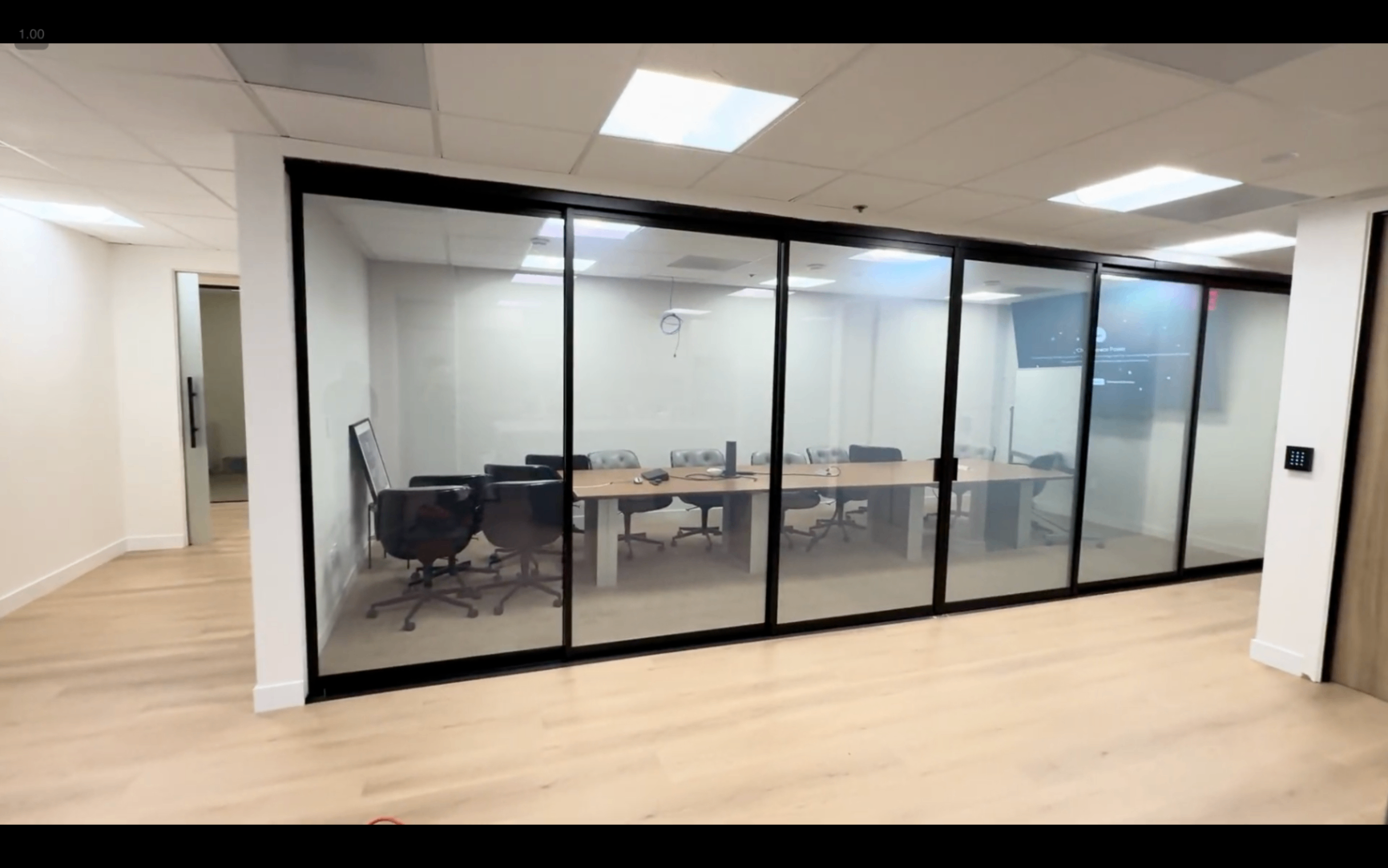
The modern office is no longer a collection of cubicles; it is a fluid ecosystem. Switchable film facilitates this by allowing glass-walled conference rooms to transition from transparent to opaque in less than 40 milliseconds. This instant change is critical for teams that move between open-concept collaboration and high-security executive sessions.
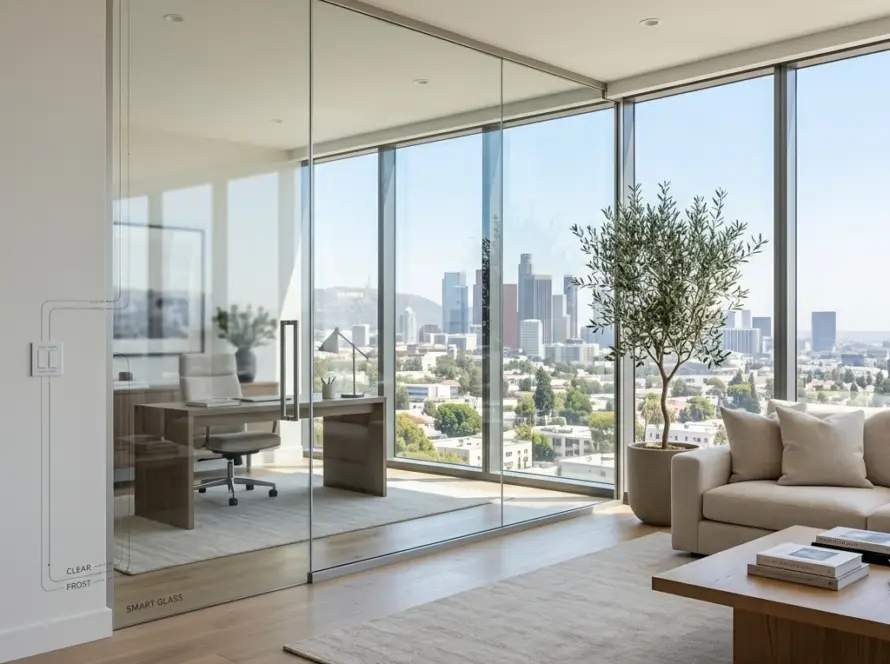
From an installer’s perspective, the adaptability comes from the retrofit nature of the product. Unlike bulky curtains or dust-collecting blinds, PDLC film is applied directly to existing glass. It integrates seamlessly with glass doors, sidelights, and exterior windows. This means you can change the layout of your privacy zones without moving a single wall. The technology utilizes a low-voltage electrical current to align the liquid crystal molecules. When the power is on, the molecules align to let light through, making the glass clear. When the power is cut, the molecules scatter, creating a frosted, opaque barrier that maintains light transmittance while providing 100% visual privacy.
What are the ROI benefits for commercial developers?
For developers, every square foot must justify its existence. Switchable film increases the "yield" of a space by making individual rooms serve multiple purposes. A glass-walled showroom can be an open part of the retail floor during business hours but can become a private consultation room or a secure VIP lounge with the flick of a switch. This multi-functionality is a massive selling point for prospective tenants who are looking to maximize their lease.
Beyond versatility, there is a tangible impact on the building’s lifecycle costs. Smart film blocks up to 99% of UV rays and significantly reduces infrared (heat) gain. In high-exposure areas like Los Angeles, this leads to lower HVAC loads and protects interior finishes from sun bleaching. When you factor in the reduced need for cleaning traditional window treatments, which harbor allergens and dust, the operational savings become apparent. Developers who integrate custom smart glass systems into their base-building specifications often see higher tenant retention rates and faster leasing cycles.
How does smart film enhance the retail customer experience?
In retail, the storefront is the primary driver of foot traffic, but the interior must facilitate the sale. Switchable film is revolutionizing high-end retail by creating "reveal" moments. Imagine a storefront that remains opaque to build anticipation for a product launch, only to become transparent at a scheduled time.
In luxury fitting rooms or high-end jewelry consultation areas, privacy is paramount. Traditional curtains often feel dated or unhygienic in a post-pandemic retail environment. Switchable film provides a sleek, modern, and easily sanitizable surface. Furthermore, when the film is in its opaque state, it can serve as a high-definition rear-projection screen. This allows retailers to turn their glass partitions into digital signage or branding displays, maximizing the utility of the glass even when privacy is engaged. This dual-purpose functionality ensures that the investment contributes directly to the store’s marketing and sales goals.
What technical specifications matter for large-scale deployments?
When managing a large-scale commercial installation, the technical details determine the success of the project. As expert installers, we focus on the power distribution and control systems. Each panel of switchable film requires a dedicated transformer. These transformers are typically hidden in the ceiling plenum or a nearby equipment closet.
The wiring is run through the door frames or slim-line channels to ensure a clean, "wireless" look. For commercial applications, we recommend integrating the film with Building Management Systems (BMS). This allows for centralized control, for example, setting all glass to opaque after business hours for security or linking the transparency to occupancy sensors. The durability of the film is also a key spec; high-quality PDLC films are rated for over 3 million switches and tens of thousands of hours in the "on" state. We ensure that every edge is precision-trimmed to prevent delamination and that busbars (the electrical contact points) are positioned to maximize the visual field of the glass.
How does this technology impact energy efficiency and LEED certification?
Sustainability is no longer optional for modern commercial projects. Switchable film contributes to LEED points in several categories, including Indoor Environmental Quality and Energy and Atmosphere. By allowing natural light to penetrate deep into the building core even when the privacy mode is active, the film reduces the need for artificial overhead lighting.
The infrared rejection properties are particularly valuable for buildings with large glass facades. By rejecting heat before it enters the building, the air conditioning system doesn't have to work as hard to maintain a comfortable temperature. This direct impact on energy consumption is a major driver for developers looking to future-proof their assets against rising energy costs. When you schedule a pricing consultation, we provide a breakdown of how the film’s performance metrics can align with your specific energy goals.
What is the installation and maintenance reality for facility managers?
One of the greatest advantages of switchable film for facility managers is the minimal maintenance required. Unlike blinds, which have mechanical parts that break and fabrics that stain, smart film is a solid-state technology. To clean it, you simply use the same non-abrasive cleaners you would use on standard glass.
The installation process is designed to be non-disruptive. Because there is no demolition involved, we can often complete floor-wide retrofits during off-hours, ensuring that business operations are not interrupted. Our team handles the entire process, from precision measuring and film cutting to the final electrical connections and testing. To see how we have successfully transformed other commercial spaces, you can explore our recent smart film projects. We emphasize a "fit and forget" approach, where the system is robust enough to handle the rigors of a high-traffic office or retail environment with zero downtime.
FAQ
How long does the film last in a high-traffic office?
High-quality PDLC switchable film is designed for longevity in commercial environments. It is typically rated for over 80,000 to 100,000 hours of "on" time and millions of switching cycles. With professional installation and proper electrical setup, the film can easily last 10 to 15 years or more, outlasting most traditional interior finishes.
Does it require a complete glass replacement?
No, one of the primary benefits of switchable film is that it is a retrofit product. It can be applied to almost any existing smooth glass surface. This makes it a cost-effective alternative to smart glass, which requires the removal of existing panes and the installation of new, factory-laminated units.
How is the film powered in a large commercial layout?
The film operates on low-voltage AC power, typically 48V to 65V depending on the specific product. Each installation includes a transformer that plugs into a standard 110V outlet. For large office layouts, we often use multi-channel power supplies that can control dozens of panels from a single centralized location, making the wiring much more efficient.
Can it be integrated into existing building management systems?
Yes, switchable film is highly compatible with modern smart building technology. It can be controlled via wall switches, remote controls, smartphone apps, or integrated directly into a BMS via RS232 or dry contact relays. This allows for automated scheduling, voice control, and integration with lighting and HVAC systems.
Is it effective for sound privacy as well as visual privacy?
While the film itself is thin, the application of an extra layer on the glass can provide a minor improvement in the Sound Transmission Class (STC) rating of the partition. However, its primary function is visual privacy. For environments requiring total acoustic isolation, we recommend applying the film to laminated or double-glazed glass systems. You can read more about acoustic considerations in our latest industry insights.
If you are looking to modernize your commercial property or retail space in Los Angeles, the transition to switchable technology is the most effective way to ensure your layout remains relevant and functional for years to come. At Smart View Smart Film Solutions, we specialize in high-performance installations that prioritize durability, aesthetics, and ROI. Contact our team today to discuss your project requirements and receive a comprehensive installation proposal tailored to your specific architectural needs.