
Smart Film Installation Business Startup Guide for Contractors

Every smart film installation business startup guide should begin with an honest fact: this is a trade, not a side hustle. The contractors who make it work hold a license, learn the low-voltage side of the product, source PDLC film from a fabricator that cuts to size, and usually add switchable film to an existing glazing or remodeling business rather than starting from zero.
Interest in this work keeps growing for a simple reason: LA offices, showrooms, medical suites, and homes keep specifying switchable privacy, and there are more jobs than trained crews. We fabricate switchable PDLC film and glass at our Canoga Park facility, install across Los Angeles, and supply material to licensed trades — so we see this business from both sides, and this guide reflects what actually separates the installers who last from the ones who generate warranty calls.
Who is actually set up to install switchable film?
The shortest path in is an adjacent trade. Glaziers and glass shops already measure, handle, and set glass for a living. Window and door contractors and remodeling GCs already run jobsites where switchable film is one more scope line. Low-voltage and smart-home integrators come at it from the other side — the controls are second nature, and the glass discipline is what they add.
In California, a contractor's license is the entry ticket, and it matters beyond the legal side: reputable PDLC fabricators — Smart View Film Solutions included — supply retrofit film to licensed contractors, glaziers, and trade installers only. The industry learned that lesson the hard way. Switchable film is unforgiving to apply, and when an untrained buyer creases a panel, the one-star review blames the product, not the application. Keeping film in trained hands protects the client, the installer, and the technology's reputation all at once.
Switchable glass panels are a different story: the PDLC layer arrives factory-sealed inside laminated glass, so any glazier can fit one like a standard unit. If your crew sets glass, you can offer switchable panels tomorrow — it is the film application that demands the new skill set.
The skills that separate clean installs from callbacks
The application itself is the gate. A creased or bubbled film cannot be lifted and re-applied, so surface prep, dust control, and a dry fit before anything touches adhesive are not optional steps — they are the job. The busbar (the powered edge connection) has to be protected and terminated cleanly, and every panel should be power-tested before the crew leaves.
Then there is the electrical half. Each independently switched zone needs a transformer sized to its glass area, wired to a wall switch, remote, or smart-home controller. None of it is exotic, but it has to be planned before the film is cut, not after.
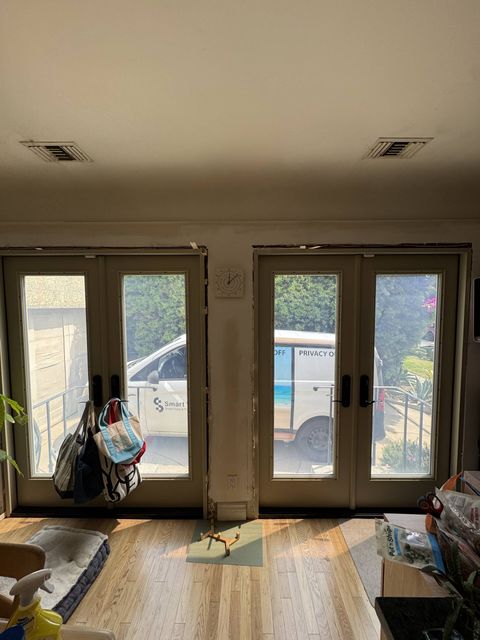
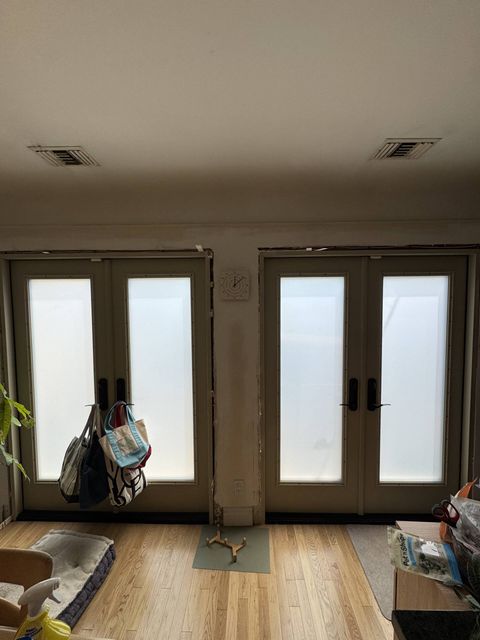
What the finished standard looks like: the switchable French doors project we installed in Los Angeles — pictured above — where every door lite frosts edge to edge with no banding, and the wiring is tucked out of sight in the frames.
Why your film supplier decides your margins
A remake is the most expensive line item in this business, and most remakes trace back to sourcing. Film has to arrive cut to your exact glass sizes with the busbar placed for the panel it powers, applied and bench-tested at the factory — not trimmed to fit on a jobsite. The matched transformer should be in the same box, with a wiring guide your crew or electrician can follow, and manufacturer spec sheets available when a designer or building owner asks for documentation.
Lead times are the quieter margin killer. Overseas film runs weeks; a local fabricator keeps a stalled jobsite from becoming your problem. We cut trade orders at our Canoga Park facility and confirm sizes, specs, and lead times per project before anything is fabricated — material and panel options are on the buy smart glass page.
How should a contractor price switchable film work?
Price the whole job, not the square footage. The film area is the visible number, but the hours live in prep, wiring, transformer placement, and per-panel testing — quote as if the application were half the work, because it is. For a market reference: a single small window usually starts around $1,500 fully installed at retail and scales with glass area and controls, so a bid built on bargain-kit material pricing is a bid that ends in callbacks.
Be equally clear about the warranty split. The film carries its manufacturer's product warranty; the workmanship warranty on the application is yours to stand behind — the same split we use on our own installs, where our licensed crew (CA lic. #1134029) covers workmanship for a year.
Do you need to start from scratch at all?
Often the better business decision is partnering instead of building solo. Window and door makers build switchable panels into their own frames. Designers and architects specify the product and leave fabrication to us. GCs sub out the switchable scope entirely, and installer crews take our cut-to-size film with fabrication support behind them. All four arrangements run through our smart glass trade partnerships program — trade pricing, real installed proof to show your clients, and a fabricator answering the phone when a panel question comes up mid-job.
Questions contractors ask before adding switchable film
Can anyone buy PDLC smart film, or is it trade-only?
Retrofit switchable film is trade-only: we supply it to licensed contractors, glaziers, and professional installers. Factory-sealed switchable glass panels are openly available, because the PDLC layer is protected inside the laminated unit and any glazier can set one like standard glass.
What does the film cost a contractor to buy?
Trade material is quoted per project — panel sizes, busbar placement, transformer count, and lead times are confirmed before anything is cut. Send a cut list or drawings and you'll have numbers within one to two business days.
What equipment does a switchable film crew need?
Mostly what a careful glass crew already owns: prep and application tools, dust control, a dry-fit setup, low-voltage hand tools, and a multimeter to power-test every panel. The real investment is practice — train on scrap panels before the first client pane.
Is there product support after the sale?
Yes. Trade orders leave our facility bench-tested, with the matched transformer, a wiring guide, and manufacturer spec sheets, and our team is reachable when something on site doesn't match the drawing.
Whether you want a fabrication partner behind your first switchable job, a supplier for a crew you already run, or would simply rather refer the scope to us, request an estimate or call (866) 728-9888 — sizes, spec sheets, and trade pricing come back within one to two business days.