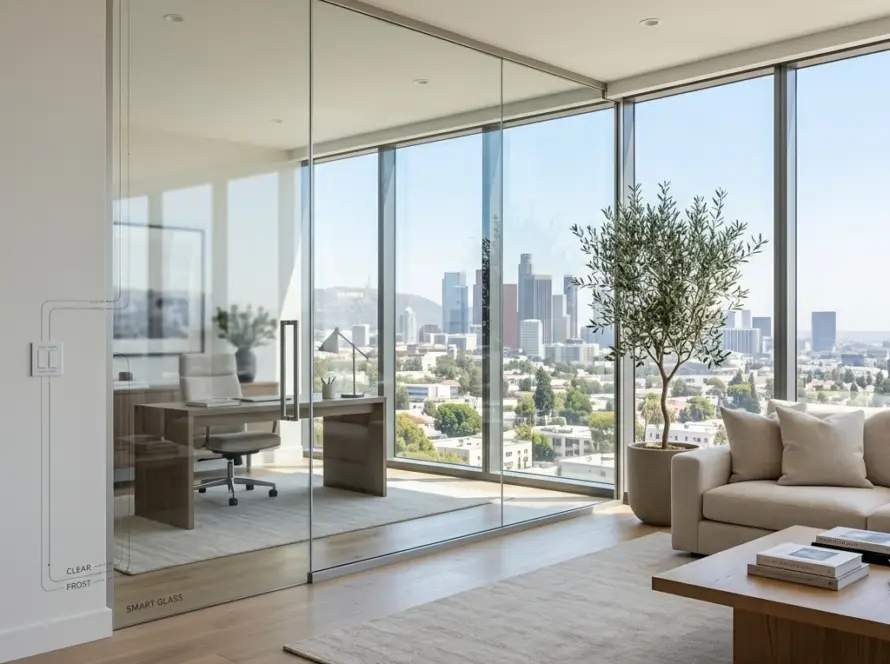
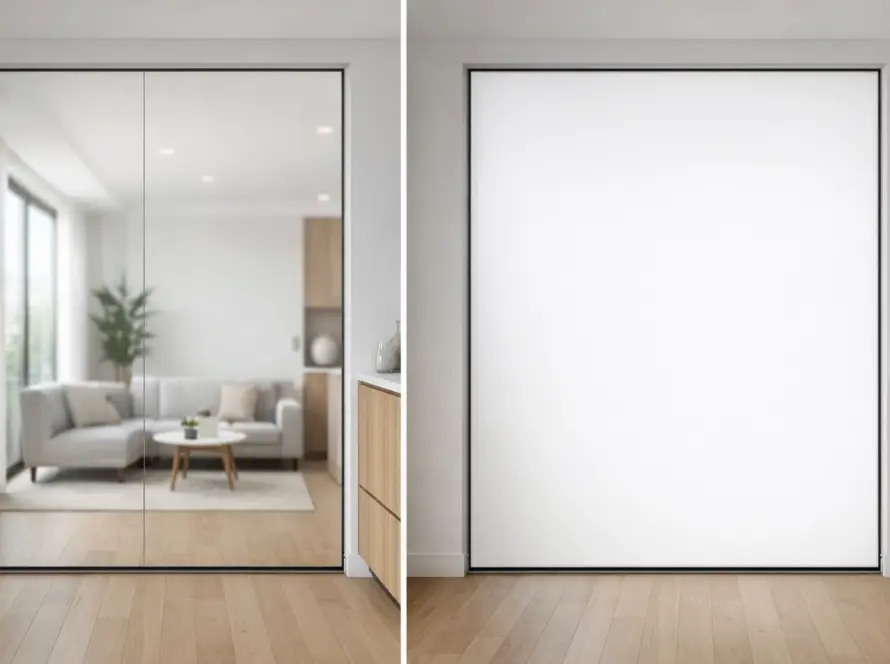
Managing a commercial property portfolio comes with constant pressure to enhance tenant experience, reduce operating costs, and maintain competitive advantage. Smart film technology delivers on all three fronts, but only when installed correctly. This guide walks you through everything you need to know about planning, executing, and maintaining a successful smart film deployment across your commercial properties.
What Planning Steps Must Property Managers Complete Before Installation?
Start with a comprehensive site evaluation. Walk each space where smart film will be deployed and document glass dimensions, existing electrical infrastructure, and accessibility constraints. Measure every pane precisely, accounting for framing and mullions that may affect film sizing.
Identify your electrical requirements early. Smart film requires continuous low-voltage power, typically 48-65V AC depending on film size and manufacturer specifications. Map out where transformers will be located, how far wiring must run, and whether existing electrical panels can accommodate additional circuits. Plan for controller placement in accessible locations: ceiling plenums, electrical closets, or wall-mounted enclosures work well for commercial applications.
Coordinate with tenants at least two weeks before installation. Smart film installation requires clean, dry conditions and temporary access restrictions. Schedule installations during off-hours or weekends when possible to minimize disruption to business operations.
Budget adequate time for material procurement. Lead times for commercial-grade smart film can range from two to six weeks depending on order size and custom specifications. Factor in shipping logistics and inspection time before installation day.
Review warranty requirements carefully. Most manufacturers require professional installation for warranty coverage to remain valid. Document installer certifications and ensure compliance with manufacturer protocols throughout the project.
How Do You Prepare Glass Surfaces for Commercial-Grade Installation?
Surface preparation determines long-term adhesion and optical performance. Begin by inspecting every glass surface for chips, cracks, or deep scratches. Damaged glass must be replaced before film application, adhesive will not bond properly to compromised surfaces, and defects will telegraph through the film creating visible imperfections.
Clean glass thoroughly using a neutral pH cleaning solution and lint-free microfiber cloths. Avoid ammonia-based products that can leave residue interfering with adhesion. For large commercial installations, consider establishing a dust-controlled environment by sealing off work areas and running HEPA filtration during application.
Pre-cut film to specifications with a 1-2mm safety margin on all edges. This critical clearance prevents edge lifting caused by thermal expansion and allows proper application of edge sealant. For projects requiring multiple panels, label each piece clearly with its designated location to avoid confusion during installation.
Condition film properly before application. Lay each piece flat with corners weighted down for 48 hours minimum before installation day. This step releases manufacturing stress and prevents curling during application, especially important for larger commercial panels exceeding six square feet.
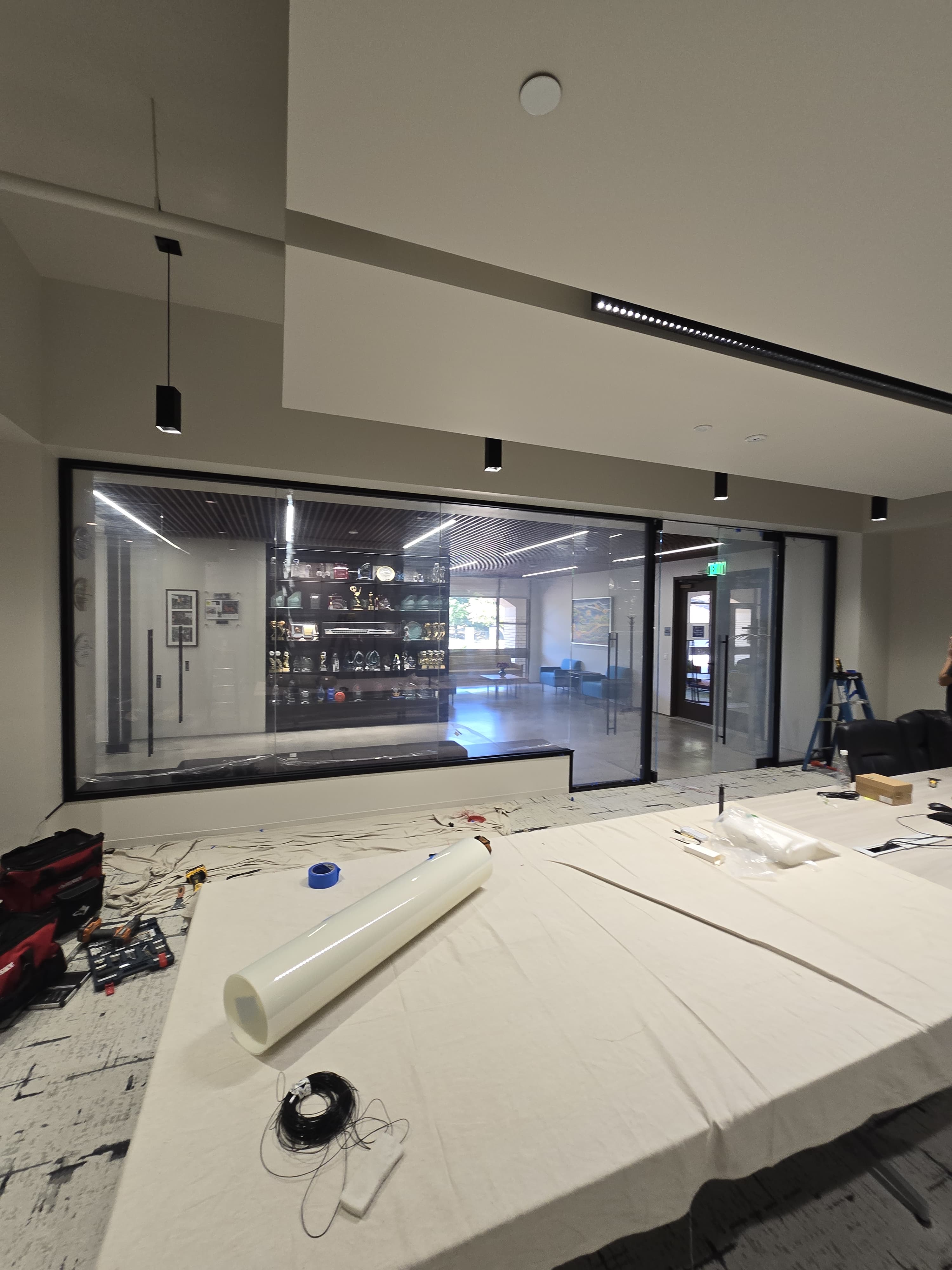
Professional preparation station showing tools, wiring components, and PDLC smart film organized for systematic commercial installation
What Installation Techniques Ensure Professional Results at Scale?
Commercial installations require systematic execution and quality control at every step. Assemble your installation team, smart film application is not a solo task. Plan for one lead installer and at least one assistant per panel to maintain control throughout the process.
Apply film using the slip solution method for electrostatic or adhesive-backed products. Spray the glass surface thoroughly with soapy water to create a workable surface that allows positioning adjustments. Peel the protective liner slowly, keeping the adhesive side facing toward you to prevent contamination. Position the film carefully at the top edge first, then lower it gradually onto the glass surface.
Use a professional-grade squeegee to remove solution and air bubbles, working systematically from center to edges. Apply firm, overlapping strokes to ensure complete adhesive contact across the entire surface. For panels larger than ten square feet, work in sections rather than attempting to squeegee the entire surface at once.
Trim excess film with a sharp utility knife, using the glass edge as a guide. Make clean, single-stroke cuts to avoid ragged edges that can compromise the seal. Apply neutral silicone sealant along all edges to create a moisture barrier protecting electrical connections and preventing edge delamination.
When you need professional smart film installation that meets commercial standards, experienced installers follow these protocols precisely on every panel.
How Should Property Managers Approach Electrical Integration?
Electrical integration requires coordination between film installers and licensed electricians. Smart film operates on low-voltage AC power supplied by step-down transformers that convert standard 120V building power to the voltage specified by the film manufacturer.
Plan transformer locations strategically. Each transformer can typically power 80-120 square feet of film depending on specifications. For large installations across multiple rooms or floors, distribute transformers to minimize wire runs and reduce voltage drop. Install transformers in accessible locations that allow future maintenance without disrupting tenant spaces.
Run wiring before film application when possible. Make connection cuts in the film’s buss bar, apply conductive paste if required by your film type, and test connections before mounting film to glass. This sequence allows troubleshooting without risking damage to installed film.
Conceal wiring professionally using cable channels, conduit, or in-wall routing. Commercial installations demand clean aesthetics, exposed wiring undermines the premium appearance smart film provides. Flat ribbon cables can be painted to match surrounding surfaces when exposed routing is unavoidable.
Install control systems that match property management needs. Options range from simple on/off switches to smartphone apps, building automation integration, and automated scheduling based on occupancy or time of day. For properties with multiple zones, centralized control systems provide efficient management and reduce tenant service calls.
Ensure all electrical work complies with local building codes. In most jurisdictions, low-voltage wiring for smart film falls under electrical code requirements and must be performed or supervised by licensed electricians. Document all electrical work for inspection and building records.
What Factors Affect Smart Film Performance in Commercial Environments?
Understanding performance variables helps property managers set accurate expectations and troubleshoot issues. Smart film clarity depends on proper voltage supply, insufficient power causes incomplete switching, leaving film partially opaque even when activated. Verify voltage at the film connection point, not just at the transformer, to account for voltage drop across long wire runs.
Temperature affects switching speed and clarity. PDLC smart film performs optimally between 32°F and 122°F. Installations in temperature-controlled commercial spaces rarely encounter issues, but film applied to exterior-facing glass in extreme climates may exhibit slower switching or reduced clarity at temperature extremes.
Humidity impacts edge seal integrity. Moisture infiltration through improperly sealed edges can cause electrical shorts or delamination over time. Inspect edge seals quarterly and reseal if gaps appear. This preventive maintenance is especially critical in high-humidity environments or areas with regular water exposure.
Film lifespan in commercial applications typically exceeds 15 years when properly maintained. UV exposure does not degrade quality PDLC film, the encapsulated liquid crystal layer remains protected between the film’s polyester layers. However, mechanical damage from impacts or abrasive cleaning can compromise film integrity and require panel replacement.
For property managers evaluating options alongside custom smart glass systems, understanding these performance factors helps determine which solution best fits specific property requirements and conditions.
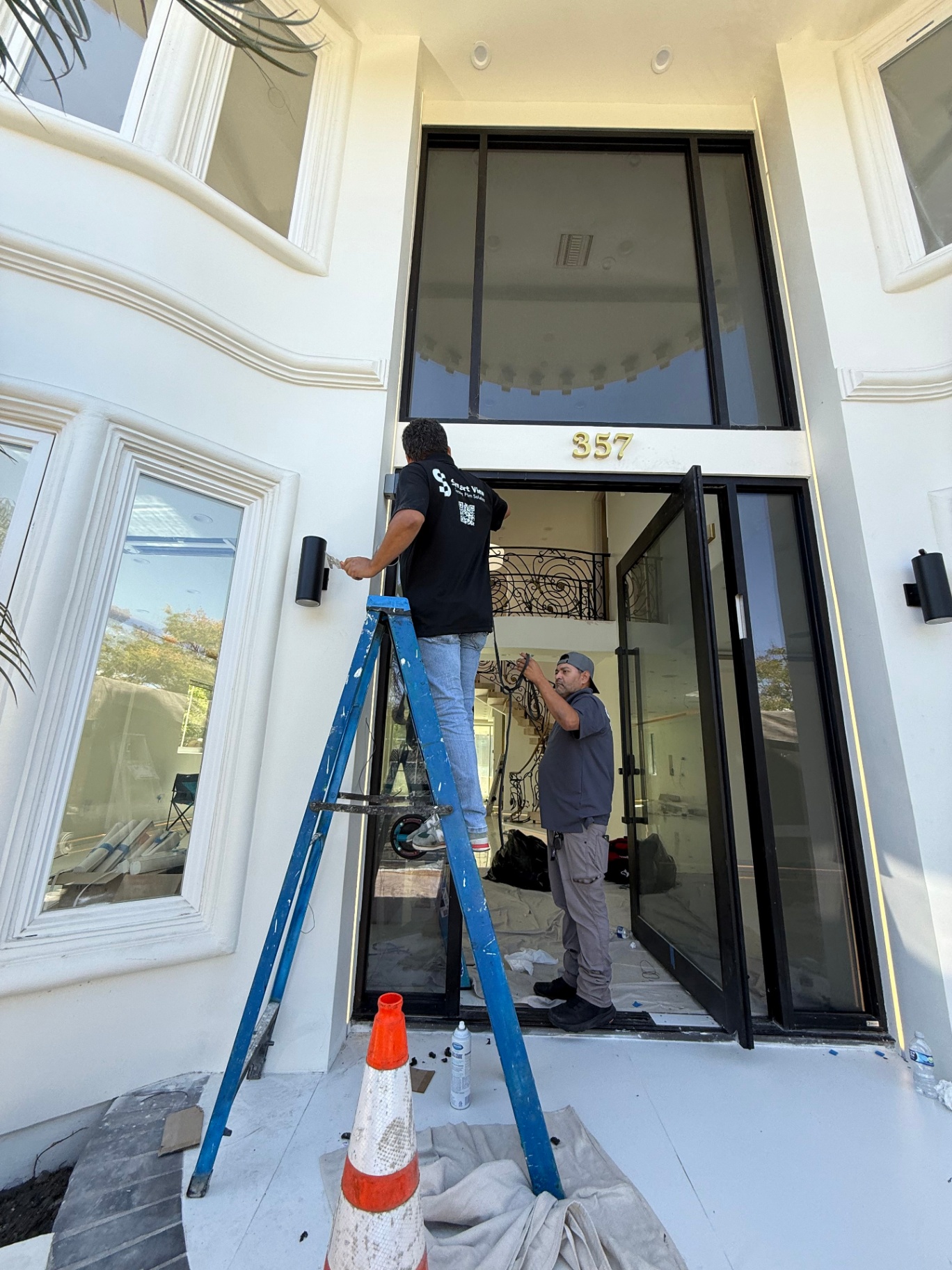
Professional installation team applying smart film with precision techniques ensuring edge-to-edge coverage and lasting performance
How Do You Manage Costs and Timeline for Multi-Property Deployments?
Commercial smart film projects involve several cost drivers that property managers must account for during budgeting. Film pricing varies based on square footage, with larger orders typically qualifying for volume discounts. Film specifications, including switching voltage, haze percentage, and additional features like electromagnetic shielding, also affect material costs.
Installation complexity significantly impacts labor costs. Ground-floor applications with standard rectangular glass panels require less time and equipment than high-floor installations with complex glazing geometry. Factor in equipment rental for lifts or scaffolding when working on upper floors or hard-to-reach installations.
Electrical infrastructure modifications add to project costs. New transformer installation, wire routing through finished spaces, and control system integration all require skilled labor. Properties with existing low-voltage infrastructure may realize cost savings compared to buildings requiring extensive electrical upgrades.
Timeline planning must account for multiple variables. Material procurement typically requires four to six weeks for commercial quantities. Installation productivity averages 100-150 square feet per day per team for straightforward applications, though complex projects may reduce this rate. Schedule installations in phases to maintain building operations and spread costs across fiscal periods.
Property managers planning deployments across multiple properties should request a custom quote that accounts for volume discounts, logistical efficiencies, and staggered installation schedules that align with budget cycles.
What Maintenance and Tenant Support Should Property Managers Plan For?
Smart film requires minimal ongoing maintenance but benefits from proactive care. Establish quarterly inspection protocols covering film condition, edge seal integrity, and electrical connection security. Document any issues and address them promptly before minor problems escalate.
Clean smart film using only soft microfiber cloths and neutral pH cleaning solutions. Never use abrasive cleaners, ammonia-based products, or rough scouring pads that can scratch the film surface. Provide tenants with clear cleaning guidelines to prevent damage from improper maintenance.
Train property staff on basic troubleshooting before issues arise. Common problems include loose electrical connections, tripped breakers, and controller battery depletion. Equipping on-site teams to resolve simple issues reduces downtime and emergency service calls.
Maintain spare transformers and controllers for critical installations. Having replacement components on hand minimizes disruption when failures occur. For large portfolios, keeping 5-10% spare capacity ensures rapid response to component failures.
Document all installations thoroughly with photos, wiring diagrams, and specifications. This documentation proves invaluable during troubleshooting, renovations, or when onboarding new property management staff. Store records digitally with location tags for easy retrieval.
Plan for tenant education during rollout. Provide simple operating instructions, clarify what normal operation looks like, and establish clear channels for reporting issues. Proactive communication reduces confusion and support requests while increasing tenant satisfaction with the technology. You can explore our recent smart film projects to see examples of successful commercial installations and tenant feedback.
Frequently Asked Questions
How long does commercial smart film installation take?
Installation timeline depends on project scope and site conditions. A single conference room typically requires one to two days including preparation, application, and electrical connection. Large-scale deployments across multiple floors may take several weeks when scheduled in phases to minimize tenant disruption. Material lead time adds four to six weeks before installation can begin.
Does smart film require ongoing power consumption?
Yes, smart film requires continuous low-voltage power to maintain transparency. Power consumption is minimal: typically 5-7 watts per square meter: adding negligible cost to building operating expenses. Film switches to its natural opaque state if power is interrupted, providing fail-secure privacy protection. This characteristic makes smart film ideal for secure areas where privacy must be maintained even during power outages.
Can smart film be removed if property use changes?
Smart film can be removed, though the process requires care to avoid glass damage. Removal typically destroys the film itself, so plan for replacement costs if you anticipate future changes. For properties where flexibility is essential, consider whether removable partitions with smart glass panels might better serve long-term needs.
What warranty coverage applies to commercial installations?
Warranty terms vary by manufacturer but typically include 10-year coverage on film performance when professionally installed. Electrical components like transformers and controllers generally carry two to five-year warranties. Warranty coverage usually excludes damage from improper cleaning, impact, or modifications by unauthorized personnel. Review warranty terms carefully and maintain documentation of professional installation to ensure coverage validity.
How does smart film performance compare across different brands?
Quality PDLC smart film from reputable manufacturers performs similarly, with differences primarily in haze percentage when transparent (typically 2-8%), switching speed (under one second), and voltage requirements (48-65V AC). Higher-end films offer lower haze and more uniform appearance across large panels. Working with experienced installers familiar with multiple product lines helps property managers select optimal solutions for specific applications and budgets.
What building code considerations affect smart film installation?
Electrical work must comply with National Electrical Code requirements and local amendments. Low-voltage wiring for smart film typically falls under Class 2 circuit regulations. Some jurisdictions require licensed electrician involvement even for low-voltage installations. Fire-rated glass assemblies may lose their rating when film is applied: consult with authorities having jurisdiction before installing film on fire-rated glass. Accessibility codes may affect control placement and operation methods.
How do property managers evaluate ROI on smart film investments?
Calculate ROI by weighing installation costs against benefits including reduced HVAC expenses from heat gain reduction, elimination of window treatment costs, increased rentable square footage (compared to traditional privacy solutions), enhanced tenant satisfaction and retention, and improved building appeal for prospective tenants. Smart film typically pays for itself within five to eight years in commercial applications through a combination of these factors. Energy modeling software can quantify HVAC savings based on specific building characteristics and climate zones.
Transform Your Commercial Properties With Professional Smart Film Installation
Smart film technology delivers measurable value to commercial properties through enhanced privacy control, improved energy efficiency, and elevated tenant experience. Success requires careful planning, professional execution, and ongoing maintenance protocols that protect your investment.
Smart View Smart Film Solutions brings extensive experience installing smart film across commercial properties throughout Los Angeles and Southern California. Our team handles every aspect of deployment from initial site evaluation through final testing and tenant training. We coordinate with your project timeline, minimize disruption to building operations, and ensure installations meet manufacturer specifications for warranty compliance.
Schedule a comprehensive property evaluation to assess your specific needs, review installation options, and receive detailed project proposals. Our team will walk your properties, evaluate electrical infrastructure, recommend solutions tailored to your goals, and provide transparent project estimates accounting for all costs.
Contact Smart View Smart Film Solutions today at (866) 728-9888 or visit smartviewsmartglass.com to schedule your free consultation and discover how smart film can enhance your commercial property portfolio.