Integrating Smart Glass with Lutron, Savant, and Alexa: Technical Integration Guide
Learn the technical requirements for integrating PDLC smart glass with Lutron, Savant, and Alexa. A complete guide to wiring, relays, and automation for smart film.
Smart glass and PDLC (Polymer Dispersed Liquid Crystal) film represent the pinnacle of architectural privacy technology. However, for a high-end residential or commercial environment, the value of switchable glass is only fully realized when it is integrated into a unified building automation system. Manually flipping a wall switch is a functional starting point, but true efficiency comes from automated scenes and voice-controlled commands.
Integrating these systems requires an understanding of both low-voltage electrical standards and the specific communication protocols used by platforms like Lutron, Savant, and Amazon Alexa. Because PDLC technology operates on alternating current (AC) at specific voltages, typically ranging from 48V AC to 60V AC, you cannot simply plug the glass into a standard smart outlet or lighting dimmer without the correct interface. Professional-grade integration ensures the longevity of the liquid crystals while providing a seamless user experience.
What are the electrical requirements for smart glass integration?
The foundation of any successful integration is the power supply unit (PSU) or transformer. Smart glass is not a "plug-and-play" DC device like many small electronics; it requires a specialized transformer that steps down 110V-120V AC household power to the specific operating voltage of the film. Most high-performance PDLC films utilize 48V AC or 60V AC. Using the wrong voltage or a direct DC current will cause permanent "burn-in" or delamination of the film.
For a professional smart film installation, the wiring must be planned during the framing or glazing stage. Each pane of glass or section of film features copper busbars where the electrical leads are attached. These leads must run to a central location where the transformers are housed. When integrating with smart home systems, the transformer acts as the primary power source, but a secondary control component, usually a relay or a contact closure interface, is required to talk to the automation hub. This setup ensures that the smart home system triggers the relay, which then completes the circuit to the transformer, switching the glass from opaque (power off) to clear (power on).
How do you connect PDLC technology to Lutron lighting systems?
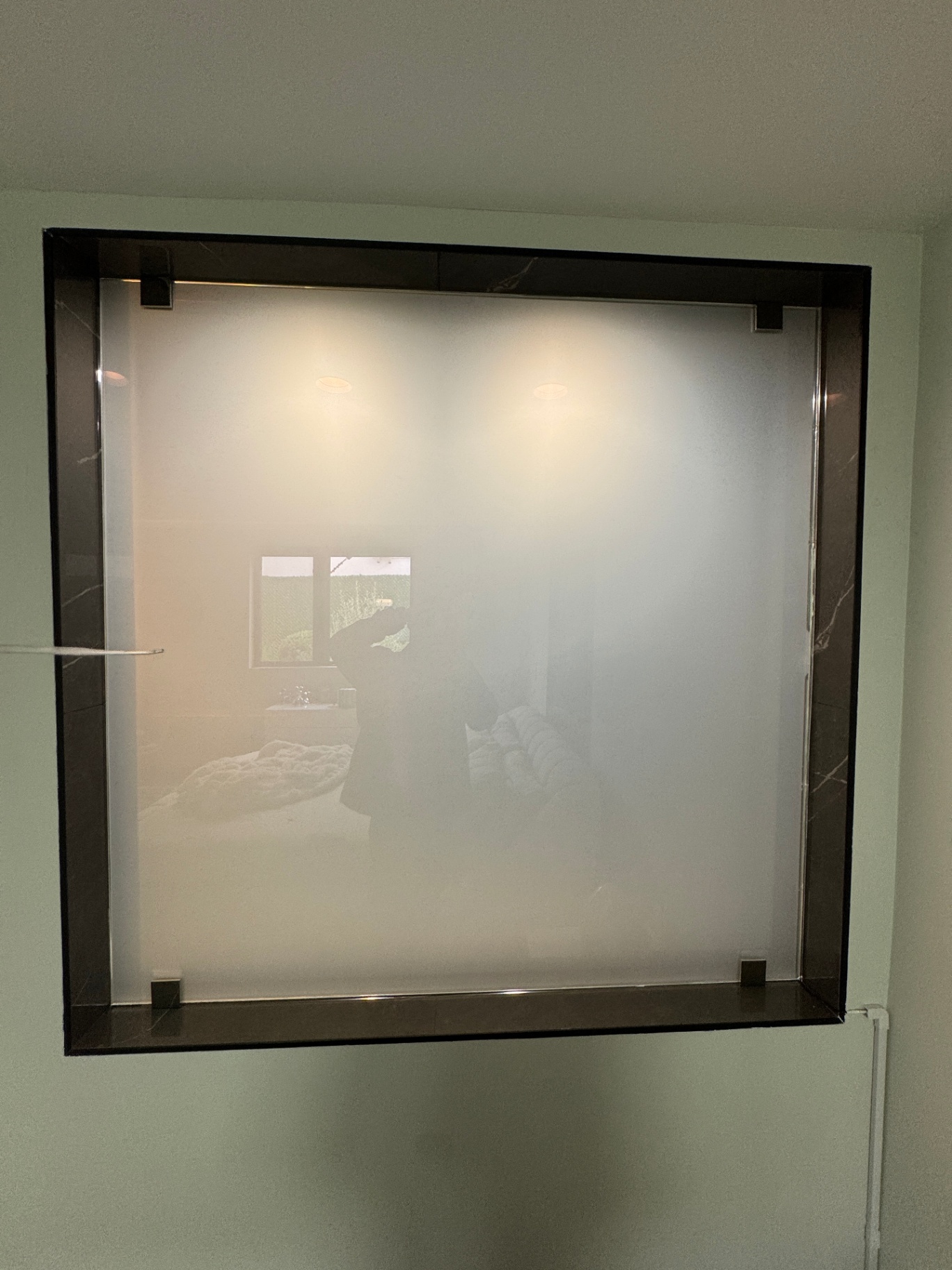
Lutron is a leader in lighting and shade control, often found in high-end projects in Southern California. Integrating smart glass into a Lutron environment (such as RadioRA 3 or HomeWorks) is typically achieved using a Lutron Contact Closure Interface (CCI). The CCI acts as the bridge between the Lutron processor and the smart glass transformer.
When the user selects a "Privacy" or "Movie Night" scene on a Lutron keypad, the processor sends a signal to the CCI to open or close the dry contact. This action toggles the power to the smart glass. For installers, it is crucial to treat the glass as a non-dimmable load. Attempting to use a standard Lutron dimmer switch to control PDLC film can result in flickering and damage to the transformer, as PDLC film requires a clean, full-voltage AC signal to remain clear. By using custom smart glass systems, you can program the glass to synchronize with Lutron motorized shades, ensuring that when the shades go up, the glass switches to a frosted state for consistent privacy.
Can Savant Pro automate smart glass for luxury environments?
Savant systems are highly favored for their intuitive user interface and ability to handle complex AV and climate configurations. For Savant integration, the preferred method is using IP-based or RS-232 controlled relays. These relays allow the Savant Pro Host to communicate directly over the local network to trigger the smart glass transformers.
In a luxury residential application, Savant allows for sophisticated scheduling. For example, a "Good Morning" scene can be programmed to switch the master bathroom glass from frosted to clear at a specific time, while simultaneously adjusting the climate and playing music. Because Savant is highly customizable, technicians can also monitor the status of the glass through the app. If a large-scale commercial project requires managing dozens of glass partitions, Savant’s ability to group zones makes it an efficient choice for facility managers.
What is the process for enabling Alexa voice control for switchable glass?
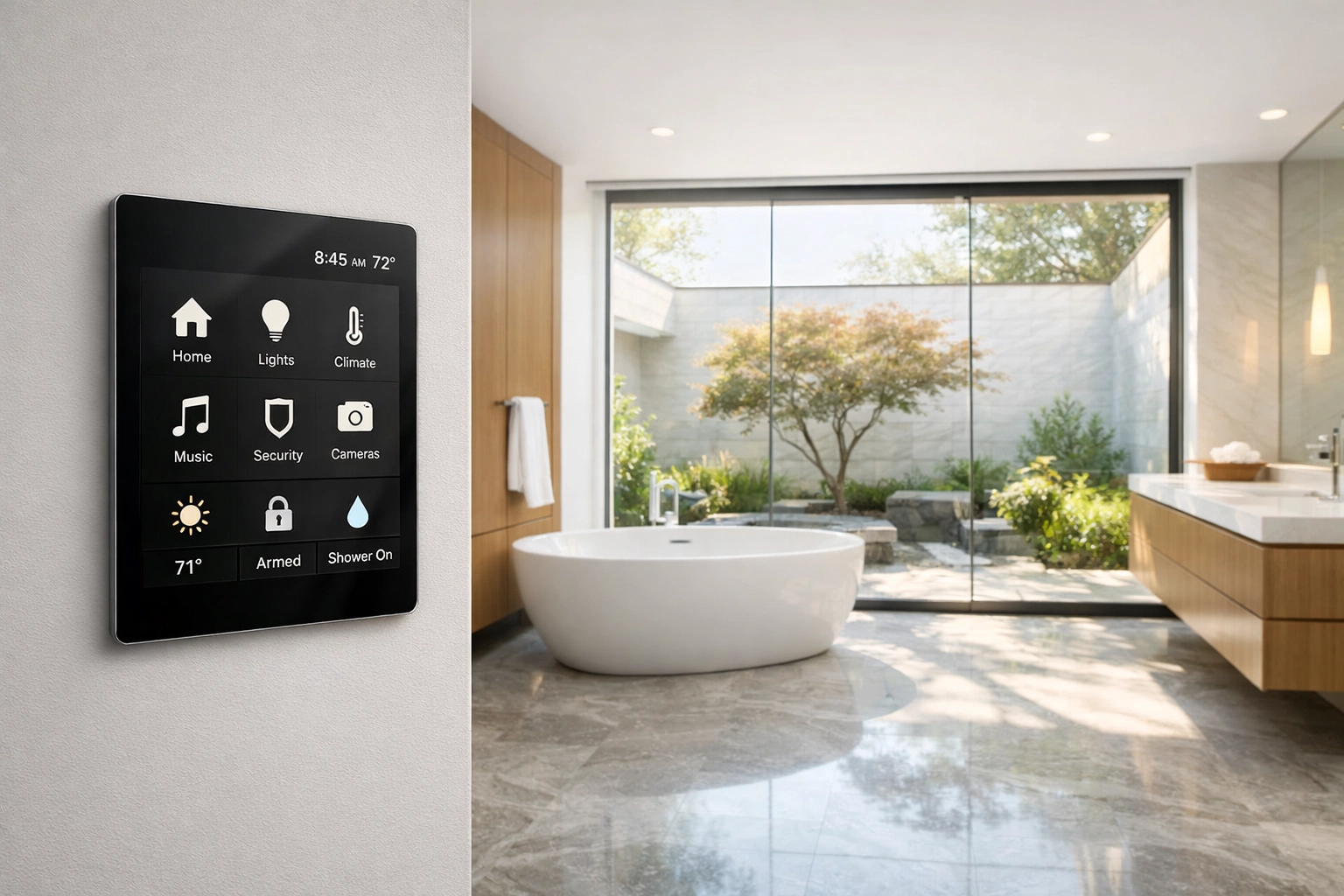
Voice control via Amazon Alexa is the most common request for modern smart home upgrades. Since Alexa is a cloud-based platform, it requires a Wi-Fi or Zigbee-enabled bridge to communicate with the physical wiring of the glass. The most reliable way to achieve this is by using a smart relay (such as those from Shelly or Sonoff) that is compatible with the Alexa ecosystem.
The smart relay is installed on the input side of the smart glass transformer. Once the relay is discovered in the Alexa app, it can be named "Office Window" or "Shower Glass." Users can then use commands like "Alexa, make the office window private." This integration is particularly useful in retrofit scenarios where pulling new wires for wall switches is difficult. By using a smart relay, the control becomes entirely wireless and voice-activated, providing a modern touch to any space.
How does integrated scheduling improve energy efficiency?
Beyond privacy, one of the primary benefits of PDLC technology is its impact on the building envelope’s thermal performance. Smart glass can block up to 99% of UV rays and significantly reduce infrared heat gain. When integrated with a smart home system, this performance can be automated to maximize energy savings.
By using the astronomical clock features in systems like Lutron or Savant, the glass can be programmed to switch to its opaque (frosted) state during the hottest hours of the day in Los Angeles. When the film is frosted, it scatters sunlight, reducing the solar heat gain coefficient (SHGC) and lowering the load on the HVAC system. To determine the best configuration for your specific orientation and glass type, you should request a custom quote to evaluate the potential ROI of automated heat management.
What wiring considerations are necessary for smart film retrofits?
Integrating smart film, the retrofit version of smart glass, requires careful planning regarding wire concealment. Unlike new construction where wires are hidden inside the wall, retrofits involve applying film to existing glass. The wires are typically run along the edge of the glass and hidden behind the glazing bead or under a slim decorative molding.
The integration with smart systems remains the same: the wires lead to a transformer, which is then connected to a smart controller. For a clean finish, the transformer is often hidden in a drop ceiling, a nearby cabinet, or a recessed media box. Professionals often explore our recent smart film projects to see how wiring is successfully masked in various architectural styles, from modern minimalist offices to classic luxury estates.
FAQ
Can smart glass be dimmed like a light bulb?
Standard PDLC smart glass is typically binary, meaning it is either fully clear or fully opaque. While some advanced variable-voltage controllers allow for a "partial" transparency effect, it is not recommended for standard installations as it can lead to uneven "haloing" and may reduce the lifespan of the film. Most integration systems treat it as an On/Off device.
Does smart glass require a lot of power to stay clear?
No. PDLC film is very energy efficient, typically consuming less than 5 watts per square meter when in its clear state (powered on). When the glass is opaque (powered off), it consumes zero electricity. This makes it an eco-friendly alternative to motorized blinds.
What happens if the smart home hub goes offline?
Most professional installations include a physical override switch. If your Alexa or Savant system goes offline, a standard wall switch or a local remote control can still operate the glass. The glass defaults to its opaque, private state if power is lost entirely.
Is it safe to integrate smart glass in wet environments like bathrooms?
Yes, provided the installation follows strict electrical codes. Transformers must be located in a dry area outside of the "wet zone," and all electrical connections at the glass edge must be sealed with non-acidic silicone to prevent moisture ingress. You can read more about moisture protection in our recent technical deep-dive.
How long does the integration hardware last?
The transformers and relays used in professional smart glass systems are industrial-grade and designed for continuous operation. The PDLC film itself is rated for over 80,000 to 100,000 hours of "on" time, ensuring decades of reliable service when integrated correctly.
Elevate Your Space with Smart View Smart Film Solutions
Integrating smart glass into your home or office automation system is a sophisticated process that requires technical expertise and high-quality components. Whether you are looking to sync your windows with a Lutron lighting system, manage your privacy through Savant, or simply use voice commands with Alexa, Smart View Smart Film Solutions provides the engineering support and installation precision needed for a flawless result.
The complexity of your integration will depend on the number of glass panels, the type of automation platform, and whether the project is new construction or a retrofit. To ensure your system is designed for maximum durability and performance, contact our team today.
request a custom quote for your next project or call us at (866) 728-9888 to schedule a site evaluation.