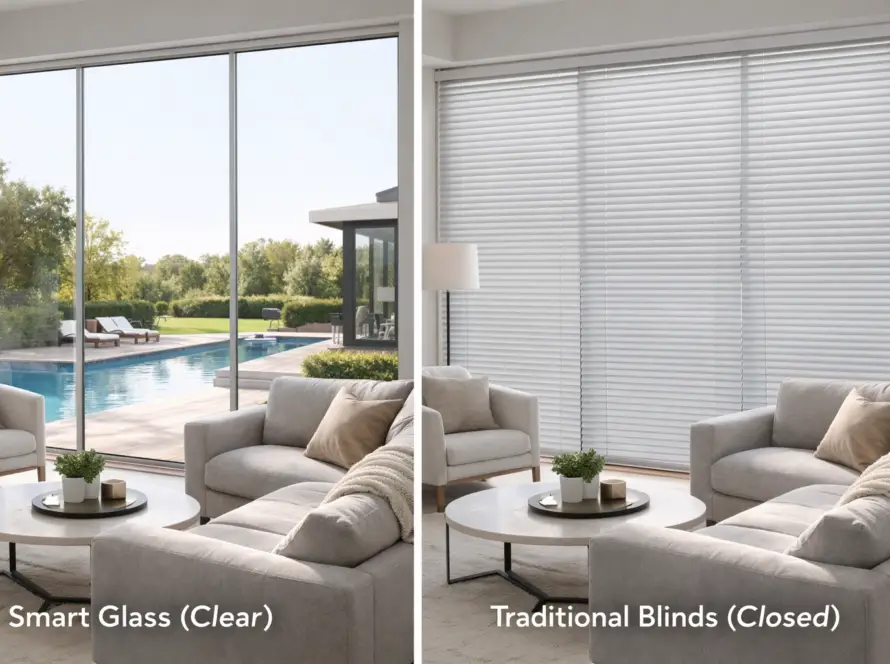
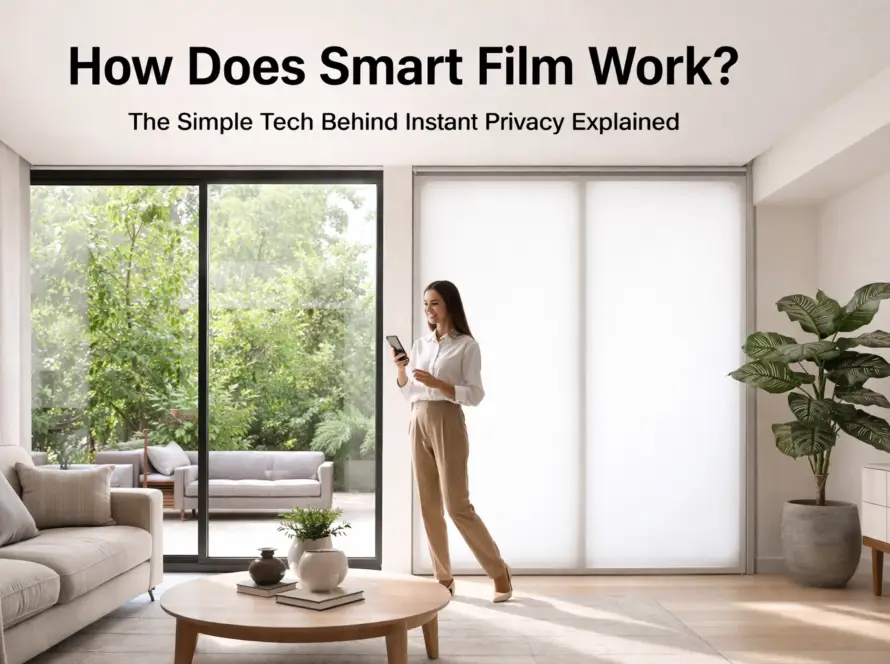
Choosing the Best Switchable Smart Glass: Residential vs Commercial
Learn how to choose between smart glass and smart film for residential and commercial projects. Compare PDLC performance, installation factors, and durability.
Selecting the right switchable privacy technology requires a deep understanding of the structural environment and the specific performance demands of the space. Whether you are an architect designing a luxury high-rise or a facility manager retrofitting a corporate headquarters, the choice between factory-laminated smart glass and field-applied smart film involves balancing technical specifications, long-term durability, and installation logistics. When specifying custom smart glass systems for high-end developments, architects must account for the laminated thickness of the PDLC layer and the specific voltage requirements needed to maintain optical clarity.
What Is the Technical Difference Between Smart Glass and Smart Film?
The core technology in both products is Polymer Dispersed Liquid Crystal (PDLC). However, the delivery method changes the application profile significantly. Switchable smart glass is a "sandwich" where the PDLC film is professionally laminated between two pieces of glass using an EVA (Ethylene-Vinyl Acetate) or PVB (Polyvinyl Butyral) interlayer. This process happens in a clean-room environment under high heat and vacuum pressure. The result is a single, solid pane of glass where the sensitive liquid crystal layer is fully protected from environmental contaminants, moisture, and physical abrasion.
In contrast, switchable smart film is a self-adhesive version of that same PDLC technology. It is designed to be retrofitted onto existing glass surfaces. It consists of the PDLC layer protected by two PET (Polyethylene Terephthalate) outer layers. One side features a high-clarity adhesive that allows it to bond directly to the glass. While the optical performance in terms of switching speed (typically under 100 milliseconds) is nearly identical to laminated glass, the film remains an "exposed" layer on the glass surface. This makes it ideal for renovation projects where replacing the actual windows is not feasible or cost-effective.
How Do Installation Requirements Differ for Residential and Commercial Sites?
In residential settings, the installation often focuses on aesthetics and seamless integration with home automation systems. For a luxury home, smart glass is frequently installed in master bathrooms or as external-facing windows. Because the glass is laminated, it can be treated as a standard IGU (Insulated Glass Unit) but requires specialized wiring exits, usually through the spacer bar or frame. Residential installations often utilize smaller, silent transformers that can be hidden in cabinetry or wall cavities.
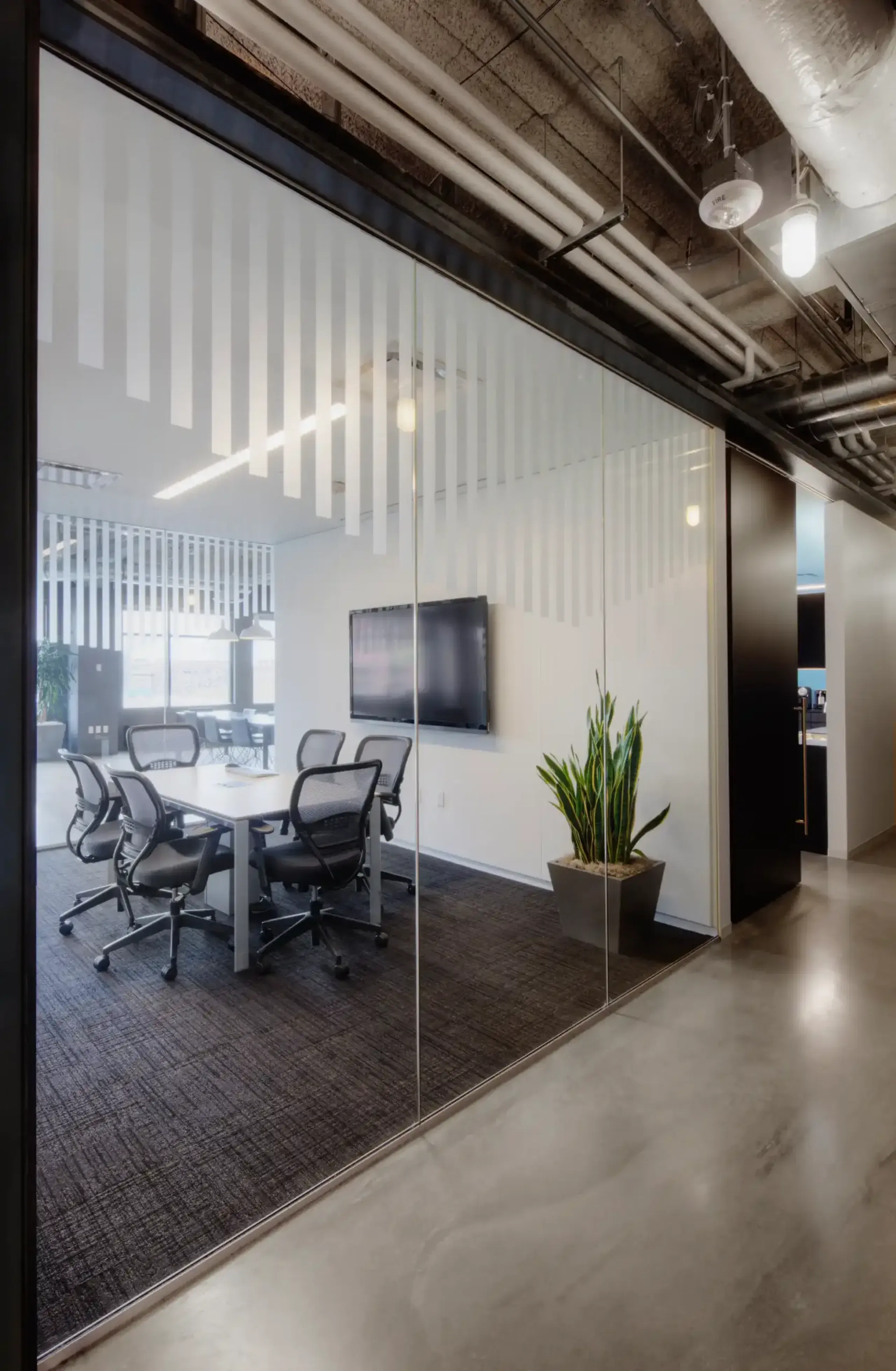
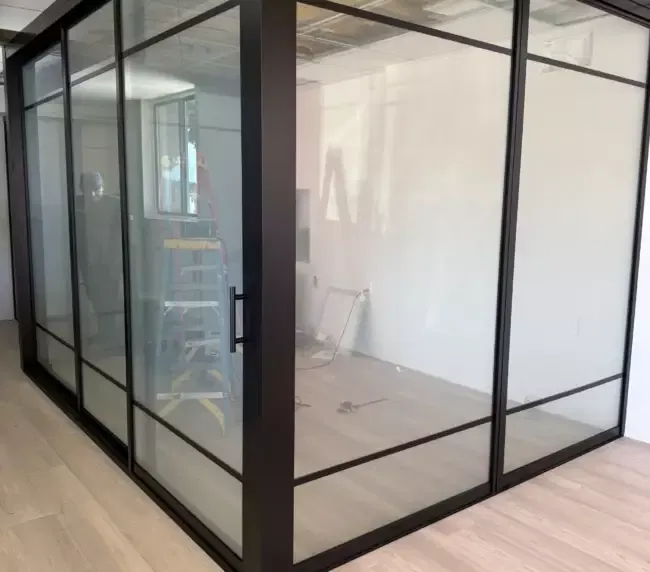
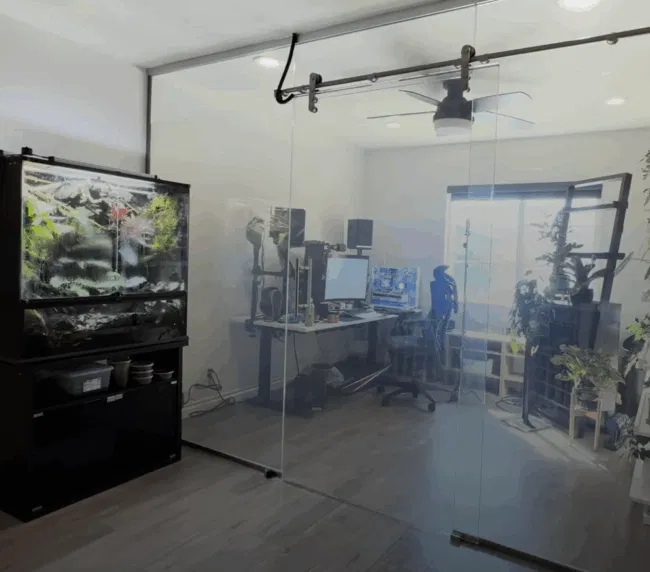
Commercial installations, such as conference rooms or healthcare facilities, often deal with much larger spans of glass and higher usage frequency. Commercial projects frequently utilize floor-to-ceiling glass partitions. Our team has documented various configurations in our gallery where you can view completed installations to see the difference between clear and frosted states in real-world lighting. In these environments, the wiring must often be routed through commercial-grade aluminum extrusions. The complexity increases when dealing with "movable" glass, such as sliding doors or folding walls, which require power transfer loops or specialized contact pins to ensure the PDLC layer receives a consistent 48V to 65V AC current.
Which Technology Offers Better Durability for High-Traffic Commercial Areas?
For high-traffic commercial zones, laminated smart glass is almost always the superior choice. Because the PDLC film is sealed inside the glass, it is immune to the "edge delamination" that can occur if a field-applied film is cleaned with the wrong chemicals or physically picked at by passersby. In healthcare environments where rigorous sanitization is required, smart glass allows for the use of hospital-grade cleaners without risking damage to the electronic components.
Switchable film, while highly durable, is more susceptible to environmental factors. In Southern California, high UV exposure and interior humidity can eventually affect the adhesive bond if not installed with precision. However, for office interiors where the glass is protected from the elements and handled by professional staff, smart film provides a lifecycle that often exceeds ten years. For those looking to upgrade existing glazing without the cost of total replacement, professional smart film installation offers a high-performance alternative that bonds directly to the glass surface. The PET coating on the film also provides an added layer of "shatter resistance" to the existing glass, which is a significant safety benefit in commercial corridors.
How Does Switchable Glass Impact Energy Efficiency and UV Protection?
One of the most significant technical benefits of PDLC technology is its impact on the building envelope's thermal performance. Both smart glass and smart film block over 98% of harmful UV rays, regardless of whether they are in the transparent or opaque state. This is critical for protecting interior furnishings, artwork, and flooring from sun bleaching, a common issue in sun-drenched areas like Los Angeles.
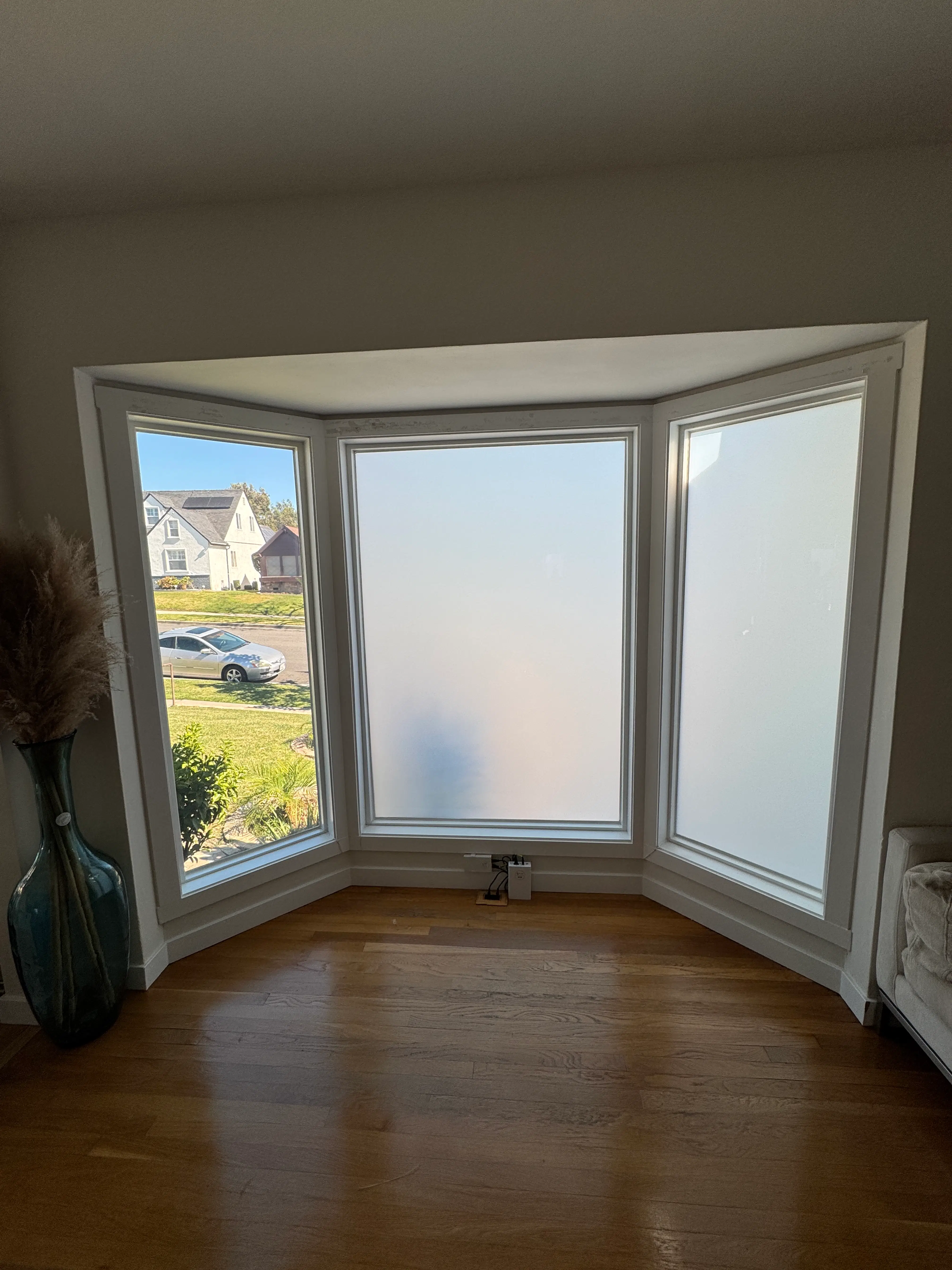
Beyond UV protection, the "frosted" state of the glass provides significant Infrared (IR) rejection. By scattering the light, the glass prevents "hot spots" in a room, reducing the load on HVAC systems. In a commercial context, this can lead to measurable ROI through lower energy bills. In residential applications, like a sunroom or a large bay window, the ability to switch to opaque during the peak heat of the day allows the home to remain cool without completely sacrificing natural daylight.
What Electrical Considerations Are Essential for Smart Glass Integration?
Smart glass is an electrical appliance and must be treated as such. It operates on low-voltage AC power. Most systems require a transformer that steps down standard 110V-120V house power to 48V or 65V AC. A common mistake in DIY or inexperienced installations is trying to run the film on DC power, which will cause "ghosting" or permanent damage to the liquid crystals.
The wiring configuration involves busbars, thin copper strips, attached to the edge of the PDLC material. These busbars must be insulated and tucked away into the frame. In commercial settings, we often integrate these systems with building management systems (BMS) or wall-mounted touch panels. In residential projects, we frequently sync the glass with Lutron, Crestron, or simple remote-control units. It is essential to ensure that the transformer is located in a ventilated area, as it generates a small amount of heat during operation.
How Do Maintenance Needs Compare Between Glass and Film?
Maintenance protocols differ based on the exposure of the PDLC layer. Laminated smart glass can be cleaned exactly like standard glass. You can use traditional glass cleaners and squeegees, provided you do not soak the edges where the electrical connections are housed. It is a "set it and forget it" solution for most property owners.
Smart film requires a more specific touch. Because the outer layer is PET plastic rather than glass, it can be scratched by abrasive cleaners or rough paper towels. We recommend using a soft microfiber cloth and a non-ammonia, pH-neutral cleaner. Furthermore, the edges of the film are often sealed with a specialized non-acidic silicone to prevent moisture ingress. Maintaining this seal is vital for the longevity of the film. For larger commercial installations, facility teams should be briefed on these specific cleaning requirements to prevent accidental damage during routine maintenance.
FAQ
What factors drive the overall cost of a switchable glass project?
The budget for a project depends on several technical variables: the total square footage of glass, the choice between retrofit film or new laminated glass, the complexity of the wiring (e.g., routing through moving doors), and the type of control systems required. Since project variables like wiring complexity and square footage change the final budget, we recommend you schedule a pricing consultation for a detailed estimate.
Can smart film be installed on curved glass?
Yes, PDLC film is flexible and can be applied to curved glass surfaces, which is common in modern architectural entries or custom office pods. However, the installation requires expert precision to ensure the film follows the radius without bubbling or creasing.
Does smart glass require a lot of electricity to run?
No. PDLC technology is highly efficient. It typically consumes between 3 to 5 watts per square meter when in the "clear" (powered) state. When the glass is "frosted" (unpowered), it consumes zero electricity.
Can the film be cut to fit custom shapes?
Yes, switchable film can be CNC-precut or hand-trimmed to fit various shapes, including triangles, circles, and glass with hardware cutouts. This flexibility makes it an excellent choice for unique residential windows or architectural glass features.
Is the switching effect instantaneous?
Yes. The transition from frosted to clear happens in approximately 10 to 100 milliseconds. This "instant privacy" is one of the primary reasons it is specified for boardrooms and medical examination rooms where discretion is required immediately.
Choosing between smart glass and smart film ultimately comes down to the stage of your project and your long-term durability requirements. For new construction or high-moisture environments, laminated smart glass is the gold standard. For existing spaces or high-rise retrofits where glass replacement is logistically impossible, switchable smart film provides a powerful, high-tech upgrade.
If you are managing a project outside of California, take a look at our recent installations in Las Vegas for examples of how our technology performs in extreme desert climates. For local projects, our team at Smart View Smart Film Solutions provides end-to-end service, from technical specification to final electrical integration.
To learn more about how switchable technology can transform your space, contact us at (866) 728-9888 to discuss your project requirements or to request a site evaluation.