
Do You Need an Electrician to Install Smart Film?

In most homes, no — you don't need to hire your own electrician to install smart film. It runs on a low-voltage transformer that plugs into a standard outlet, and Smart View's licensed crew handles every connection as part of the install. A permanent wall switch does involve wiring, but that work is part of the job we do — not a separate trade you have to line up.
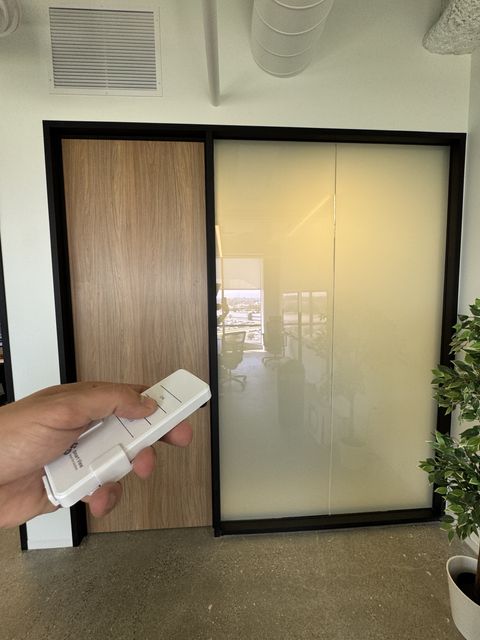
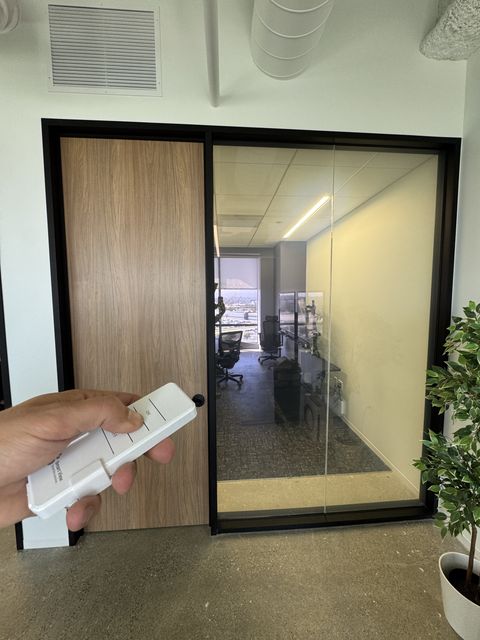
The wiring question is one of the first things people ask, usually because they picture tearing open walls or booking a second contractor. In practice the electrical side of a smart-film job is small and well understood. Here is exactly how the power works, when it counts as electrical work, who does that work, and where a rare job might need a licensed electrician on top of your install.
How smart film gets its power
Smart film is a PDLC (polymer-dispersed liquid crystal) layer that reads frosted with no power and turns clear the moment you energize it. It doesn't run on the mains voltage in your wall directly — a small transformer steps that down to the low voltage the film needs, and that transformer is the only electrical component in the whole system. Its draw is modest, comparable to a small LED fixture per square foot of glass, so it doesn't tax a circuit. (Which wattage that unit should be is a sizing question rather than a wiring one — our guide to what size transformer smart film needs runs the math.)
Everything about the wiring comes down to one question: how do you want to feed that transformer? There are two paths, and only one of them touches your electrical system at all.
The plug-in path needs no new wiring
If there's a standard outlet near the glass, the transformer simply plugs into it like any appliance. No new circuit, no electrician, nothing opened up. This is the fastest option, it's fully reversible, and it's ideal for renters or for a single window where a nearby outlet is easy to reach. The only trade-off is a visible cord and adapter unless it's tucked behind furniture or trim. For a lot of residential jobs, this is all the wiring a smart-film install ever involves.
When a wall switch means actual wiring
For a built-in look — a wall switch in the same form factor as a light dimmer, and no cord in sight — the transformer is concealed and fed from a switched circuit instead of an outlet. That is genuine electrical work. The part that matters to you is who does it: Smart View's own installers are licensed (CA lic. #1134029) and run that connection as part of the install. You don't source, schedule, or pay a separate electrician; it's one crew and one job. Our smart glass office project in El Segundo is a good example — the conference glass is driven by a clean wall switch with the transformer hidden above the ceiling, wired in the same visit the film went up.
Operable doors and hidden feeds
The one place the wiring gets genuinely technical is glass that moves. French doors, sliders, and pivoting panels need power-transfer hardware so the low-voltage connection survives thousands of open-and-close cycles without a wire ever showing or fatiguing — usually a concealed hinge-side transfer or a feed routed through the jamb or floor. This is the detail a general handyman most often gets wrong, and it's exactly the kind of thing our installers spec and run as part of a normal job. It doesn't change the answer: it's still our crew, still one install, still no separate electrician for you to find.
So is there ever a job that needs your own electrician?
Rarely, and even then you're not left to arrange it. In almost every residential project, the plug-in outlet or the concealed wall-switch feed we install covers the whole system. The edge cases are things like running a brand-new dedicated circuit across a finished wall to reach glass in an awkward spot, or a large commercial project that has to land on the building's electrical panel to meet code. On those, we either do the work under our own license or coordinate directly with the site's electrician so it's handled cleanly — you're never the one chasing a second trade. If you want the full picture of the process, our smart film installation page walks through it step by step.
What the wiring adds to the cost
Less than most people expect, because price is driven mainly by glass area and the controls you choose, not by the electrical connection. A single small window usually starts around $1,500 fully installed and climbs from there with size and features. The plug-in option adds nothing beyond the transformer that's already part of the system; a concealed wall switch adds a little labor for the hidden run. The honest breakdown of what actually moves the number is on our smart glass cost page. Quoting is remote — send photos and rough dimensions and you'll have real numbers within one to two business days, no site visit needed to get a price.
Common questions about wiring smart film
Do I have to hire my own electrician for smart film?
In almost all cases, no. The plug-in option needs no electrician at all, and when you want a permanent wall switch, our own licensed installers do that wiring as part of the job. You don't coordinate a separate trade.
Can smart film just plug into a regular wall outlet?
Yes. If there's a standard outlet near the glass, the transformer plugs straight into it like an appliance — no new circuit and nothing opened up. It's the fastest, fully reversible option and a common choice for renters and single windows.
Is the smart-film wall switch the same as a normal light switch?
It looks and mounts like one — the same form factor as a light dimmer — and it's wired into a switched circuit the same way. That's why, when you choose it, the connection is electrical work our crew performs during the install.
The short version: a plug-in job needs no electrician, and a hardwired one is handled by our licensed crew in the same visit. Request your estimate or call (866) 728-9888 with photos and rough sizes, and we'll send real numbers within one to two business days.