Common PDLC Smart Film Questions: 7 Expert Answers (2026)
Every smart film project starts the same way. A homeowner, office manager, or GC sees the film flip clear-to-frosted in a showroom, decides they want it, and then hits a wall of technical questions that don’t get answered cleanly anywhere online. The result: projects stall for weeks while people chase specs across marketing pages.
This guide collects the common PDLC smart film questions we actually field on real LA jobsites and answers them in plain language — 7 of them, plus one follow-up path for anything we didn’t cover. Every answer reflects what happens on a real install, not what a spec sheet promises.
The Most Common PDLC Smart Film Questions We Hear on LA Jobsites
Across the conference rooms, bathrooms, and storefronts we’ve installed in the last year, the same 7 questions repeat on nearly every initial call. Most originate from the same underlying uncertainty: buyers know they want switchable privacy, but they don’t know what the film will let them do — and more importantly, what it won’t.
Here’s the short list, plainly answered.
Q1 — Is smart film a DIY project?
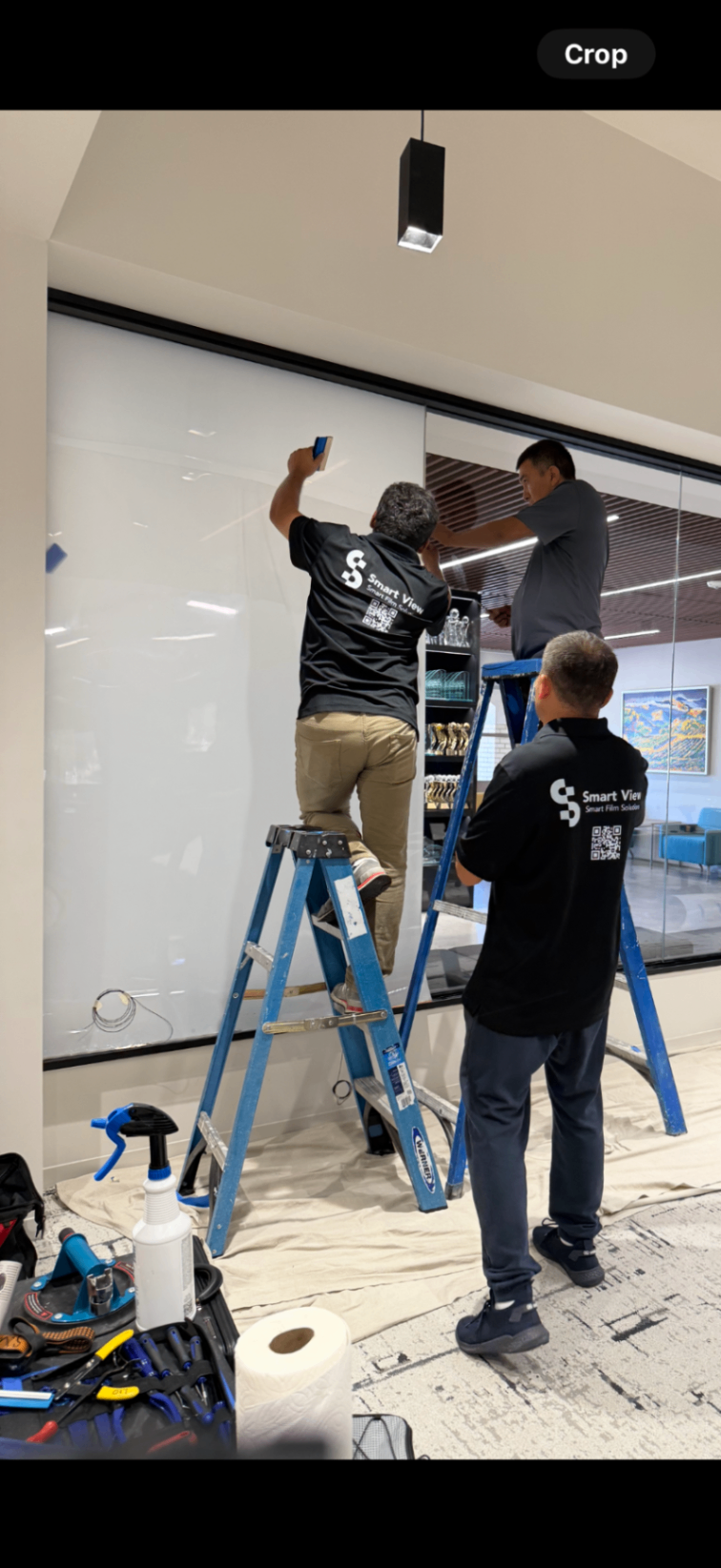
This is one of the most common PDLC smart film questions we get, and the answer is simpler than people want it to be: no. PDLC smart film installation needs specialized tooling (precision cutting + busbar soldering + AC transformer wiring) and clean-room-level glass prep to avoid bubbles and delamination. Even experienced installers working outside our shop occasionally have to redo a panel because of dust contamination or a misaligned bus edge.
The retail adhesive kits on Amazon that look cheaper usually produce a film that’s visibly patchy, has alignment issues, or delaminates within a few months. For a lasting install, hire a pro — and verify they’ve done at least a dozen switchable-film jobs before they touch yours.
Q2 — Does smart film need constant power to stay clear?
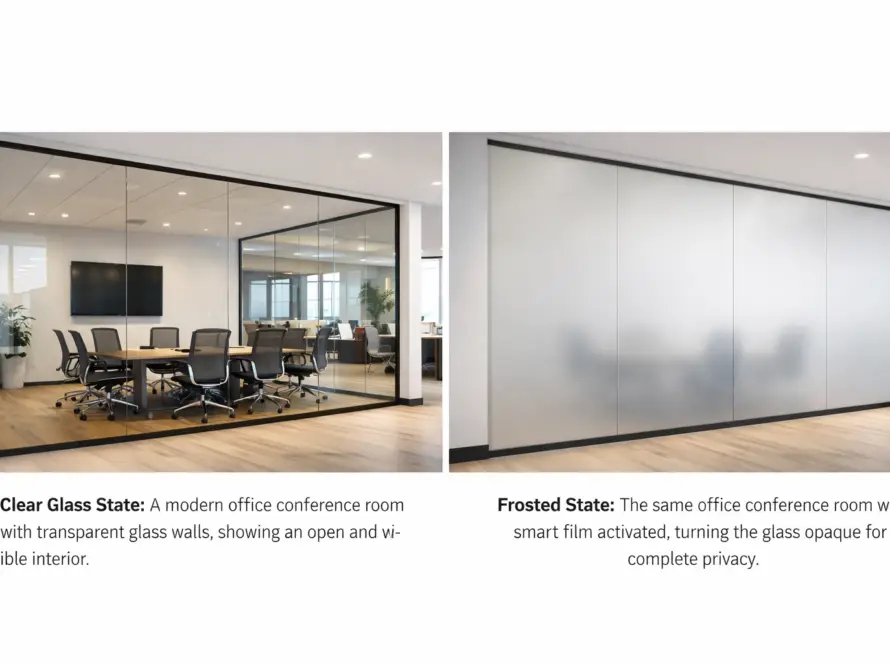
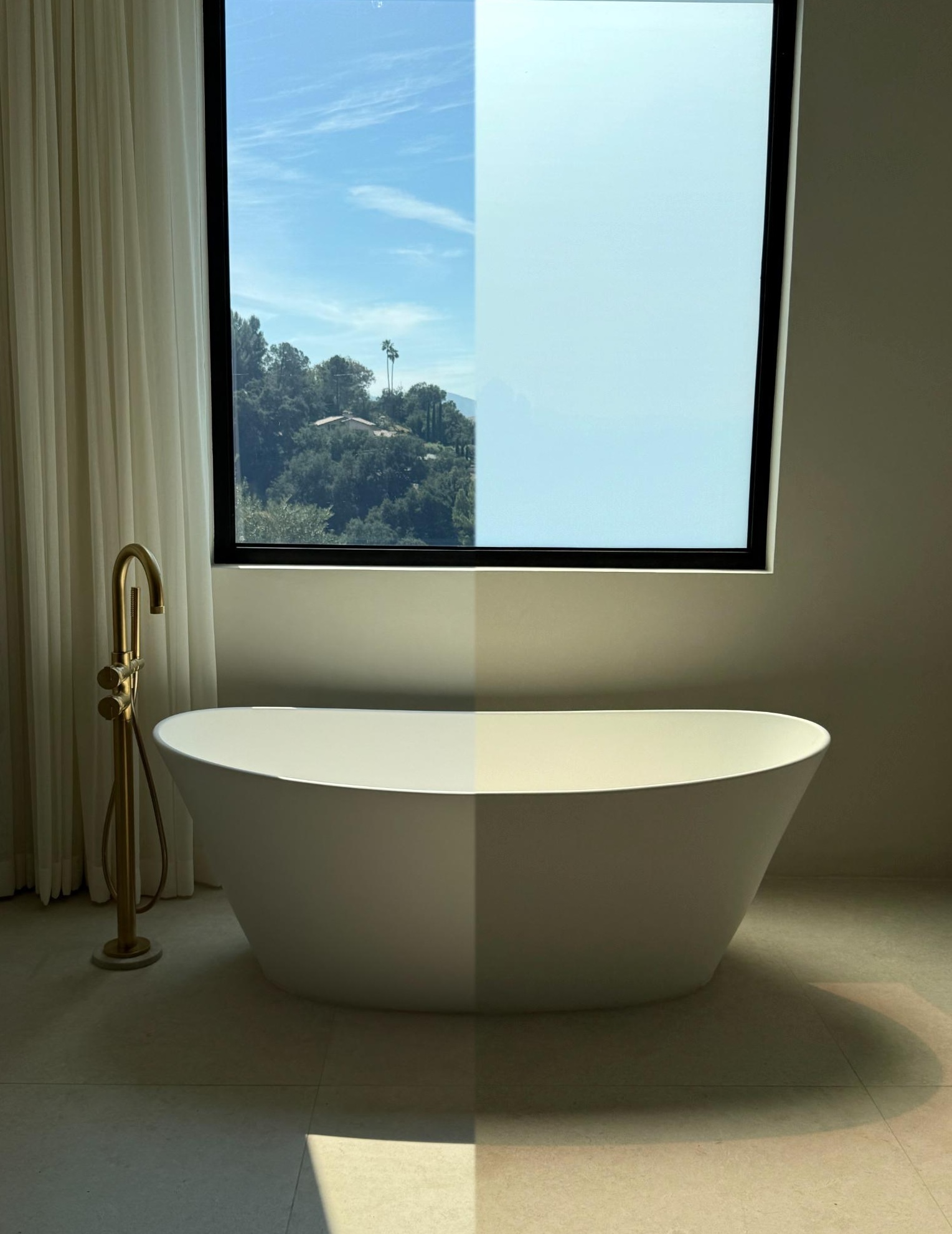
Yes, but only in the clear state. PDLC film is “normally opaque” — with no power, the liquid crystals scatter light and the glass reads as frosted. Power the film via its low-voltage driver, and the crystals align, letting light pass through cleanly.
This is a feature, not a bug: a power failure defaults your glass to privacy rather than exposure. Clients consistently mention appreciating it the first time the lights flicker and the windows quietly frost over instead of snapping to clear.
Q3 — How fast is the clear-to-frosted transition?
Less than 100 milliseconds. For all practical purposes, it’s instantaneous. Fast enough to feel responsive in a meeting when someone taps the switch for a private call. Fast enough to feel like actual magic the first time clients try it in their own home.
This is one of the biggest advantages over electrochromic glass, which can take several minutes to tint or clear — a big gap in user experience when you’re trying to react to a real-world privacy moment.
Q4 — Can smart film be cut to any shape?
Yes, but only at fabrication. Smart film can be cut into rectangles, circles, triangles, or curved profiles — but every custom shape has to be cut at the factory or by an expert installer using precision templates, and each shape needs its own bus bar and wiring leg.
Translation: complex geometry doesn’t disqualify smart film, but it does increase the control-system complexity. If you’re eyeing a non-rectangular panel, tell your installer during the design walk so the electrical run gets planned around the shape instead of around a standard rectangle.
Q5 — Can smart film be installed on curved glass?
Yes. The PET substrate the film sits on is flexible enough to wrap around gentle curves — curved partitions in executive boardrooms, luxury residences with radius bay windows, curved storefronts. The trick is ensuring the film adheres without tension, which means extra care during application and slightly more materials margin in the quote.
Sharp bends or tight radii still aren’t feasible — the film needs relatively gentle curvature. If your glass has a bend, send a measurement diagram to your installer before the quote so the materials and labor math lands right.
Q6 — How does smart film handle LA sun and heat?
Better than most buyers expect. PDLC film is rated for continuous operation under direct sunlight including UV exposure; the film stack includes UV inhibitors specifically so the liquid-crystal layer doesn’t degrade over years of southern-California sun.
Heat buildup is worth watching on very large panels in full western exposure — the film does warm slightly when energized. For the 50–100 sq ft range we most often install, this is below what anyone notices. For wall-to-wall glass in harsh exposure, we’ll sometimes spec a lower-opacity film variant to keep thermal load manageable.
Q7 — Are there cheaper DIY alternatives worth considering?
Usually no — and the reason is worth understanding. The cheap switchable-film kits on Amazon typically cut corners on one of three things: the PDLC layer itself (lower resolution, visible grain), the adhesive (yellows or bubbles under sun), or the driver (loud, unreliable, short lifespan).
For small, low-stakes applications, they can be fine. For a primary bathroom window, an office partition, or a retail storefront, the total cost of a proper install is usually under 2× the cheap-kit route and it lasts 10× longer. That math rarely favors the cheap option.
How These Common PDLC Smart Film Questions Play Out on a Real Project
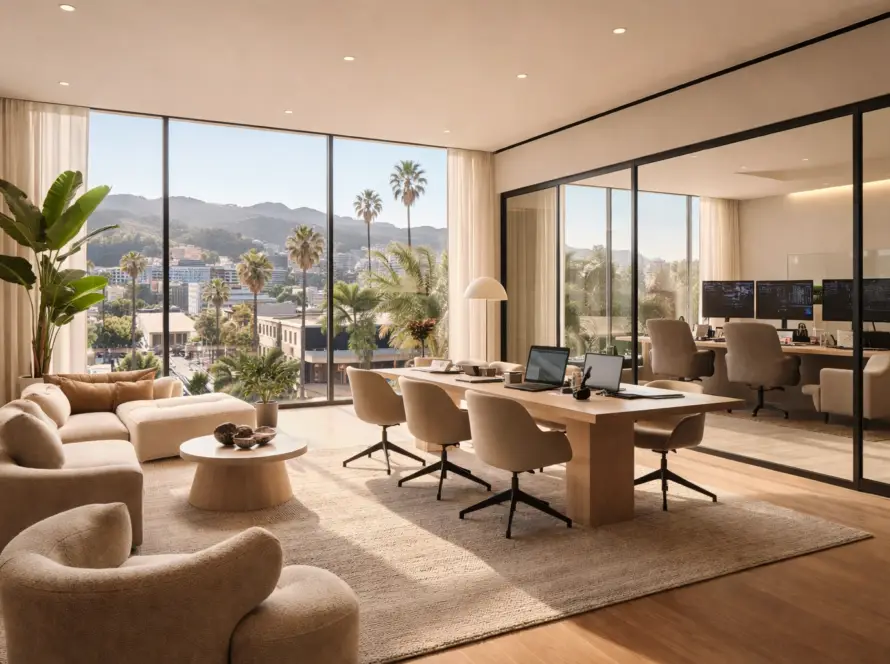
Each of these common PDLC smart film questions comes up on nearly every install — but the conference-room project we did in Beverly Hills last year is the one where almost all of them surfaced in a single design walk. The client wanted curved glass around a boardroom, instant switching for confidential meetings, power-failure-defaults-to-private behavior, and a clean look that didn’t telegraph “office partition.”
Full project breakdown: smart glass conference rooms in Beverly Hills — walks through the same question set applied to a single real client scope.
Still Have a Question We Didn’t Answer?
These common PDLC smart film questions cover roughly 90% of what we hear on first calls, but every project has its own edge cases — unusual glass geometry, a specific control system, a tight install window. We’re happy to answer one-off questions before you commit to a project.
Contact Smart View with your specific scenario — room size, glass type, control preference, timeline — and we’ll give you a plain answer, fast, no sales pressure.