Ultimate Guide to Smart Film for Windows Retrofits | Smart View Inc
Transform your existing glass with high-performance PDLC technology. Learn about installation, electrical requirements, and the benefits of professional smart film installation in Los Angeles.
Retrofitting existing glass with switchable privacy film is a high-precision engineering task that converts standard windows into dynamic privacy barriers. Unlike factory-laminated smart glass, which requires full window replacement, smart film is applied directly to the interior surface of your current glazing. This process is complex and requires a deep understanding of Polymer Dispersed Liquid Crystal (PDLC) behavior and electrical integration.
When searching for the best solutions for your property, engaging a team that specializes in professional smart film installation is critical. A successful retrofit depends on the quality of the film, the precision of the cut, and the integrity of the electrical busbars. This guide breaks down the technical requirements and performance metrics you need to understand to ensure your project succeeds.
What is the science behind PDLC switchable privacy film?
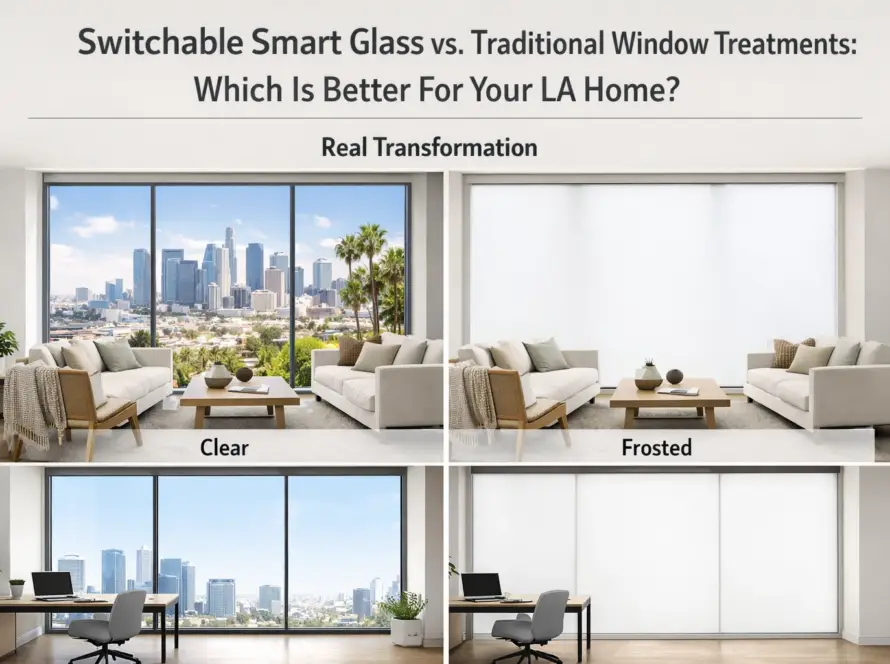
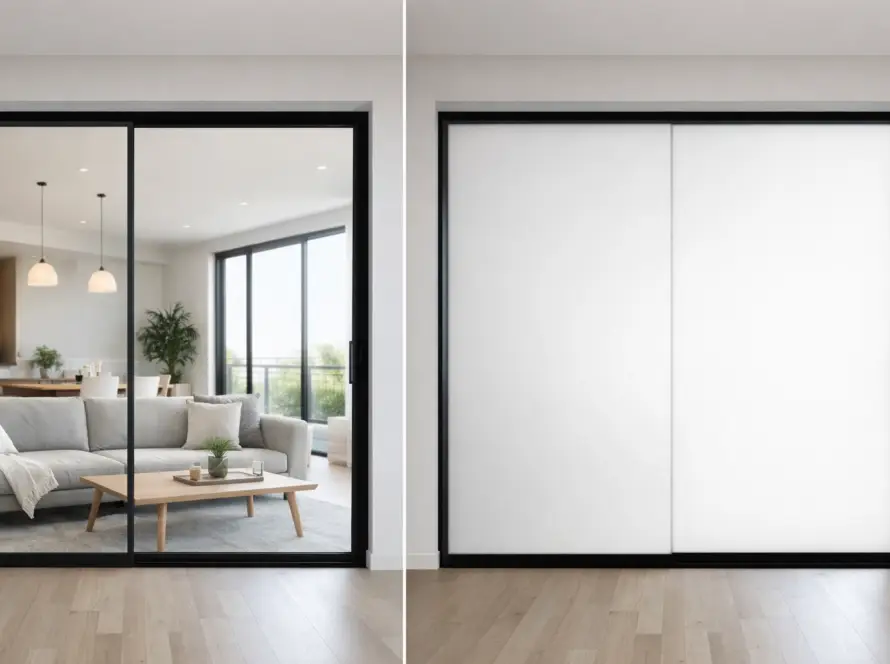
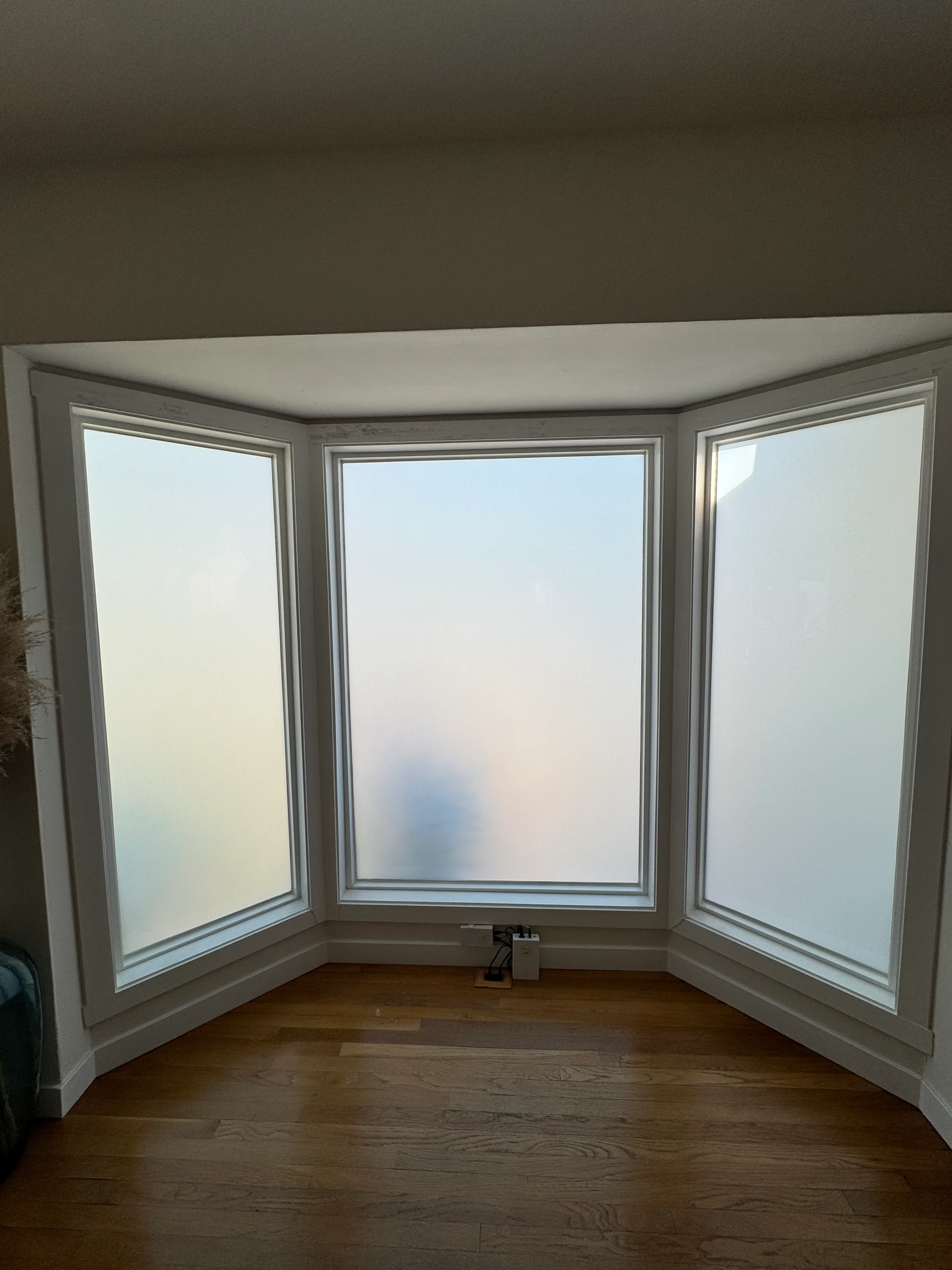
The core technology behind smart film is PDLC. This material consists of liquid crystal droplets dispersed in a specialized polymer matrix. In its natural, unpowered state, these liquid crystals are arranged in a random, disorganized fashion. When light hits the film, it scatters in multiple directions, creating the "frosted" or opaque appearance that provides total privacy.
When an electrical current is applied, typically between 48V and 65V AC, the liquid crystal molecules align themselves parallel to the electric field. This alignment allows light to pass through with minimal scattering, rendering the glass transparent. Technically, the performance is measured by visible light transmission (VLT) and haze levels. High-quality PDLC films used in custom smart glass systems offer a clear-state haze of less than 3%, ensuring that your view remains crisp when the power is on.
Can you install smart film on any existing window?
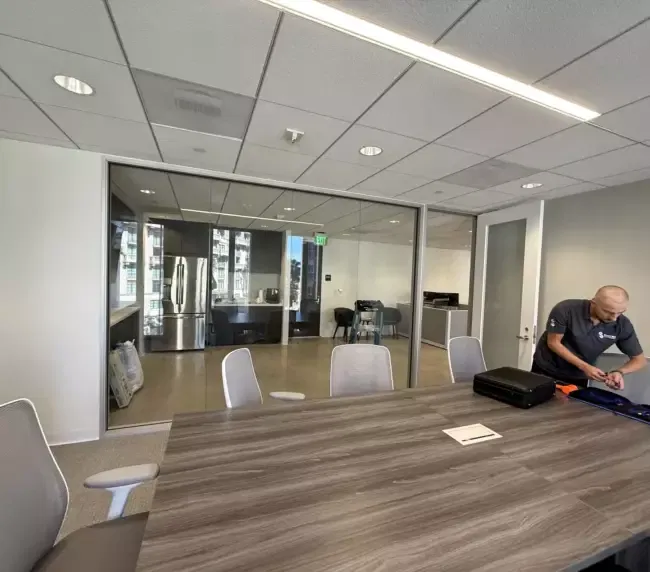
Most smooth glass surfaces are candidates for a retrofit, but technical inspections are necessary to confirm compatibility. The glass must be structurally sound and free of deep scratches or significant imperfections that could interfere with the adhesive bond. Smart film is best applied to tempered glass, which is standard in most modern commercial and residential windows in Southern California.
One of the most important considerations is the size of the glass. Modern fabrication allows for panels up to 71 inches wide, but larger spans require multiple pieces of film joined by a precision butt-joint. Installers must account for thermal expansion and contraction; if the film is cut too tight to the frame, it may buckle. Conversely, a gap that is too large will allow light leaks. Achieving a millimetric tolerance is what separates an amateur application from a professional-grade retrofit. You can learn more about the differences in application by reading our smart glass retrofit guide.
What are the electrical and wiring requirements for a retrofit?
Smart film is an electrical appliance. Every panel requires a connection to a power source via copper busbars and thin-gauge wiring. In a retrofit scenario, the biggest challenge is concealing these wires to maintain a clean aesthetic. We typically route wiring through the window gaskets or along the frame using specialized low-profile channels.
The system requires a dedicated transformer to convert standard wall power to the necessary operating voltage. These power supply units (PSUs) are often installed in a nearby closet, above a drop ceiling, or inside a wall-mounted enclosure. You must ensure that the wiring path is planned before the film is applied. For complex projects involving multiple zones, we integrate the film with smart home controllers or DMX systems, allowing for remote operation via mobile apps or wall switches.
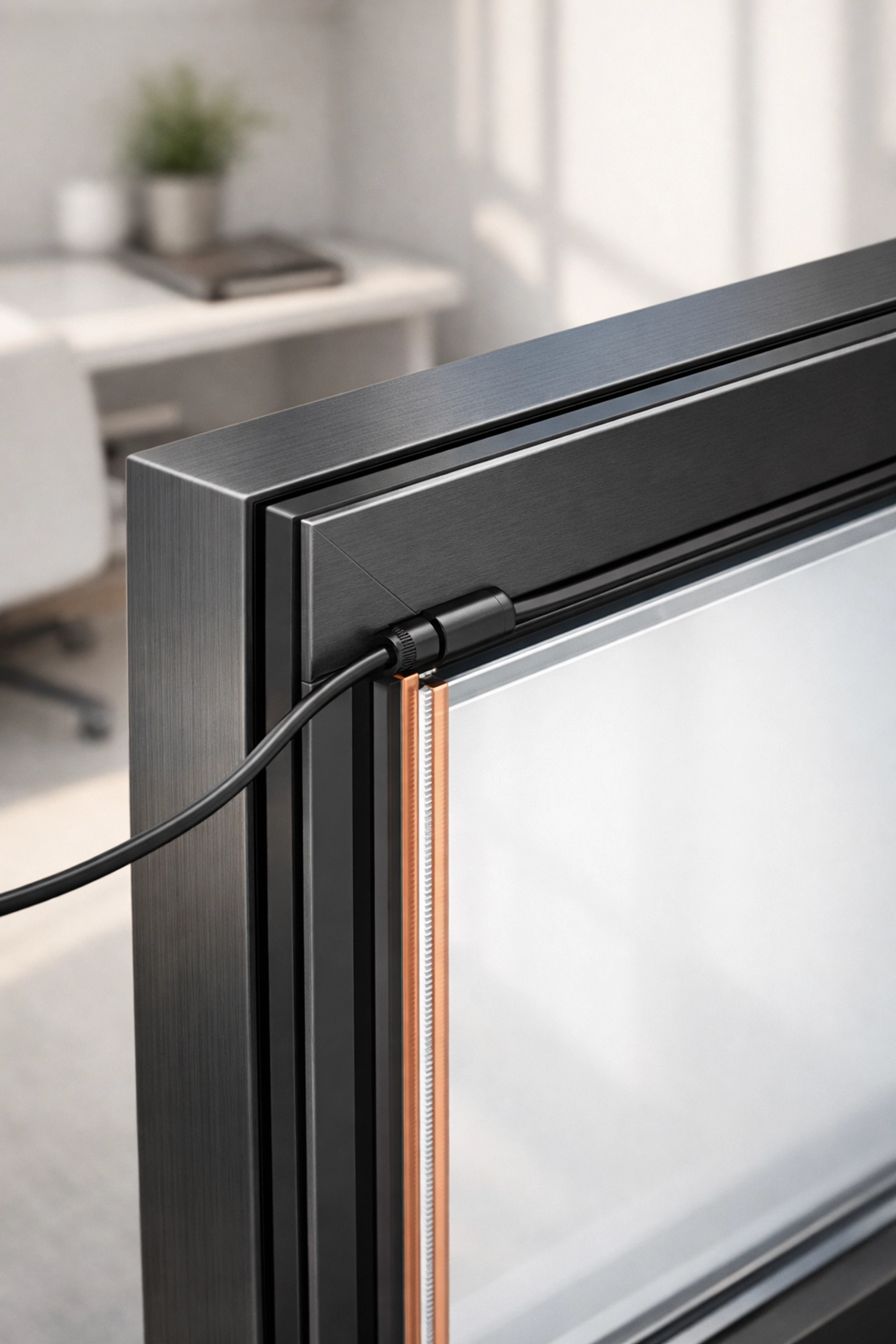
SEO Alt Text: Technical diagram showing the wiring path and transformer connection for a multi-panel smart film retrofit installation.
How does smart film improve energy efficiency and UV protection?
Beyond privacy, smart film is a functional upgrade for the building envelope. PDLC film is engineered to block more than 98% of harmful ultraviolet (UV) rays in both its clear and frosted states. This is a critical performance metric for properties in Los Angeles, where intense sun exposure can lead to the fading of expensive interior furnishings, artwork, and flooring.
Furthermore, the film contributes to solar heat gain reduction. By reflecting a significant portion of infrared (IR) radiation, the film helps stabilize interior temperatures, reducing the load on HVAC systems. While the film does consume a small amount of electricity (typically less than 0.7 Watts per square foot), the energy savings gained from reduced cooling costs often offset the operational power draw. When you request a custom quote, we can discuss the specific thermal performance metrics relevant to your glass type.
What should you expect during the professional installation process?
The installation of switchable privacy film is a multi-stage process that requires a controlled environment. The glass must be surgically cleaned to remove every microscopic particle of dust; any debris left on the surface will create a visible bubble or "pimple" in the film that cannot be removed later.
- Preparation: The glass is scrubbed and scraped using specialized tools.
- Dry Fitting: The film is held against the glass to verify dimensions and busbar orientation.
- Application: The adhesive backing is removed, and the film is squeegeed onto the glass using a dry-application method. This prevents moisture from interfering with the electrical components.
- Wiring: The busbars are soldered to the lead wires and connected to the transformer.
- Sealing: The edges are typically sealed with non-acidic silicone to prevent delamination and protect the electrical connections from moisture.
How do you maintain and clean switchable privacy film?
Maintenance is straightforward but requires specific protocols to protect the electronic components. You must never use abrasive cleaners or industrial solvents. A simple mixture of mild soap and water, or a specialized alcohol-based glass cleaner applied to a soft microfiber cloth, is sufficient.
The most important rule is to avoid getting the edges of the film wet. Excess liquid can seep into the PDLC layers and cause electrical shorts or permanent "browning" of the film. Always spray the cleaner onto the cloth rather than directly onto the glass. With proper care and professional-grade sealing during installation, smart film is designed to last for over 10 years of continuous operation.
FAQ
Frequently Asked Questions About Smart Film Retrofits
Can smart film be powered by batteries?
No. Smart film requires a constant electrical current to remain clear. Battery power is not sufficient to maintain the liquid crystal alignment over long periods. The system must be hardwired into a transformer connected to your building’s electrical grid.
How much does the installation cost?
Total project investment depends on several variables, including the total square footage, the number of individual panels, and the complexity of the wiring path. Retrofitting a single bathroom window is different from a full-floor commercial office. To get an accurate assessment for your project, please contact us for a detailed consultation.
Is the film waterproof for use in showers?
Yes, but the installation must be executed perfectly. We use specialized neutral-cure silicone to seal the edges of the film, preventing any water ingress. For shower applications, it is vital that the electrical connections are positioned at the top of the glass, away from direct water contact.
Does the film provide total blackout?
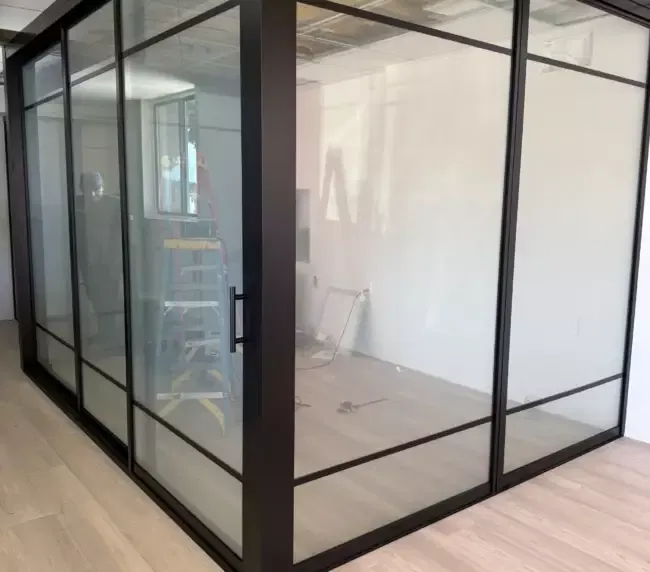
No. Smart film provides "frosted" privacy, meaning it obscures the view but still allows diffused natural light to enter the room. If you require a total blackout for a home theater or bedroom, you would need to combine smart film with blackout drapery or specialized motorized shades.
How fast does the film switch between clear and frosted?
The transition is nearly instantaneous. Most high-quality PDLC films switch states in less than 100 milliseconds.
Secure Your Property With Advanced Smart Film Solutions
Successfully retrofitting your windows with smart film requires a balance of aesthetic design and technical expertise. By choosing a solution that offers superior UV protection, IR rejection, and millimetric installation precision, you ensure long-term durability and performance. We encourage you to view completed installations to see how this technology has transformed residential and commercial spaces across Southern California.
If you are ready to upgrade your existing glass with on-demand privacy, contact Smart View Smart Film Solutions today. Our team provides full-service delivery, from custom fabrication in our Los Angeles facility to final electrical integration. Call (866) 728-9888 to schedule a site evaluation and begin your transition to a smarter, more private environment.