Advanced Automation: Integrating Switchable Smart Glass with Lutron and Savant Systems for Seamless Privacy.
Integrate switchable PDLC glass with Lutron and Savant home automation systems. Learn the technical requirements for wiring, power supplies, and programming scenes for luxury residential and commercial environments in Southern California.
Smart glass technology has evolved from a standalone novelty into a fundamental component of high-end home automation. For architects, developers, and homeowners utilizing Lutron or Savant ecosystems, the integration of Polymer Dispersed Liquid Crystal (PDLC) technology offers an unparalleled level of control over privacy, lighting, and aesthetic flow. Achieving a flawless installation requires more than just mounting film or glass; it demands a deep understanding of electrical protocols, relay logic, and system programming to ensure a professional smart film installation that performs reliably for years.
What is the technical foundation of switchable PDLC glass?
To integrate switchable glass effectively, one must first understand the physics of PDLC technology. At its core, PDLC consists of liquid crystal droplets dispersed in a polymer matrix, sandwiched between two layers of conductive Indium Tin Oxide (ITO) coated film.
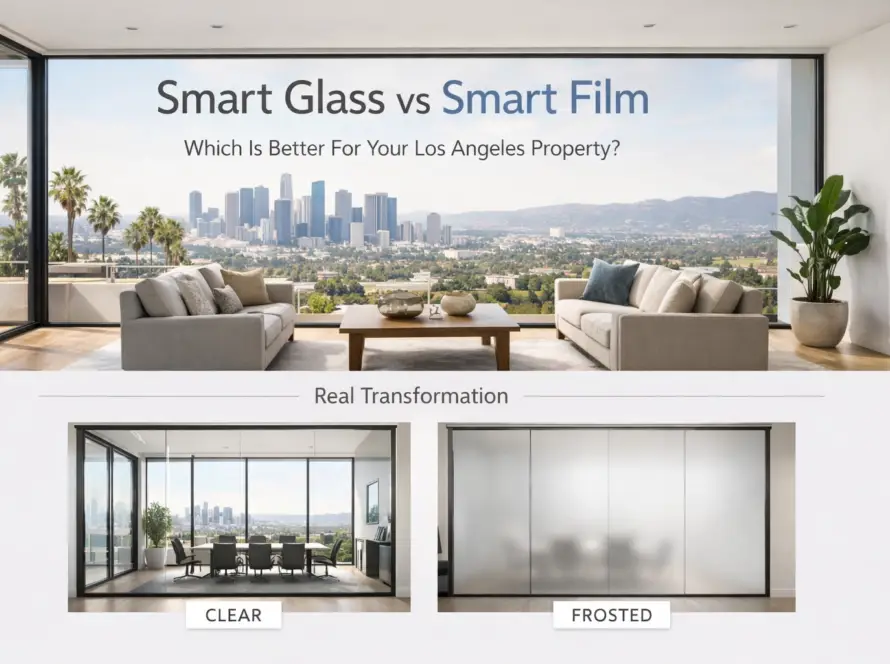
In its "off" or de-energized state, the liquid crystals are randomly oriented, scattering light and creating an opaque, frosted appearance. This provides instant privacy while still allowing approximately 70-80% of natural light to permeate the space. When an electrical current is applied, typically between 48V and 65V AC, the liquid crystals align, allowing light to pass through without scattering, rendering the glass transparent.
From an engineering perspective, PDLC is a capacitive load. This means the power supply and the control interface must be rated to handle the initial inrush current and the steady-state power consumption, which is generally low (approximately 0.5 to 1 watt per square foot). Understanding these electrical characteristics is vital when specifying the drivers and relays that will interface with a Lutron or Savant processor.
How does switchable glass interface with Lutron and Savant hardware?
The integration of smart glass into a control system usually occurs at the power supply level. Unlike a standard light bulb, you cannot simply plug smart glass into a wall outlet and expect it to behave correctly within an automation scene.
For Lutron systems (such as Homeworks QSX or RadioRA 3), the most common method of integration is through a dry contact closure or a high-voltage switch/dimmer operating a dedicated transformer. If the goal is simple on/off functionality, a Lutron LMJ-16R-DV-B relay module can be used to trigger the power supply. For more advanced applications where "dimmable" transparency is desired, a 0-10V dimming ballast or a specialized PDLC-compatible dimmer is required to vary the voltage.
For Savant systems, the integration typically leverages the Savant Smart Host and Pro App via an IP-based relay controller or a dedicated Savant power module. By connecting the PDLC power supply to a Savant-controlled relay, the glass becomes an addressable "load" within the Savant Blueprint software. This allows the glass to be grouped with lighting, shades, and climate control, as seen when you explore our recent smart film projects involving complex multi-zone integrations.
What are the power and wiring requirements for smart glass integration?
Wiring is the most frequent point of failure in smart glass installations. Because PDLC operates on low-voltage AC, the gauge of the wire and the distance from the power supply are critical factors.
- Wire Gauge: We typically recommend 18/2 or 20/2 AWG stranded copper wire for runs up to 50 feet. For longer runs, voltage drop must be calculated to ensure the glass receives the minimum required voltage to achieve full clarity.
- Homerun Topology: Each panel or zone of smart glass should be "homerun" back to a central power supply location. Daisy-chaining multiple panels can lead to uneven transparency and increased stress on the transformer.
- Shielding: To prevent electromagnetic interference (EMI) with high-fidelity audio systems or sensitive data lines, a common concern in luxury Southern California estates, using shielded cabling is often a best practice.
- Accessibility: Transformers must be placed in a ventilated, accessible location (such as an AV rack or a closet). They should never be buried behind drywall, as they contain fuses and thermal protection components that may need servicing.
Why is programming essential for Savant and Lutron scenes?
The true value of integrating smart glass into a control system is realized through programming. Without a control system, smart glass is just a high-tech light switch. With Lutron or Savant, it becomes a dynamic architectural element.
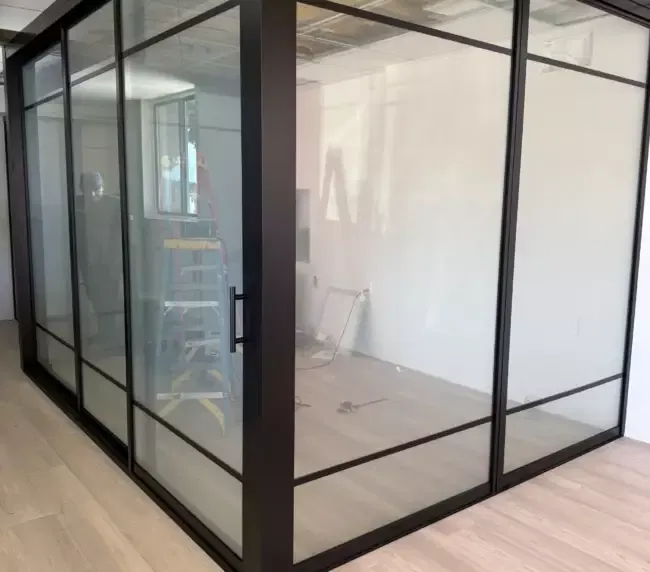
In a luxury residential setting, a "Privacy" scene can be programmed to simultaneously lower the Lutron Sivoia shades, dim the lights to 30%, and switch the master bathroom glass to opaque. In a commercial boardroom, a Savant "Presentation" mode might clear the glass partitions to showcase the office view while lowering a projection screen.
Furthermore, feedback loops can be established. For instance, if a Savant-integrated door lock is engaged in a wine cellar or bathroom, the system can automatically trigger the smart glass to its opaque state, ensuring privacy without manual intervention. This level of logic is why specifying custom smart glass systems during the early design phase of a project is so advantageous for technical performance.
How do automated schedules improve energy efficiency and UV protection?
Beyond privacy, smart glass serves as a high-performance solution for solar heat gain and UV protection. When integrated with an automation system, the glass can be programmed to follow an astronomical clock.
In Southern California, where solar intensity is high, the glass can be set to "opaque" during the hottest parts of the day. While the glass is opaque, it still blocks 99% of harmful UV rays, protecting expensive interior furnishings, artwork, and flooring from fading. While the visible light transmission remains high, the infrared (heat) rejection helps reduce the load on HVAC systems, contributing to overall building efficiency.
By scheduling the glass to remain clear during the morning and opaque in the afternoon, homeowners can maximize natural light harvesting while minimizing solar heat gain, all without lifting a finger. This automated management is a key differentiator for high-end properties looking to balance aesthetic transparency with environmental responsibility.
What technical considerations ensure long-term reliability in Southern California?
The climate in Southern California provides unique challenges, particularly regarding heat and UV exposure. To ensure the longevity of a smart glass system integrated with Lutron or Savant, several technical safeguards should be implemented:
- Thermal Stress Analysis: Large glass panels can experience thermal stress. We ensure the glass is properly heat-strengthened or tempered to withstand the temperature fluctuations common in coastal and desert regions.
- Surge Protection: Automated systems are sensitive to power surges. Installing high-quality surge protection on the primary side of the smart glass power supplies prevents damage to the PDLC film during electrical storms or grid instability.
- Maintenance of Connections: In coastal areas, salt air can lead to oxidation at connection points. We use specialized conductive epoxies and sealed busbars to prevent degradation of the electrical signal.
Technical compatibility is a critical first step, much like our guide on how to choose the best switchable privacy film for commercial retail compared. Ensuring that the control protocols of your Lutron or Savant system match the electrical requirements of the PDLC power supply is the only way to guarantee a flicker-free, responsive installation.
FAQ
What are the most common questions about smart glass integration?
Can I dim switchable glass like a light bulb?
Yes, but it requires a specific 0-10V or triac-dimmable transformer. Standard dimmers can damage the PDLC film. When integrated with Lutron, a 0-10V interface is usually the most reliable way to achieve varying levels of transparency.
Does smart glass require a constant power draw?
Smart glass requires power to stay clear. When the power is off, it is opaque. The power consumption is minimal, generally less than 1 watt per square foot, making it very efficient for large-scale installations.
Can I control the glass via voice commands?
Absolutely. Once the glass is integrated into a Savant or Lutron system, it can be mapped to voice assistants like Josh.ai, Alexa, or Siri. You can simply say, "Savant, give me privacy," and the glass will frost instantly.
Is the film safe for wet environments like bathrooms?
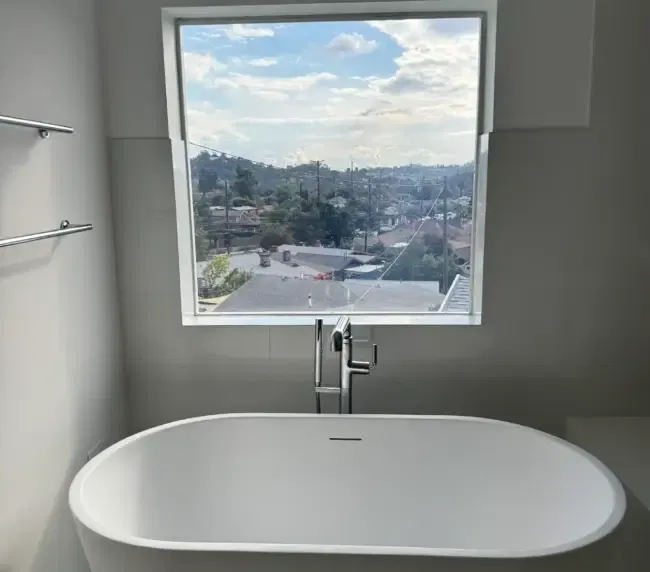
Yes, provided the edges are properly sealed and the electrical connections are handled according to IP67 standards. We frequently install smart film in luxury bathrooms and steam showers across Los Angeles, ensuring all wiring is moisture-proof and concealed.
What happens if the power goes out?
By default, smart glass is a "fail-safe" privacy product. If the power fails, the glass reverts to its opaque/frosted state, ensuring your privacy is maintained even during a blackout.
For homeowners and developers looking to elevate their property with the latest in switchable technology, the integration of PDLC glass with world-class automation systems represents the pinnacle of modern design. At Smart View Smart Film Solutions, we provide the technical expertise necessary to bridge the gap between architectural glass and complex electrical engineering.
Whether you are retrofitting an existing space or specifying a new build, our team is ready to assist with wiring diagrams, load calculations, and hardware selection. To discuss the specific requirements for your project and request a custom quote, contact our specialists today at (866) 728-9888.